
Furnace carbon monoxide signs in California

Say what's going on with your furnace, and a pro who works on them reaches out.

Get matched

A furnace leaks carbon monoxide when something inside the heat exchanger cracks or the burner isn't getting enough air to burn gas clean. Watch for soot around the furnace, a yellow flame where it should burn blue, or a sour smell when the furnace kicks on. Inside the house, the signs look like a bad cold that gets better when you leave the room: headaches, nausea, feeling tired for no reason. Gas furnaces are the norm in California homes, and most run from a closed combustion chamber vented straight outside, so a crack or a blocked vent sends the gas into the house instead of out of it. A carbon monoxide detector near the furnace catches what you can't smell or see. If yours is sounding, or you're seeing any of these signs, shut the furnace off and have it looked at before running it again.

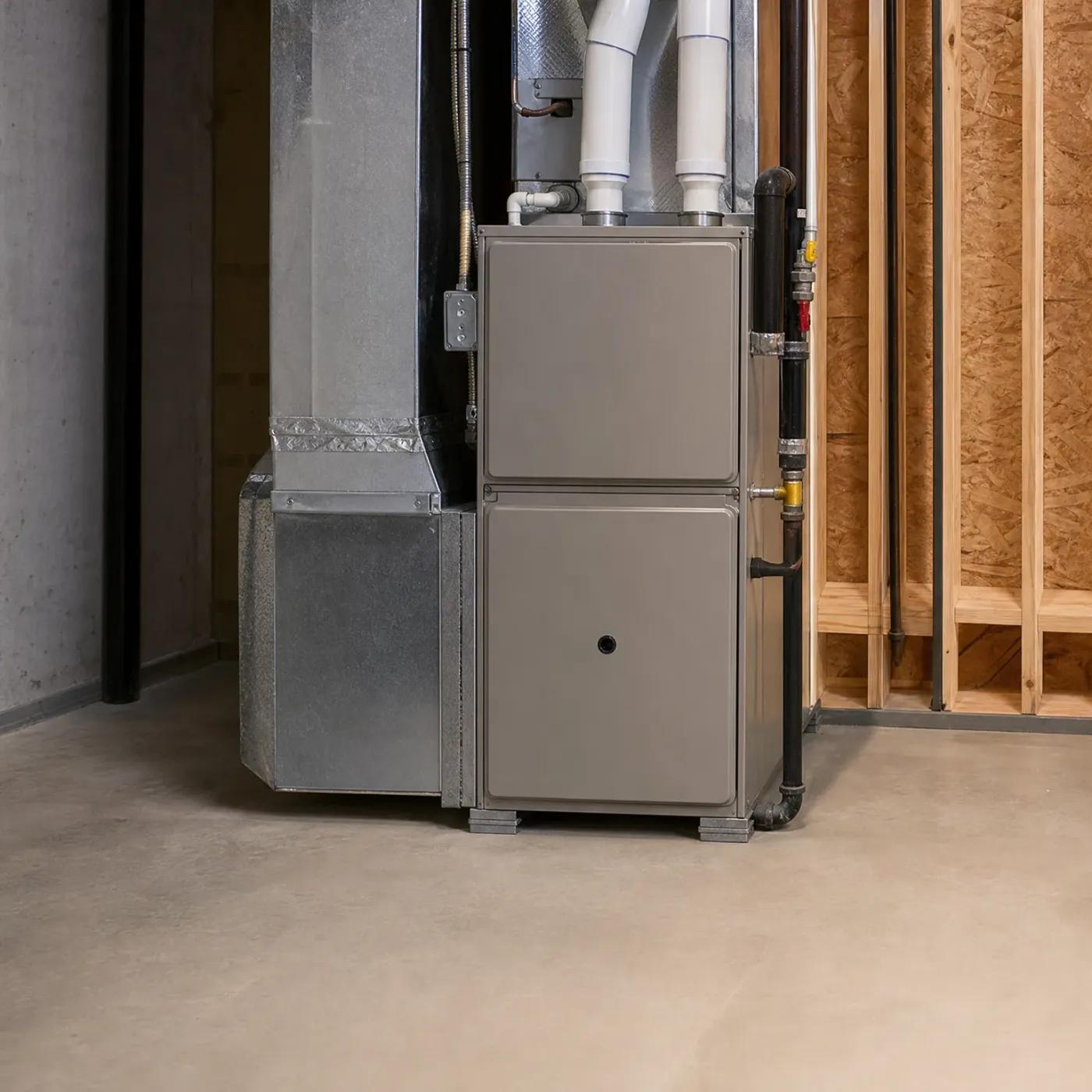
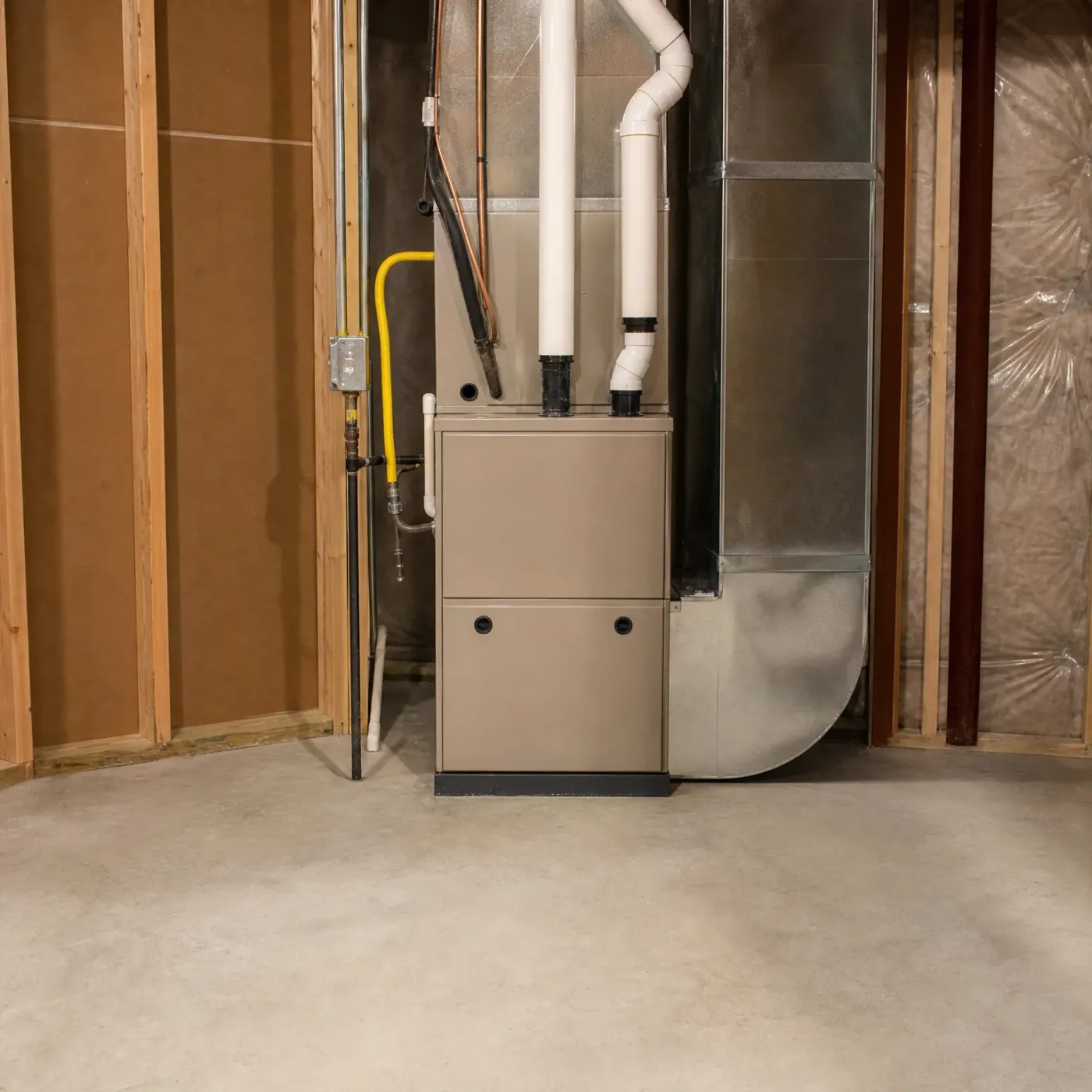
A beige high-efficiency furnace in an unfinished basement, with white PVC vent pipes, a yellow gas line, metal ductwork, and exposed wood framing on a concrete floor.

Normal Operation

The burner flame stays blue and steady, and the furnace cycles on and off without any odor in the house. The flue pipe stays sealed, the condensate line drains clean, and there's no soot around the cabinet or the vents. This is what a furnace burning gas correctly looks like underneath.
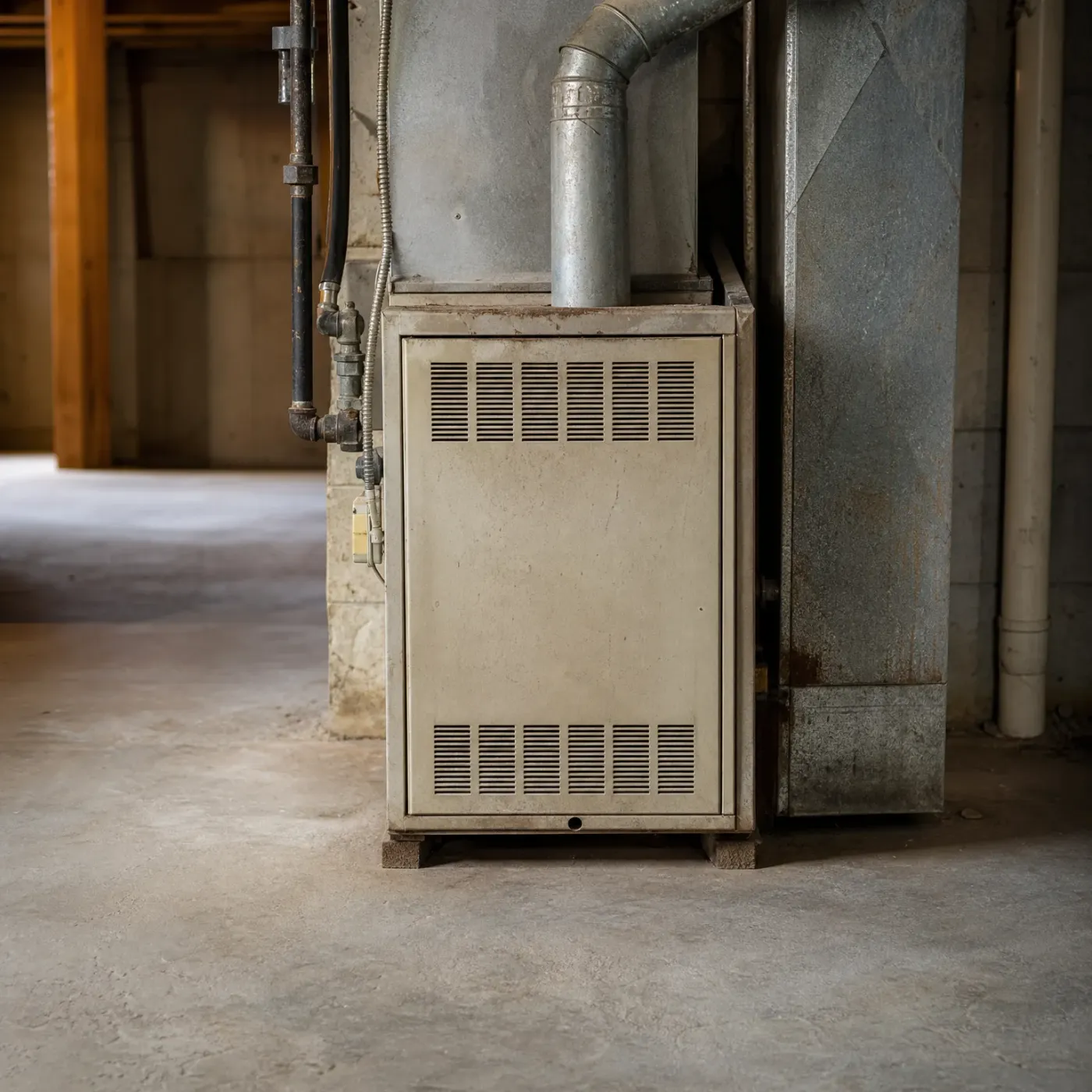
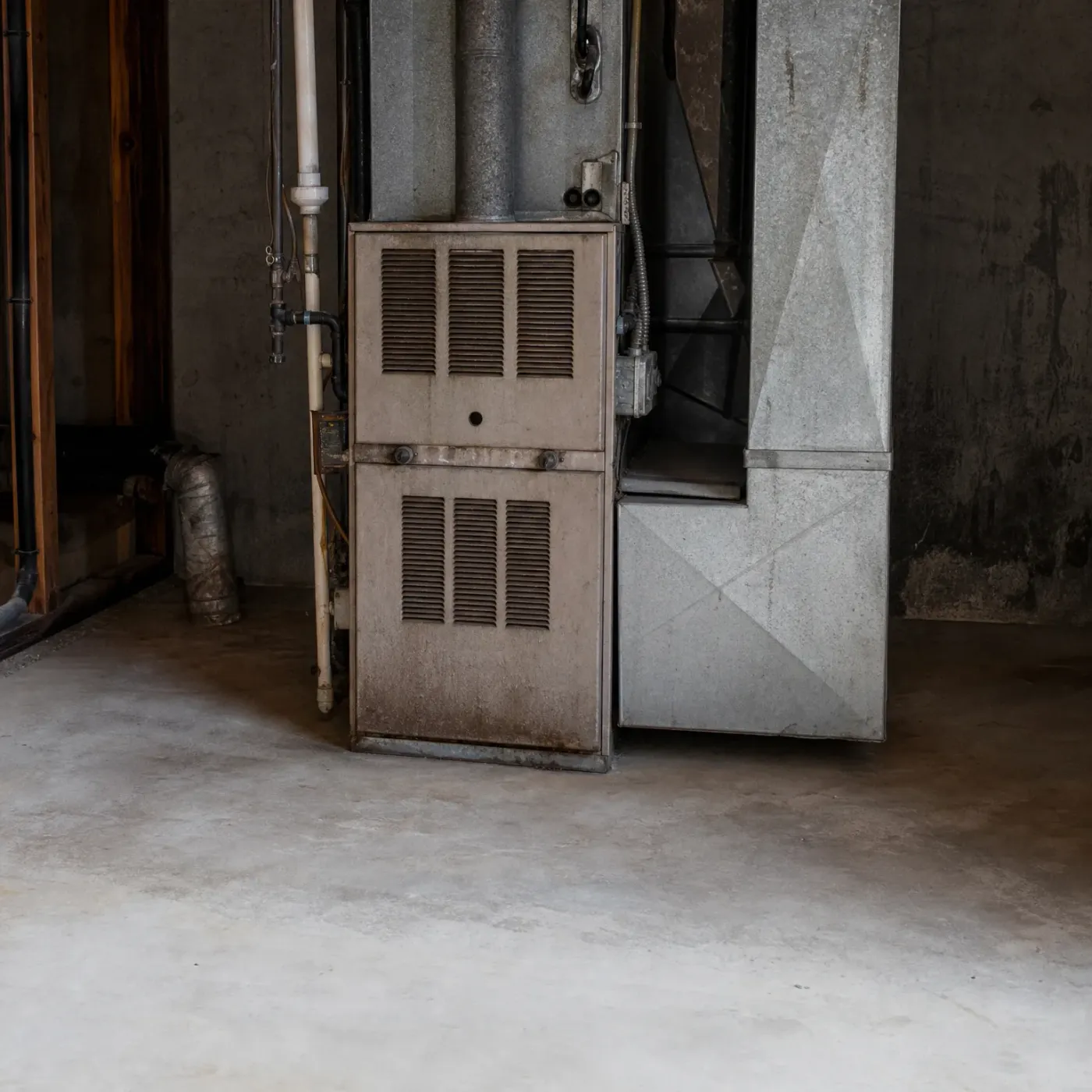
An older beige furnace with two louvered vent panels stands on a concrete basement floor, connected to galvanized ductwork and a metal flue pipe, with gas piping and flexible conduit on the wall behind.

Warning Signs Present

Soot stains the panels near the flue connection, and the pipe itself may be loose or rusted through where it meets the duct. A flame that burns yellow or orange instead of blue means the burner isn't getting enough air. If anyone in the house gets headaches or feels drowsy only when the furnace runs, get it checked.

Is something off with your furnace right now

Walk past the furnace closet and take a real look. Soot stains on the cabinet or around the vents mean something isn't burning right. If the flame through the viewing window looks yellow or orange instead of blue, that's worth acting on the same day. A sour or sharp smell when the furnace kicks on, headaches that show up when everyone's home and fade when they leave, or a pilot light that keeps going out are all signs the heat exchanger or the burner needs a look. None of these are things to wait out. A cracked heat exchanger can put carbon monoxide into the air your household breathes, and in a closed-up house in January that air doesn't go anywhere on its own.

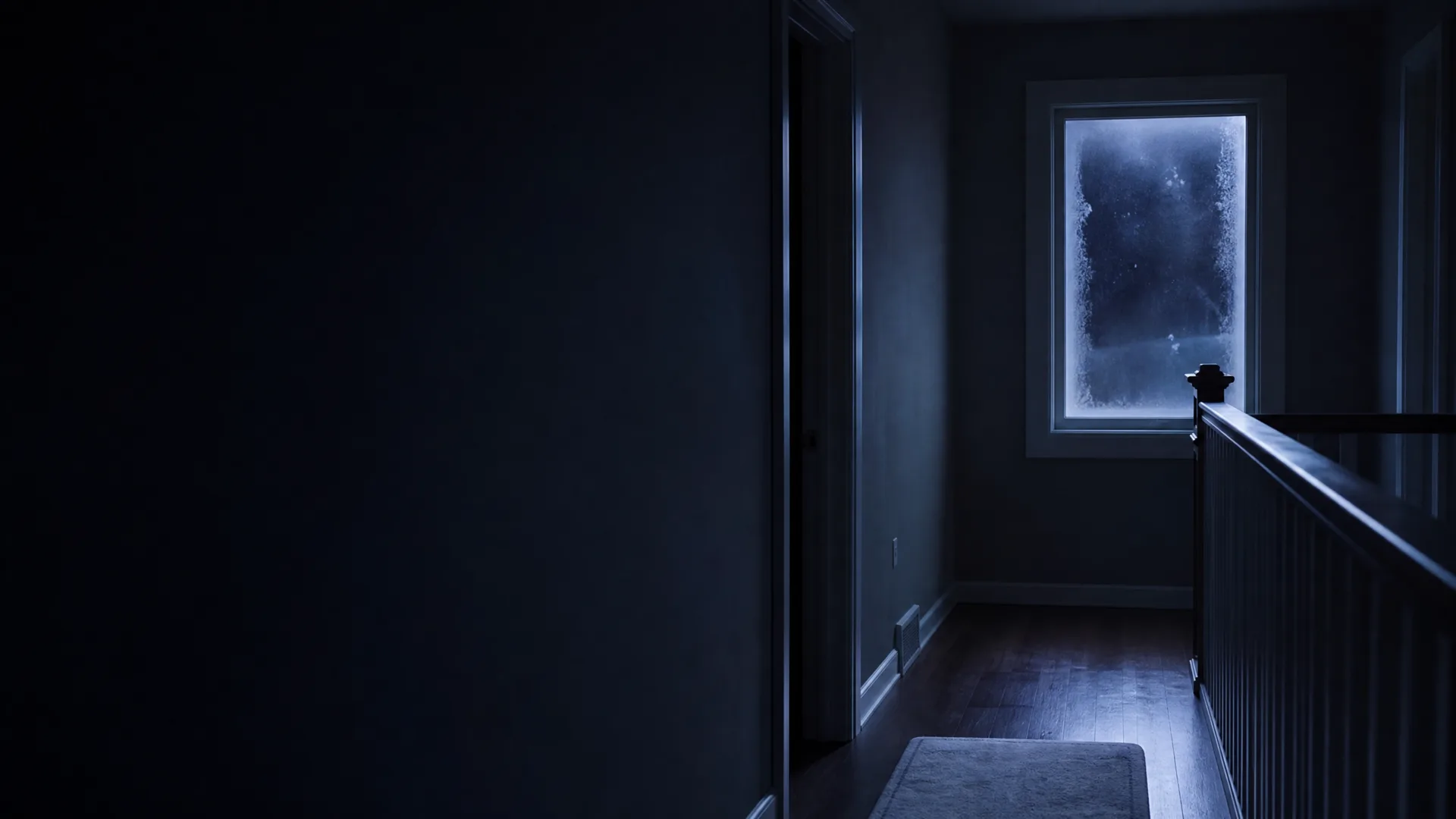
A dark interior hallway with a dim window at the end, a wooden floor, a stair railing on the right, and a bench or rug in the foreground.

You wake up without knowing why. The house is quiet in that specific way, no air moving through the vents, and the hallway floor is cold under your feet. Frost has crept up the corners of the window at the end of the hall. You stand there a second, listening, and your head feels dull, like you haven't slept at all. Downstairs the furnace isn't running. You don't know yet if it's the cold or something else making you feel this way, only that at 2 a.m., alone with it, you'd rather have someone who knows furnaces tell you which one it is than guess by yourself until morning.

A local pro for your furnace repair

Describe what your furnace is doing once, in one form.

Asking costs nothing, and the choice to hire stays yours.

How a Furnace Lets Carbon Monoxide Through

  • A cracked heat exchanger lets carbon monoxide mix with the warm air a furnace blows into your home.
  • The burner needs the right mix of gas and air; a dirty or misaligned burner starves that mix and raises carbon monoxide output.
  • A blocked flue pipe keeps combustion gases from leaving the house, pushing carbon monoxide back through the cabinet instead.
  • A furnace's inducer motor should pull exhaust out before the burner fires; if it's weak, gas can ignite without a clear path out.
  • Rollout switches and flame sensors are built to shut a furnace down the moment combustion goes wrong, so a furnace that won't stay lit may be protecting you.
  • Carbon monoxide has no smell on its own; what you notice first is usually soot, a yellow flame, or a sour odor from something burning alongside it.

A furnace burns gas in a sealed chamber and sends the exhaust out through the flue, keeping that air separate from the warm air blown into your rooms. That separation depends on the heat exchanger. Once it cracks, even a hairline crack, combustion gases find their way into the air your furnace circulates through the house. The burner has to get the mix of gas and air right to burn clean. When it's dirty or sitting slightly out of position, the flame burns inefficiently and produces more carbon monoxide than it should. The inducer motor is supposed to clear exhaust out of the chamber before the burner lights, so gas has somewhere to go. A motor that's lost strength leaves exhaust with nowhere to vent properly. A blocked flue pipe does the same thing from the other end, trapping combustion gases that should be leaving the house and forcing them back through the cabinet. Furnaces have switches built for exactly this. A rollout switch or flame sensor will shut the system down rather than let it keep burning unsafely, so a furnace that keeps tripping out or won't stay lit is often doing its job, not failing at it. Carbon monoxide itself has no smell. What gives it away is what's burning alongside it: soot stains near the cabinet, a flame that's turned yellow instead of blue, or a sour, sharp odor when the furnace kicks on.

A woman with long wavy brown hair in a grey ribbed sweater sits on a couch indoors, looking toward a window, with a potted palm-like plant and fireplace behind her.
A woman with long brown hair wearing a green V-neck top and beige cardigan sits on a light sofa, looking off to the side, with a dining table, lamp and framed picture in the background.
A woman with long dark hair in a cream knit sweater sits on a beige sofa indoors, looking toward a bright window with a houseplant and framed picture in the background.
A woman with long dark hair in a green knit sweater sits on a couch indoors, smiling and looking toward a window with a blurred room behind her.

Every gas furnace needs a working carbon monoxide detector nearby

A detector catches what you can't smell or see. Place one near the furnace closet and one near bedrooms, and test the batteries twice a year.

Get a local pro

A cracked heat exchanger won't fix itself

Gas burning unevenly or venting poorly gets worse with every heating cycle. A furnace repair contractor can check the exchanger, the burner, and the flue before the next cold snap.

Get a local pro
An older gas furnace with two louvered front panels stands on a concrete basement floor beside galvanized sheet-metal ductwork, pipes, and a weathered concrete wall.
Before you get your furnace repair
A gray high-efficiency furnace in a basement, connected to sheet-metal ductwork on the left and white PVC vent pipes above, with black gas and drain piping and an exposed wood-stud wall with OSB sheathing on the right.
After you get your furnace repair

You keep running the furnace and hope the soot or the smell was nothing. Every gas furnace in California still has to warm the house on the cold nights, and a cracked heat exchanger doesn't heal itself while you wait to see.

You get the furnace looked at before the next cold night. A contractor who knows gas furnaces checks the heat exchanger, the burner, and the flue, and tells you straight what's wrong instead of leaving you to guess from a smell.

Winter nights average 40°F statewide

Nights here average 40°F in December, January and February, so your furnace isn't running flat out the way it would somewhere colder. It still cycles on most nights, and a crack in the heat exchanger or a starved burner puts off carbon monoxide whether the furnace runs hard or barely at all.

NOAA nClimDiv 1991-2020 county normals weighted by homes

A gray-haired woman in a cream knit sweater stands in a dimly lit kitchen at night, looking to her right, with a round loaf of bread in the foreground and a dark window and potted plant behind her.
A woman with her hair in a bun holds a sleeping young child against her chest, both wrapped in a textured beige knit blanket on a sofa in a dimly lit room with a lamp, framed picture, and bookshelf behind them.
A man seen from behind raises his hand to wave at a woman standing in the open front doorway of a single-story house with gray shingle siding, white columns and a gabled porch entry.

Your furnace should warm the house without putting any of this into it

Soot on the cabinet, a yellow flame, a sour smell when it kicks on. Any one of those means the burner isn't getting clean air or the heat exchanger has a crack in it, and neither one is something you wait out. Nights here don't ask as much of a furnace as they do elsewhere, but it still runs most of the winter, and what it's doing while it runs is the question.

You don't have to figure out which part it is or who's free to look at it this week. Once you ask for help, a contractor who knows gas furnaces gets in touch with you directly, and you can describe what you saw and let them tell you what it means. No calling around, no repeating the same details to three different shops, no sorting through quotes on your own.

A living room corner with a light beige sofa holding a textured taupe cushion, a large ceramic vase of olive branches by a window, a framed neutral artwork on the wall, and a dark bowl with stacked books in the foreground.
A dimly lit unfinished basement with concrete walls and floor, exposed floor joists, a small window at left, and a dark furnace with PVC venting and sheet metal ductwork at right.

A pro who works on furnaces

Describe your furnace job once, to one pro.

Step 1 of 3: Equipment