Tell us about the job
Takes about a minute. No obligation.
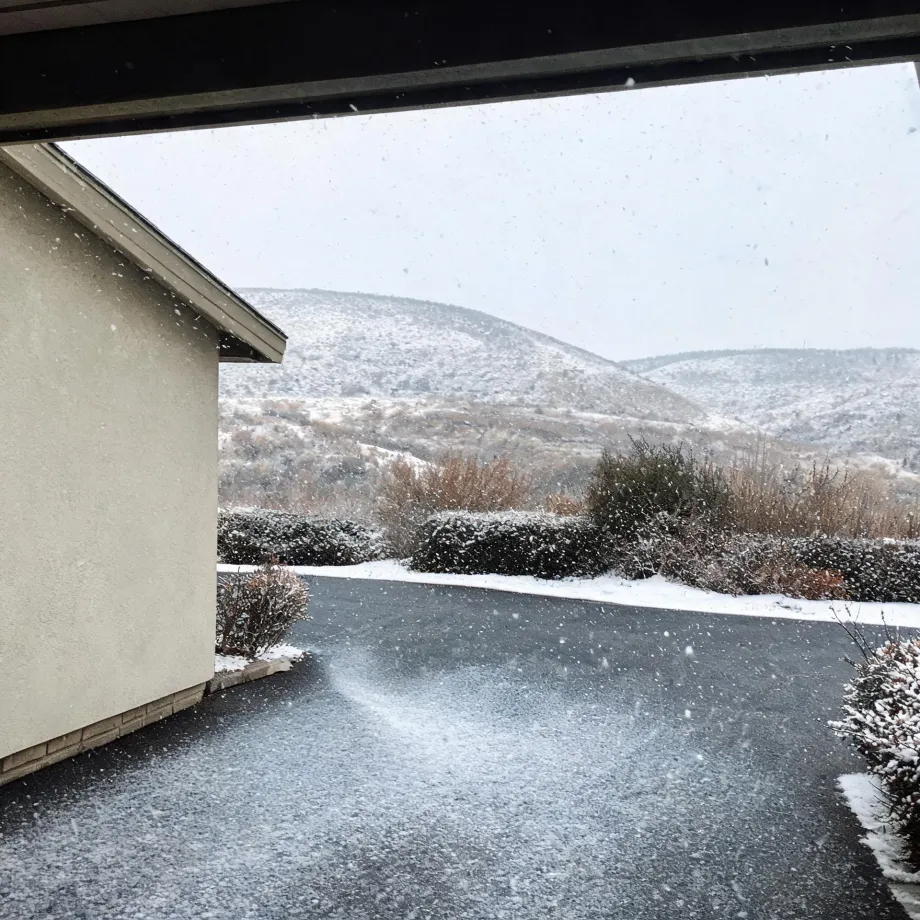
Sizing a furnace for this area means accounting for a burner and heat exchanger that cycle through a long, unbroken stretch of cold months. Homes in Amador County, CA run heat about eight months a year, from October through May. A heat exchanger that starts and stops repeatedly across that span accumulates fatigue at the welds and joints, and an undersized unit runs longer per cycle, which pushes that wear forward. A contractor quoting a replacement here factors that thermal load into the equipment selection first, before anything else on the job.
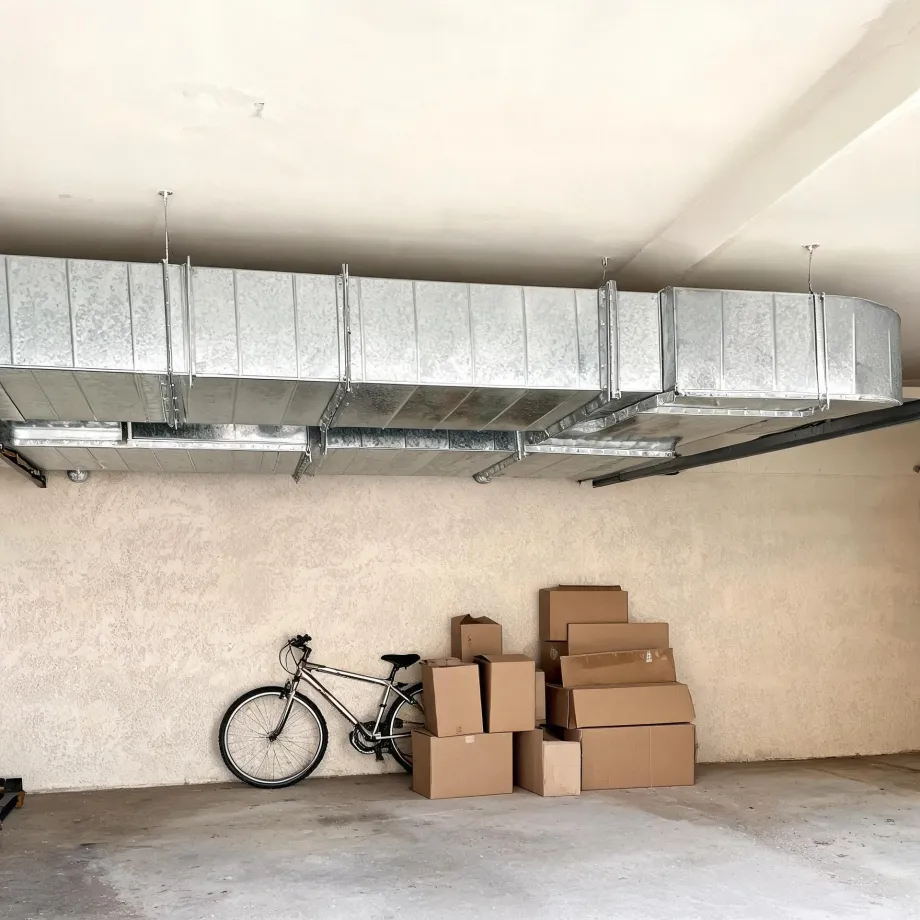
Ductwork in a house carries the load a furnace delivers, and in Amador County the ductwork is often the harder part of the job. Half the homes in Amador County, California were built in 1984 or earlier (2020-2024 ACS 5-year). A contractor fitting a new furnace into housing of that vintage will open duct connections that were sized and sealed for equipment no longer in production, and what they find there sets the real scope of the project. Trunks that are undersized, joints that have separated, or flex runs that have collapsed all change what the installation costs and how long it holds.
What Gets Installed With a New Furnace
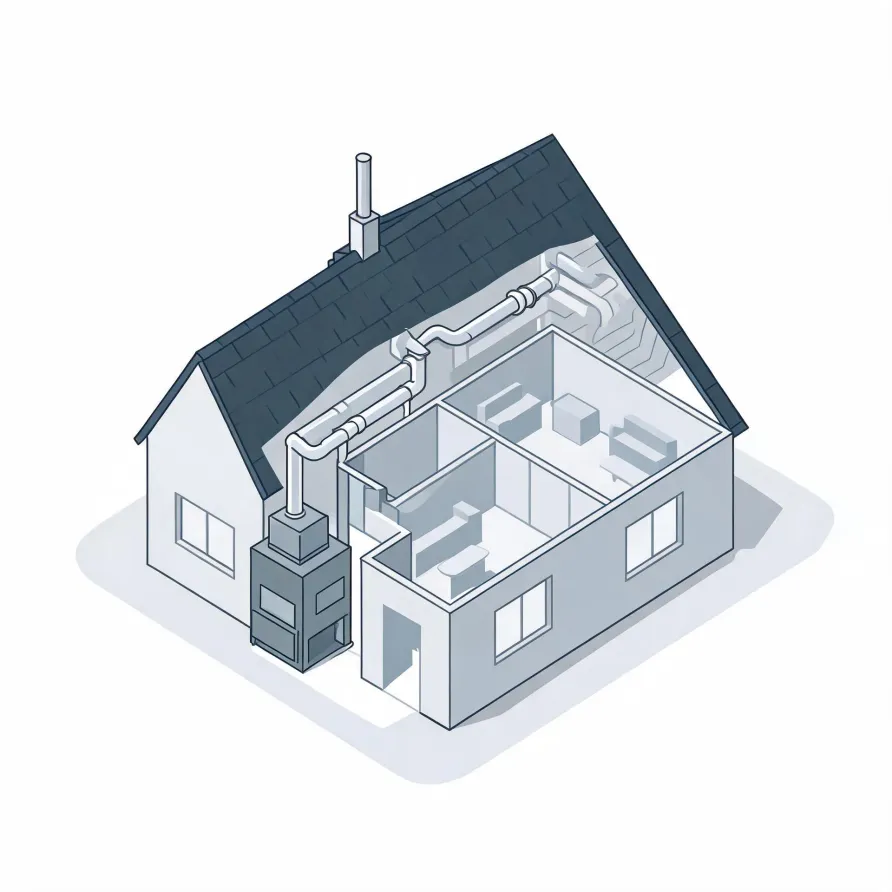
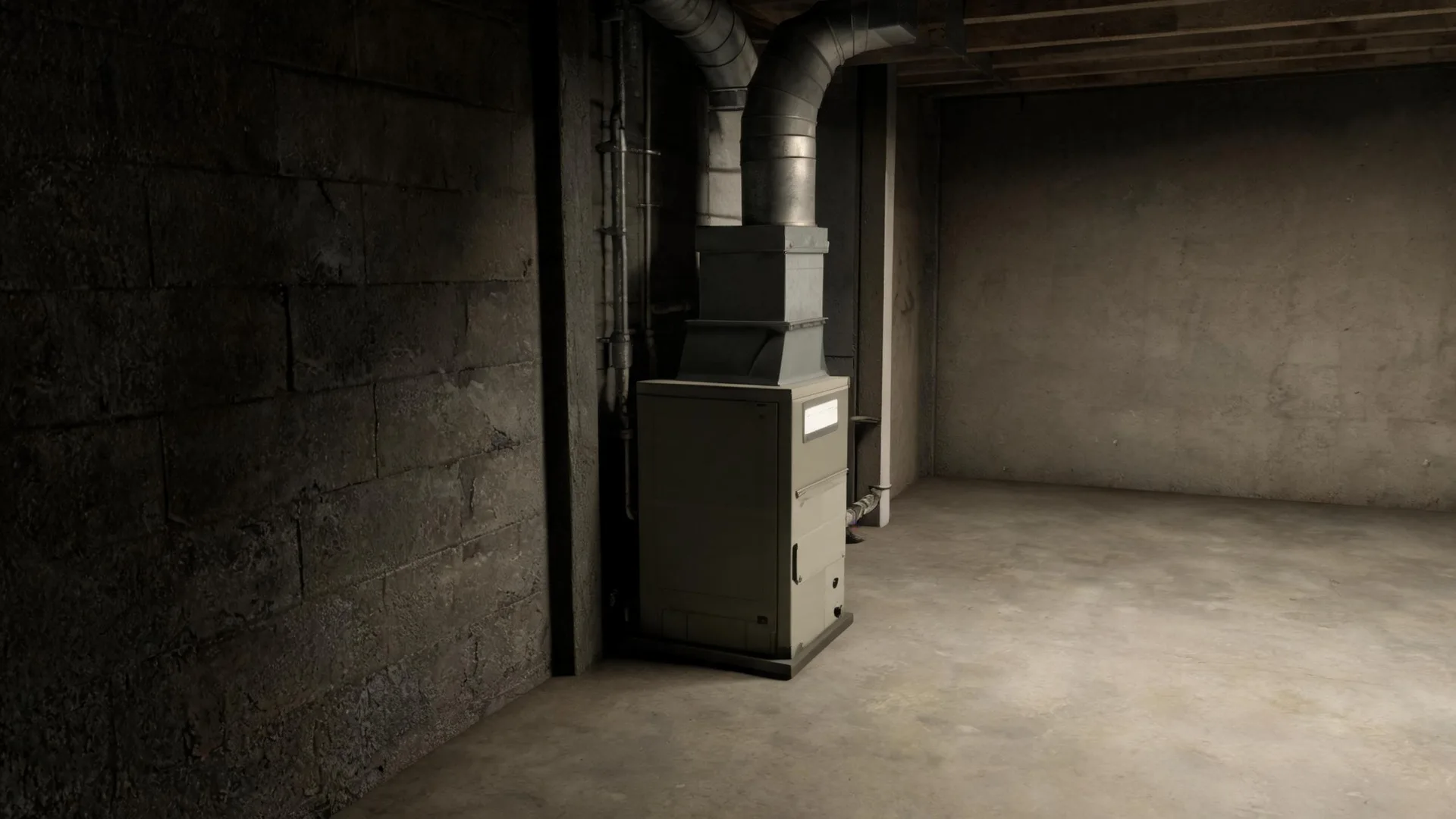
The furnace itself sits inside the home, most often in a utility closet, basement, or garage. It is the box that generates heat by burning gas and pushing the resulting warmth into the air supply. The heat exchanger lives inside that cabinet, separating combustion gases from the air that moves through your home.
The flue pipe runs from the furnace to an exterior wall or the roof, carrying exhaust gases out of the house. The air handler and blower motor, housed within the same cabinet, pull return air in and push conditioned air back out. A new thermostat mounts on an interior wall and gives the system its controls.
The drawing shows a typical layout, and a licensed contractor will determine exactly what applies to your home and its existing setup.
Find a contractor in Amador CountyAmador County, by the numbers
340 severe weather events were recorded in Amador County, California between 2015 and 2024.
NOAA National Centers for Environmental Information, Storm Events Database, bulk CSV export, events 2015-01-01 through 2024-12-31.Half the homes in Amador County, California were built in 1984 or earlier (2020-2024 ACS 5-year).
U.S. Census Bureau, 2020-2024 American Community Survey 5-Year EstimatesAmador County, California holds 19,019 housing units (2020-2024 ACS 5-year).
U.S. Census Bureau, 2020-2024 American Community Survey 5-Year EstimatesOwners occupy 80.4% of the occupied homes in Amador County, California (2020-2024 ACS 5-year).
U.S. Census Bureau, 2020-2024 American Community Survey 5-Year EstimatesFurnace Installation Rules on the Books for Amador County, California5 codes, standards & statutes
What the installation actually looks like
Non-weatherized gas furnaces manufactured on or after November 19, 2015 must reach 80.0 percent AFUE.
Non-weatherized oil-fired furnaces manufactured on or after November 19, 2015 must reach 83.0 percent AFUE.
Mobile home gas furnaces manufactured on or after November 19, 2015 must reach 80.0 percent AFUE.
Non-weatherized gas furnaces manufactured on or after December 18, 2028 must reach 95.0 percent AFUE, up from the 80.0 percent minimum that applies to units manufactured before that date.
Licensing and Legal Requirements in Amador County, California
California requires a state contractor license: it is a misdemeanour to engage in the business of, or act in the capacity of, a contractor in California without one, unless the work is exempt.
Severe Weather Events in Amador County
Weather swings drive wear on heating equipment. A furnace working hard against cold snaps and storm-driven temperature drops takes on more load than one in a mild, stable climate, which is why local weather history is part of sizing and installing the right unit for a home here.
340 severe weather events, 2015–2024. Source: NOAA National Centers for Environmental Information, Storm Events Database.