Tell us about the job
Takes about a minute. No obligation.
Sizing a furnace for a Shasta County home is not a step a contractor can rough in and revisit later. Homes in Shasta County, CA run heat about eight months a year, from October through May. The burner and heat exchanger cycle through that load without a long summer break to mask a margin that came in too tight. An undersized unit runs longer per cycle to hold temperature, and that added cycling is where the heat exchanger takes its punishment. A contractor doing the load calculation here has to account for the full demand before anything gets ordered, because a unit that is close enough somewhere else is not close enough here.
Existing ductwork is what a furnace installation turns on in Shasta County, and much of the stock here was ducted for equipment long since replaced. Half the homes in Shasta County, California were built in 1982 or earlier (2020-2024 ACS 5-year). That gap between what the house was built around and what a contractor is now putting in means the duct system often carries assumptions baked in for a different unit: different static pressure, different airflow, different heat output. A contractor pricing a furnace here measures and tests the duct system before committing to anything, because the new unit has to move air through what is already in the walls and ceiling.
What Gets Installed With a New Furnace
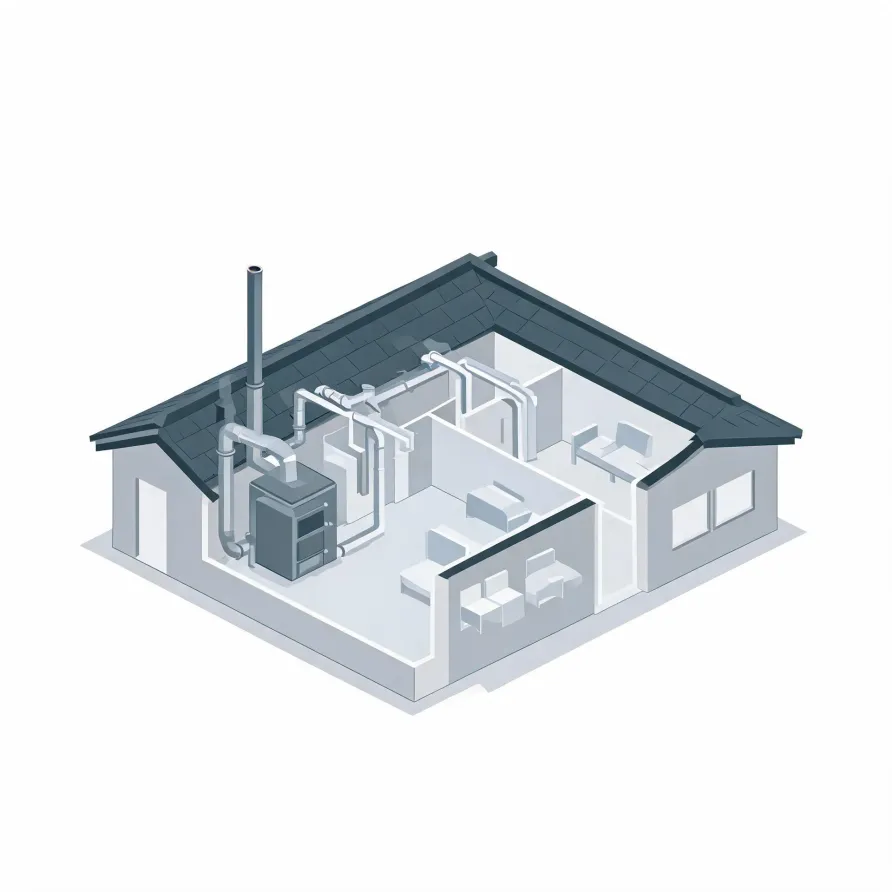
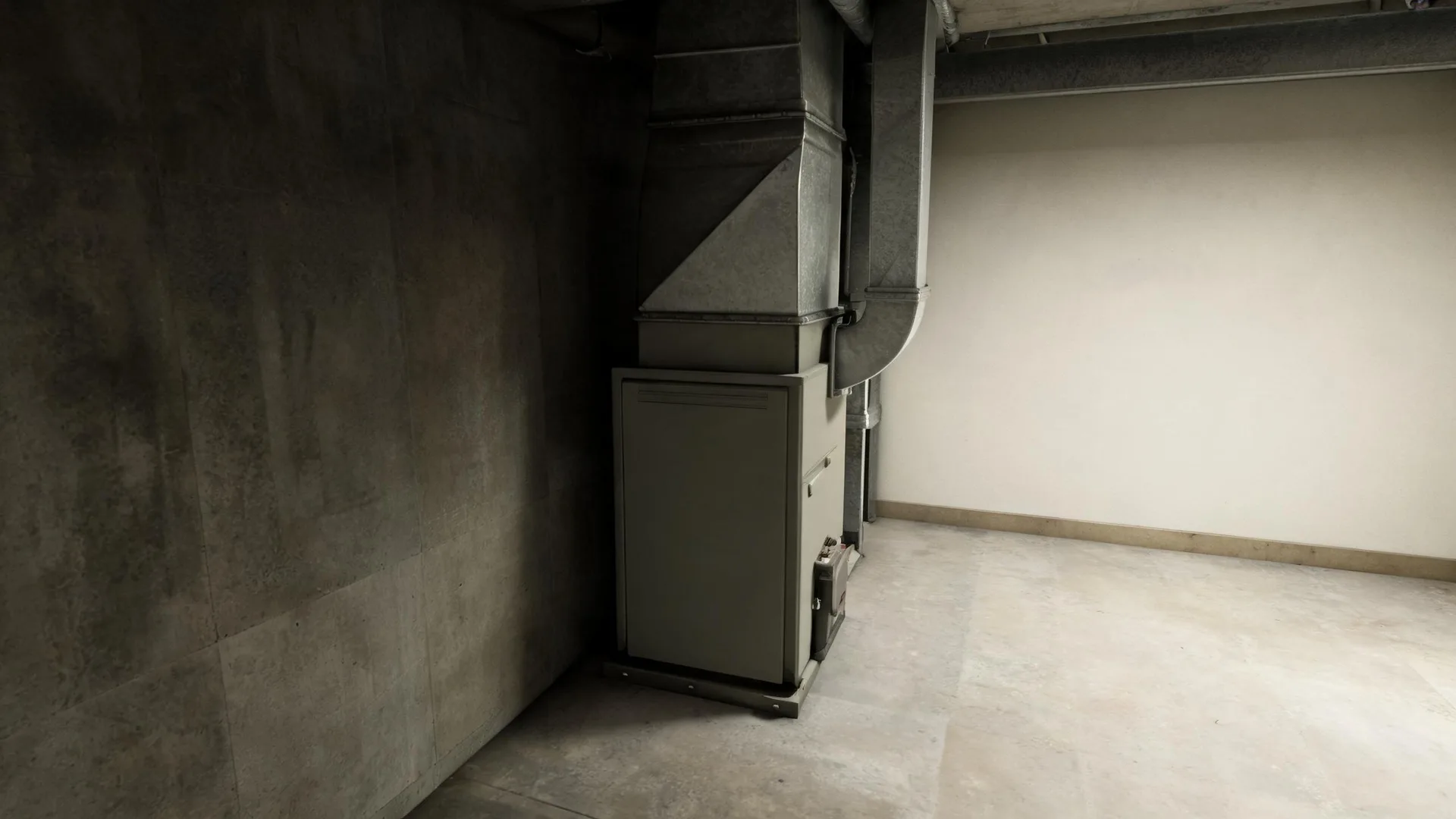
The furnace itself sits in a utility closet, basement, or garage and is the heart of the system. A contractor mounts the heat exchanger and burner assembly inside the cabinet, then connects a flue pipe that runs out through a wall or roof to carry combustion gases out of the house.
The air handler components that move conditioned air sit within or directly beside the furnace cabinet. The blower fan, filter housing, and plenum attach at the top or side where the unit meets the supply and return air openings, and a thermostat mounts on an interior wall to give the homeowner control over the whole system.
The drawing shows a typical furnace layout, and a licensed contractor determines exactly what applies to your home's configuration.
Find a contractor in Shasta CountyShasta County, by the data
209 severe weather events were recorded in Shasta County, California between 2015 and 2024.
NOAA National Centers for Environmental Information, Storm Events Database, bulk CSV export, events 2015-01-01 through 2024-12-31.Half the homes in Shasta County, California were built in 1982 or earlier (2020-2024 ACS 5-year).
U.S. Census Bureau, 2020-2024 American Community Survey 5-Year EstimatesShasta County, California holds 80,068 housing units (2020-2024 ACS 5-year).
U.S. Census Bureau, 2020-2024 American Community Survey 5-Year EstimatesOwners occupy 65.6% of the occupied homes in Shasta County, California (2020-2024 ACS 5-year).
U.S. Census Bureau, 2020-2024 American Community Survey 5-Year EstimatesFurnace Installation Rules on the Books for Shasta County, California5 codes, standards & license rules
What the Installation Actually Looks Like
Non-weatherized gas furnaces manufactured on or after November 19, 2015 must reach 80.0 percent AFUE.
Non-weatherized oil-fired furnaces manufactured on or after November 19, 2015 must reach 83.0 percent AFUE.
Mobile home gas furnaces manufactured on or after November 19, 2015 must reach 80.0 percent AFUE.
Non-weatherized gas furnaces manufactured on or after December 18, 2028 must reach 95.0 percent AFUE, up from the 80.0 percent minimum that applies to units manufactured before that date.
Licensing Rules for HVAC Work in Shasta County, California
California requires a state contractor license: it is a misdemeanour to engage in the business of, or act in the capacity of, a contractor in California without one, unless the work is exempt.
Severe Weather Events in Shasta County
Weather in Shasta County puts real demands on heating equipment, and those demands shape what a furnace needs to handle year after year. How hard a system works, and how reliably it needs to perform, is a local question first.
209 severe weather events, 2015–2024. Source: NOAA National Centers for Environmental Information, Storm Events Database.