How to restart a furnace after a California power outage

Step 1 of 3: Equipment

Why won't my furnace turn back on after the power went out?

An outage trips the power, it comes back on, and everything else in the house seems fine, but the furnace just sits there. No fan, no heat, nothing on the thermostat. With gas furnaces running most homes here, it's an easy thing to want sorted out before it turns into a cold house overnight, especially when the fix might be something small you can check yourself first.

Most of the time, you just need to reset it

A furnace that won't restart after an outage usually isn't broken. The control board loses its place when power cuts out, and it needs the switch turned off for a few seconds, then back on, to reset. Check the furnace switch itself, it looks like a light switch near the unit, and make sure the breaker for the furnace didn't trip along with everything else. If the thermostat screen is blank, it may need its own batteries checked. When the reset doesn't bring the fan or burners back, the outage likely caught a part that was already close to failing, and that's worth having looked at rather than reset again and again.

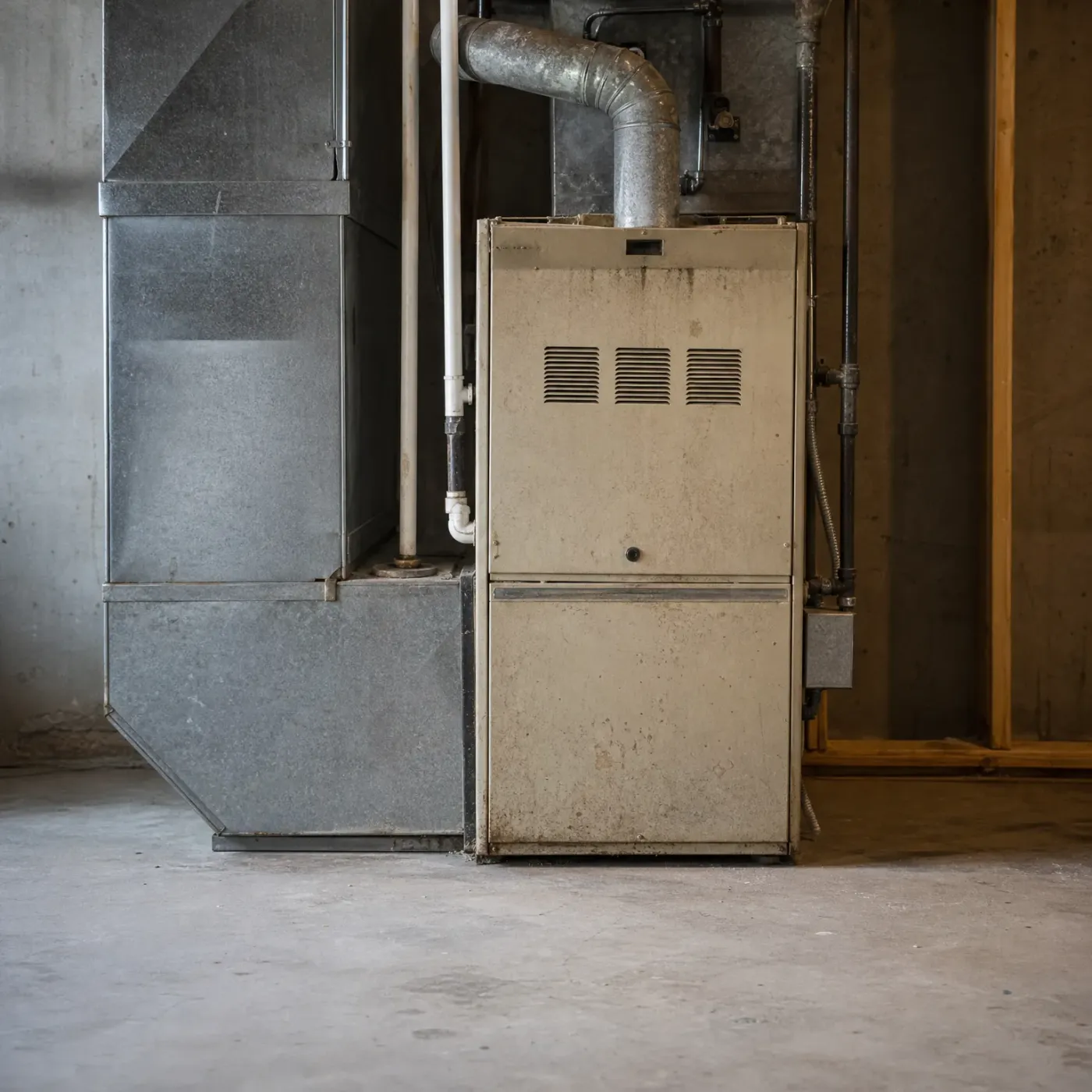
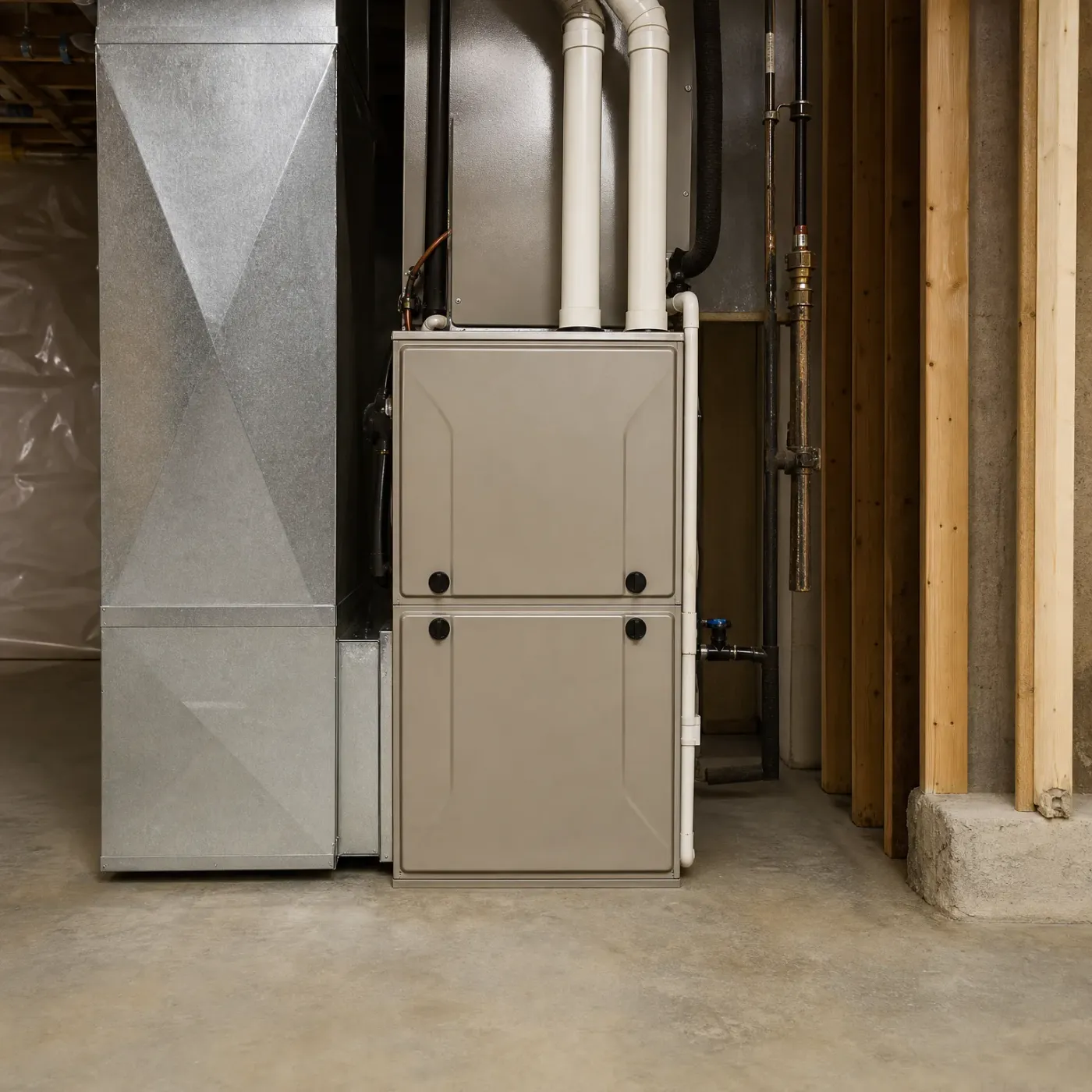
A beige high-efficiency furnace with white PVC vent pipes stands beside galvanized sheet-metal ductwork in a basement with a concrete floor, exposed wood studs, and metal piping along the wall.

Furnace restarts clean

Thermostat calls for heat, the igniter glows, the burners catch, and the blower pushes air through the ductwork. The flame sensor and inducer motor are doing their job, and the furnace settles into its normal cycle like the outage never happened.

An older beige furnace with a louvered vent panel stands on a concrete basement floor beside galvanized sheet-metal ductwork, a metal flue pipe and vertical pipes along a concrete wall.

Furnace stays dead

You've flipped the breaker, checked the switch on the furnace itself, and reset the thermostat, but nothing catches. A furnace that won't restart after power returns usually means a part failed, not that it needs more time.

Reset It or Call for Help

Reset it yourself

  • Flip the furnace switch off for a few seconds, then back on, since the control board sometimes just needs a clean restart after power drops out mid-cycle.
  • Check the breaker for the furnace specifically, not just the lights, since a tripped breaker can leave the furnace dead while the rest of the house is fine.
  • Set the thermostat a few degrees above room temperature and wait to see if the igniter glows and the burners catch.
  • If the furnace has a standing pilot, relighting it yourself works if you can reach the pilot assembly and follow the plate on the panel.
  • A reset that holds through a full heating cycle means the outage was the whole problem and nothing failed.

Call someone in

  • If the switch reset doesn't hold, or the furnace trips the breaker again, something failed during the outage and needs a look before you keep trying.
  • A furnace that hums or clicks but never lights usually means the igniter or flame sensor didn't survive the power cut, and that's not a reset you can do from the thermostat.
  • Someone local who services furnaces every winter knows which parts in your area usually fail after an outage, since it's not random.
  • One contractor means one visit instead of fielding calls from several companies while you're sitting in a cold house.
  • Gas furnaces depend on the control board reading the flame and igniter correctly, and a board that's confused after an outage won't fix itself with another reset.
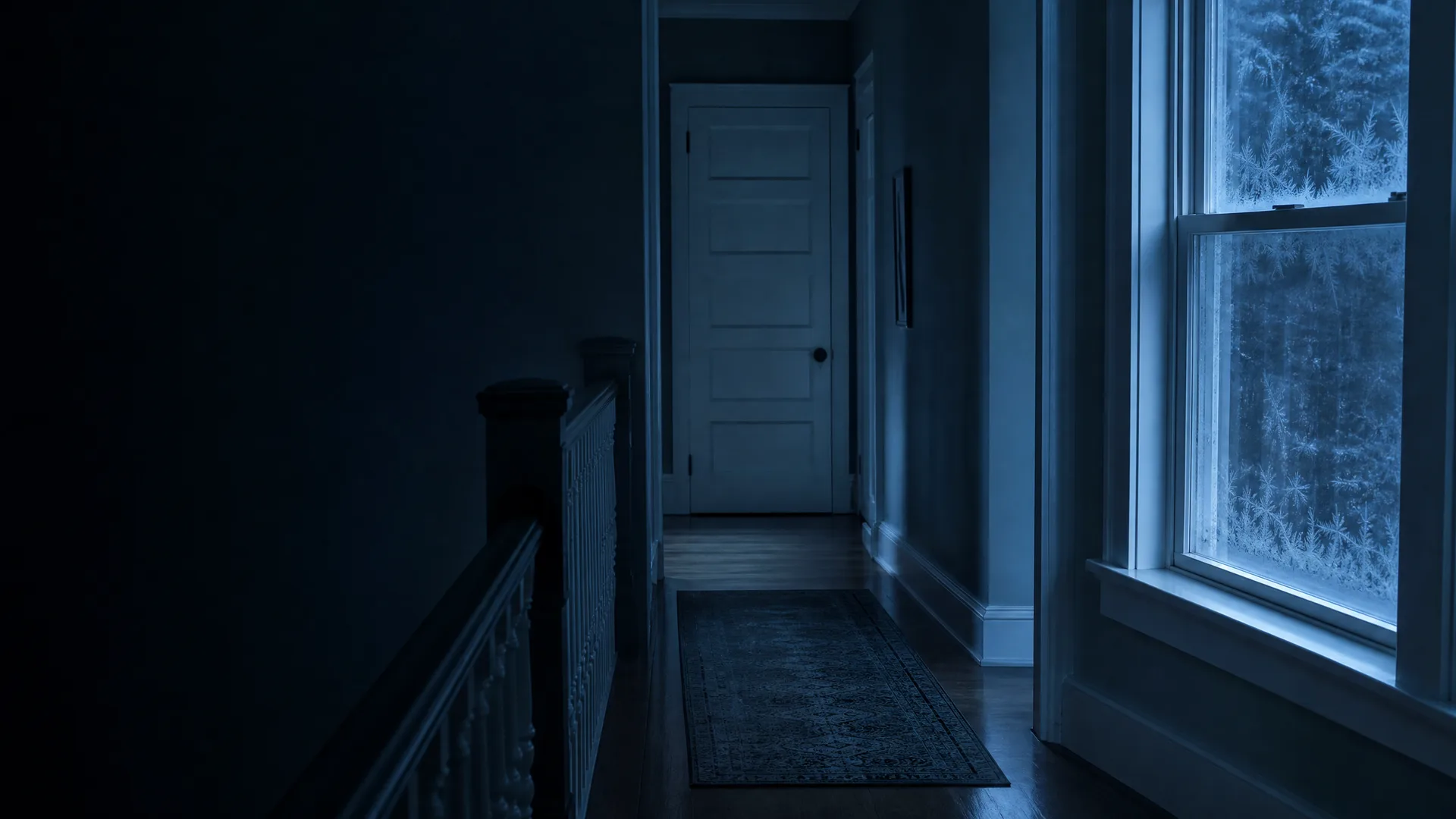
Dimly lit interior hallway at night with a closed white paneled door at the end, a long runner rug on a wood floor, a stair railing at left, and a frost-covered window admitting blue light at right.

You wake up because the room feels wrong before you know why. 2 a.m., and the hallway outside your kids' rooms is cold enough that you can feel it from the bed. You check the vent. Nothing. No air moving, no hum from downstairs. The thermostat screen is lit but the house isn't listening to it. Frost has crept onto the edges of the hallway window, and the only light is the dim blue glow off the display. Outside, the street is quiet, the kind of quiet that means everyone else's power came back too and it's just your furnace that didn't follow. You stand there in the cold a minute, waiting to see if it kicks on by itself.
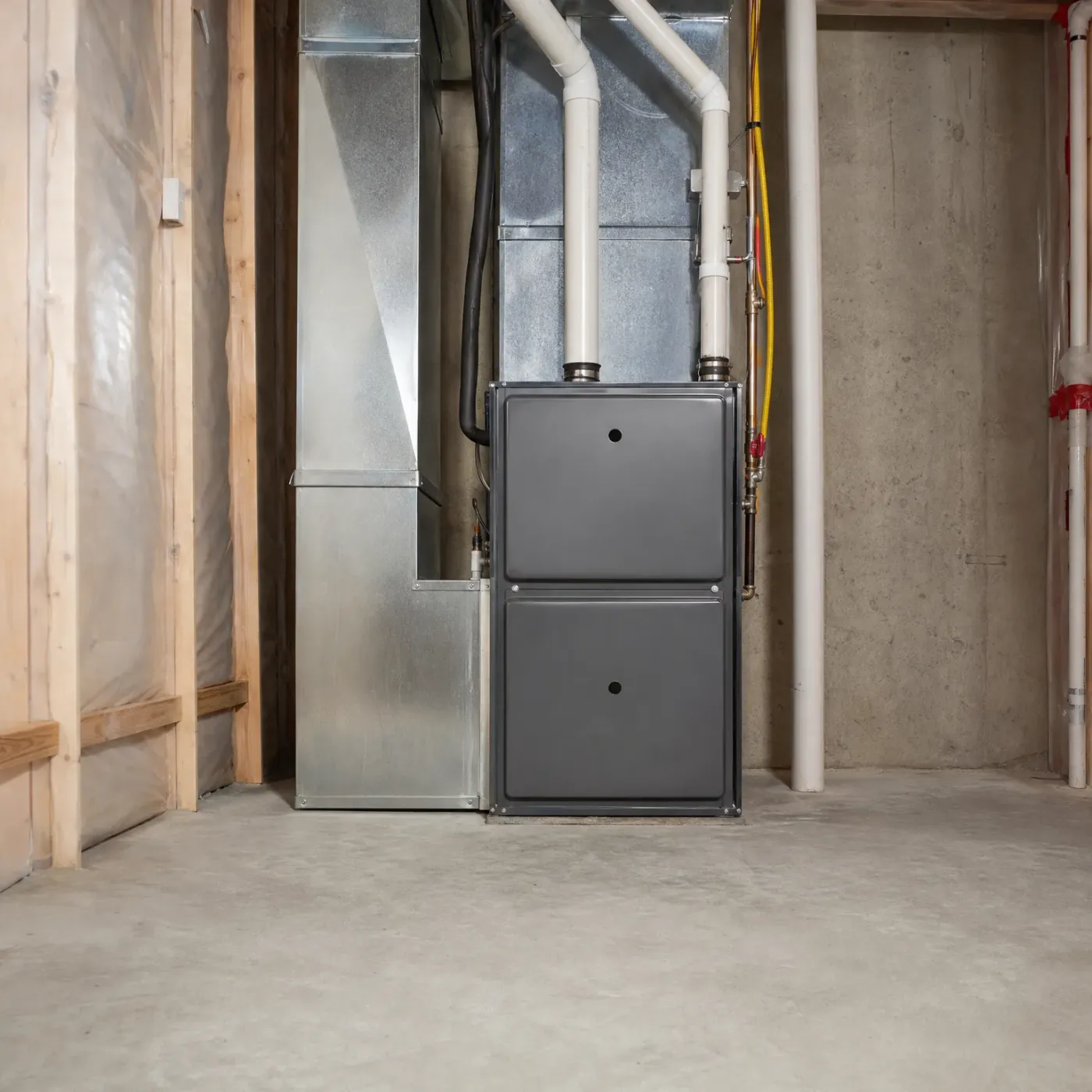
A gray high-efficiency furnace with two PVC vent pipes stands in an unfinished basement beside sheet-metal ductwork, a framed and plastic-covered wall, and a bare concrete wall with vertical pipes.
The igniter glows, the burners catch, and the blower sends warm air through the ductwork without a single light flickering on the control board.
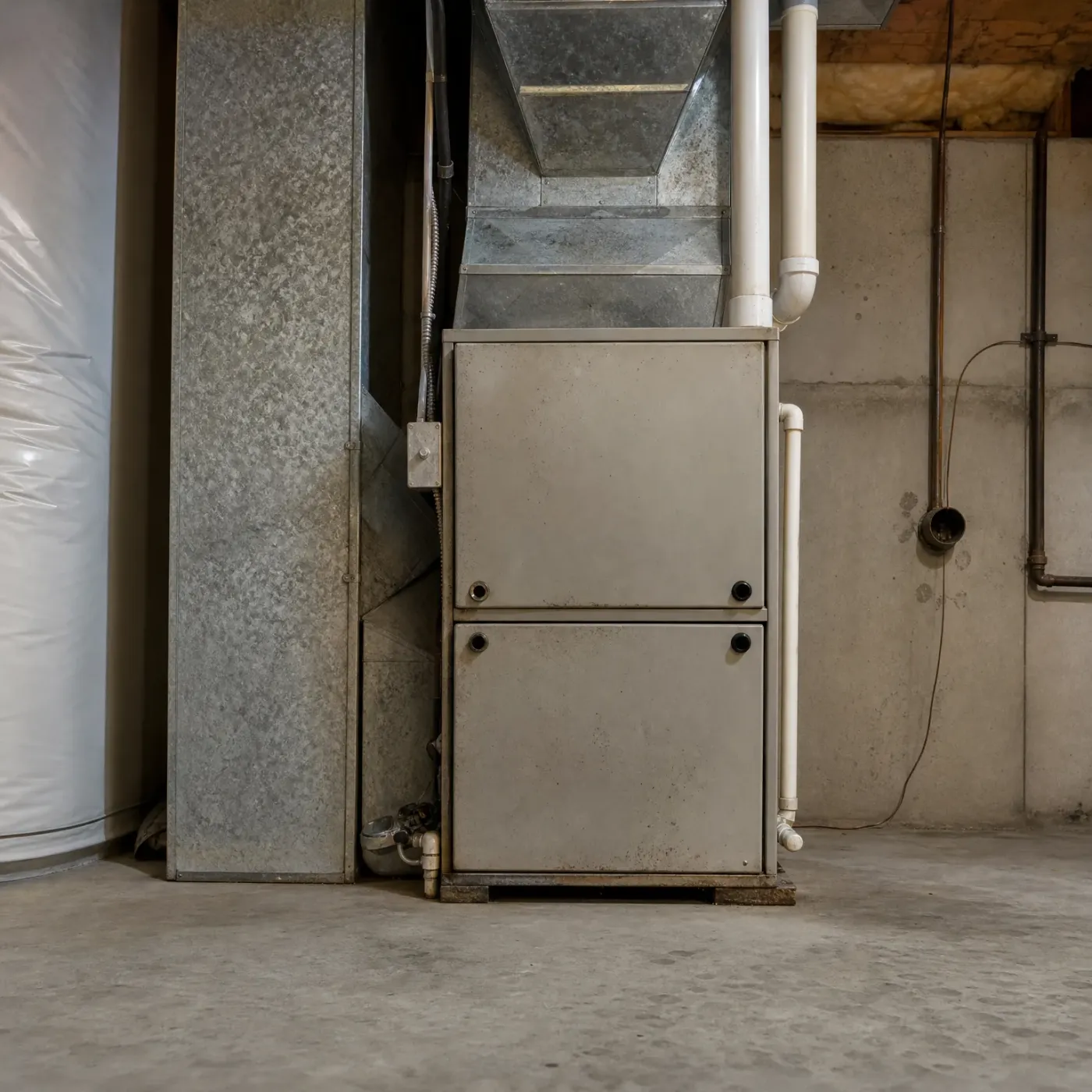
A gray furnace cabinet in a basement, connected to galvanized sheet-metal ductwork and white PVC pipes, against a concrete wall with exposed metal piping and insulation overhead.
The furnace sits dark and silent, its sheet-metal ducts and drain pipes doing nothing while cold air backs up through the house.
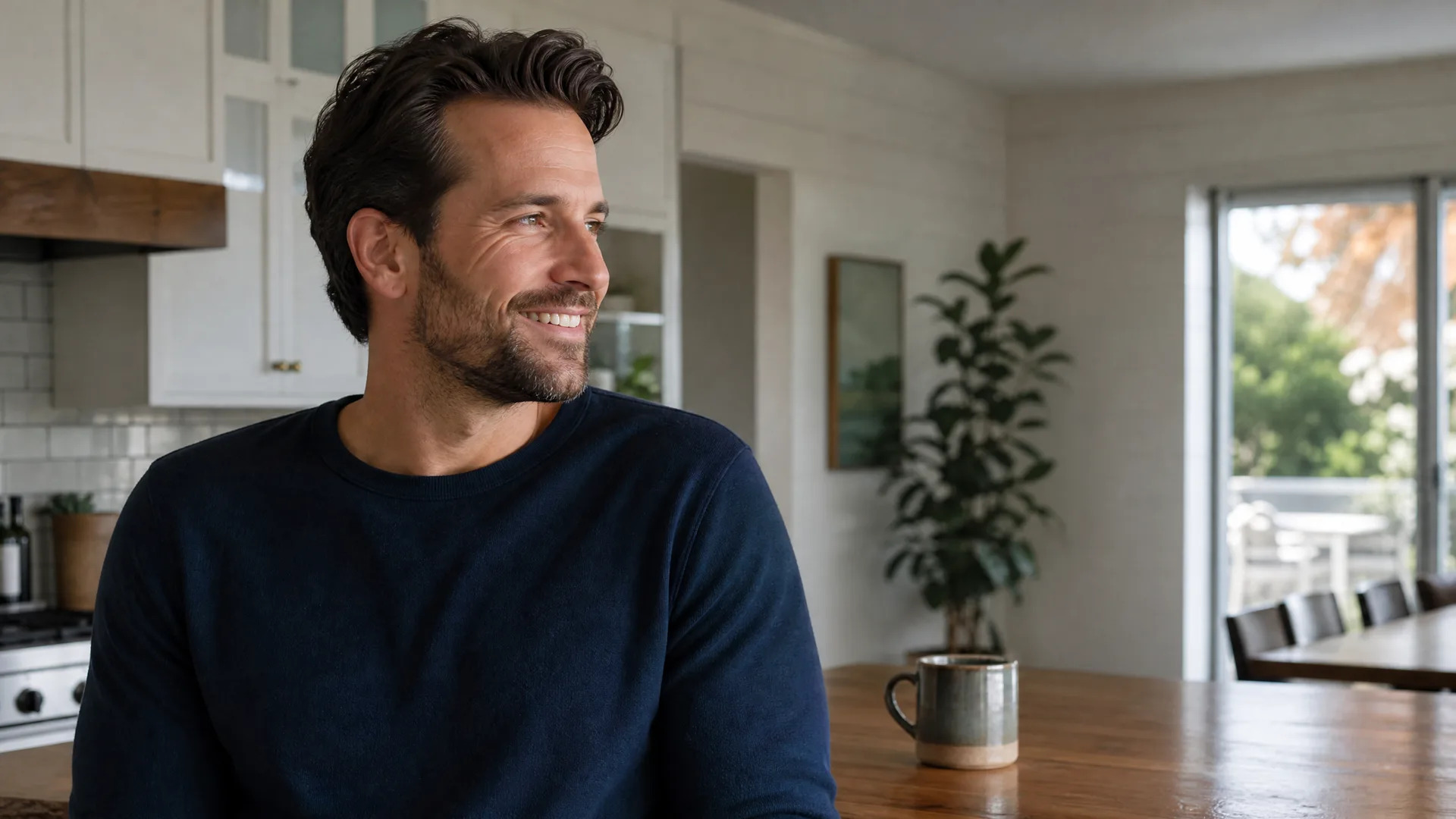
A smiling man in a navy long-sleeve shirt sits at a wooden table in a kitchen and dining area, with a ceramic mug, a potted plant, and a sliding glass door behind him.
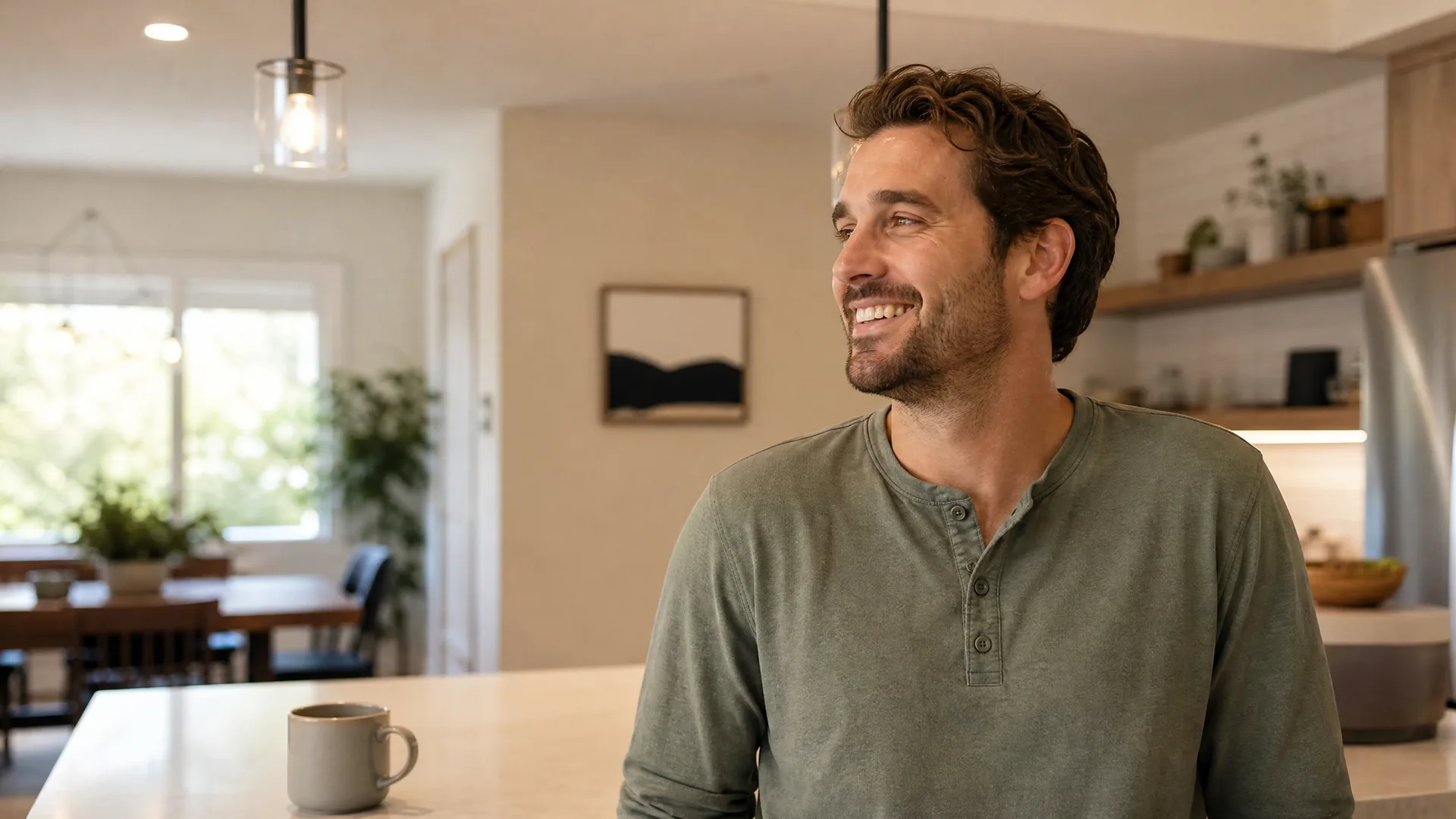
A smiling bearded man in a green henley shirt stands at a kitchen island with a gray mug, looking off to the side, with a dining area and shelves blurred behind him.
A smiling bearded man in a navy sweater sits at a white kitchen island with a ceramic mug, with open shelves, potted plants and a range hood behind him.
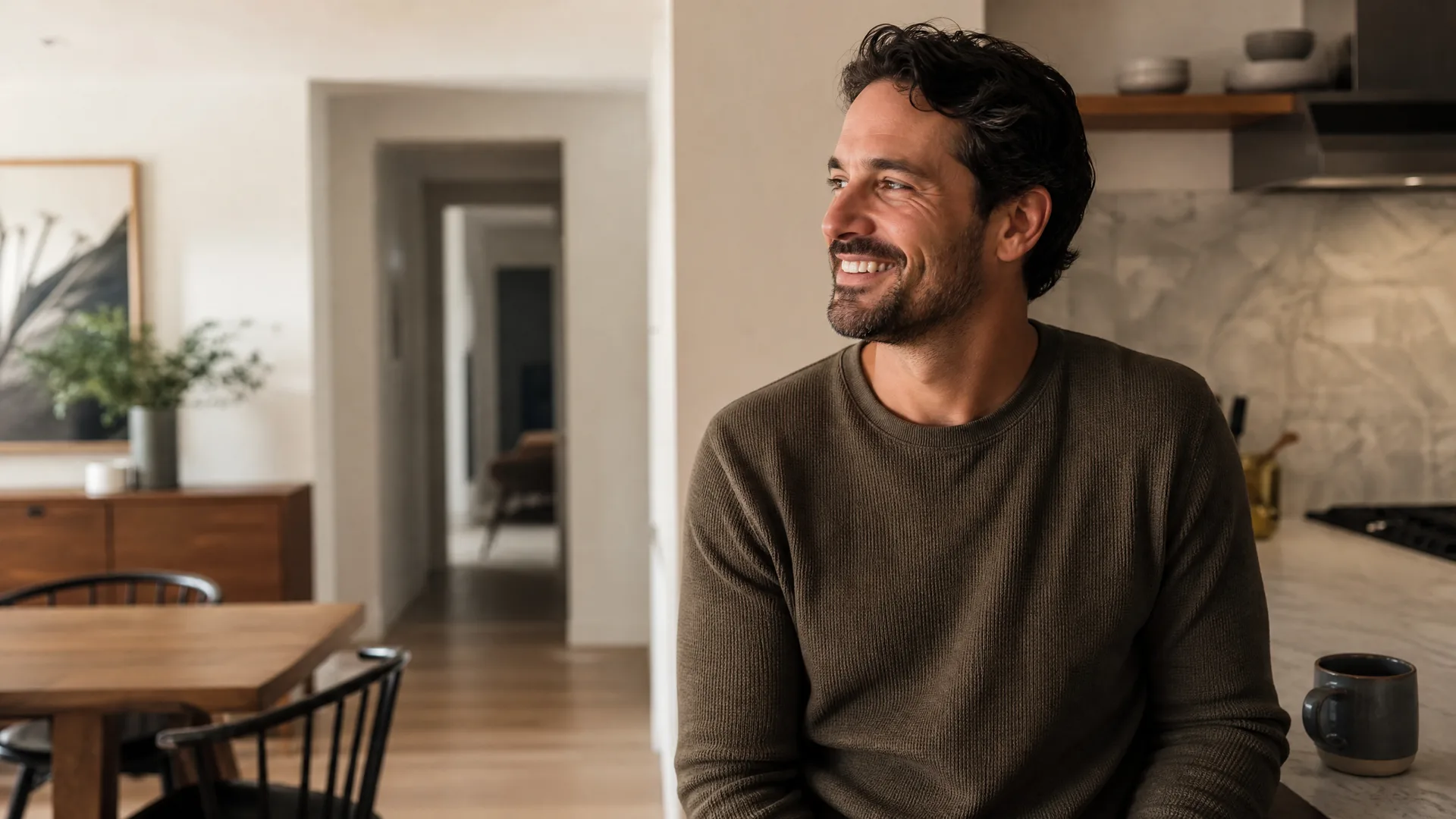
A smiling man in a dark olive long-sleeve shirt sits in a kitchen beside a counter with a dark mug, with a dining table, sideboard and hallway visible in the blurred background.

Hand off the furnace problem

You've already tried the switch and the breaker, and the furnace is still dark. At that point it's not a settings problem anymore. Something inside, the control board, the igniter, the flame sensor, didn't survive the power dropping out mid-cycle the way it should have, and no amount of flipping switches is going to fix that from your end. Gas furnaces run most of the year here, so a dead one isn't something to sit on, especially overnight with kids down the hall. A local contractor who works on these systems all winter has seen this exact failure after an outage before and knows where to look first. Send the request and that part stops being yours to figure out. You stop checking the thermostat every twenty minutes and let someone who does this for a living take it from here.

Why the restart gets stuck

  • Power loss mid-cycle can leave the control board waiting on a signal from a sensor that never finished its check.
  • Most furnaces run an ignition sequence that has to complete start to finish, and a cut partway through leaves it stuck.
  • The inducer motor has to prove it's pulling air through the venting before the control board will let gas reach the burners.
  • Some control boards hold a fault in memory until power is fully cut and restored, not just cycled at the thermostat.
  • A furnace that locked out from a bad ignition try before the outage won't clear that lockout just because power is back.
  • The flame sensor has to detect an actual flame within seconds of ignition or the board shuts gas off again on purpose.

A gas furnace doesn't just flip back on. It runs through a sequence, and every step has to report back before the next one starts. The inducer motor spins up first and has to pull air through the venting hard enough to trip a pressure switch, proving the exhaust path is clear. Only then does the control board open the gas valve and fire the igniter. The flame sensor has a few seconds to confirm a real flame is burning. If it doesn't, the board cuts gas on purpose, because unburned gas with no flame is the one thing it's built to prevent.

An outage can cut power at any point in that chain. If it hits while the inducer is still proving itself, or right as the igniter is trying to light the burners, the board doesn't pick up where it left off when power returns. Some boards hold onto that failure, treating it as a lockout rather than a one-time glitch, and that lockout stays until power is cut fully at the switch or breaker, not just reset at the thermostat. If the furnace had already struggled to light before the outage, that history can still be sitting in memory, and the furnace will refuse to start again for the same reason it failed the first time, outage or not.

A smiling man with dark curly hair in a navy t-shirt sits on a gray couch indoors, with a large-leafed plant and a window in the background.
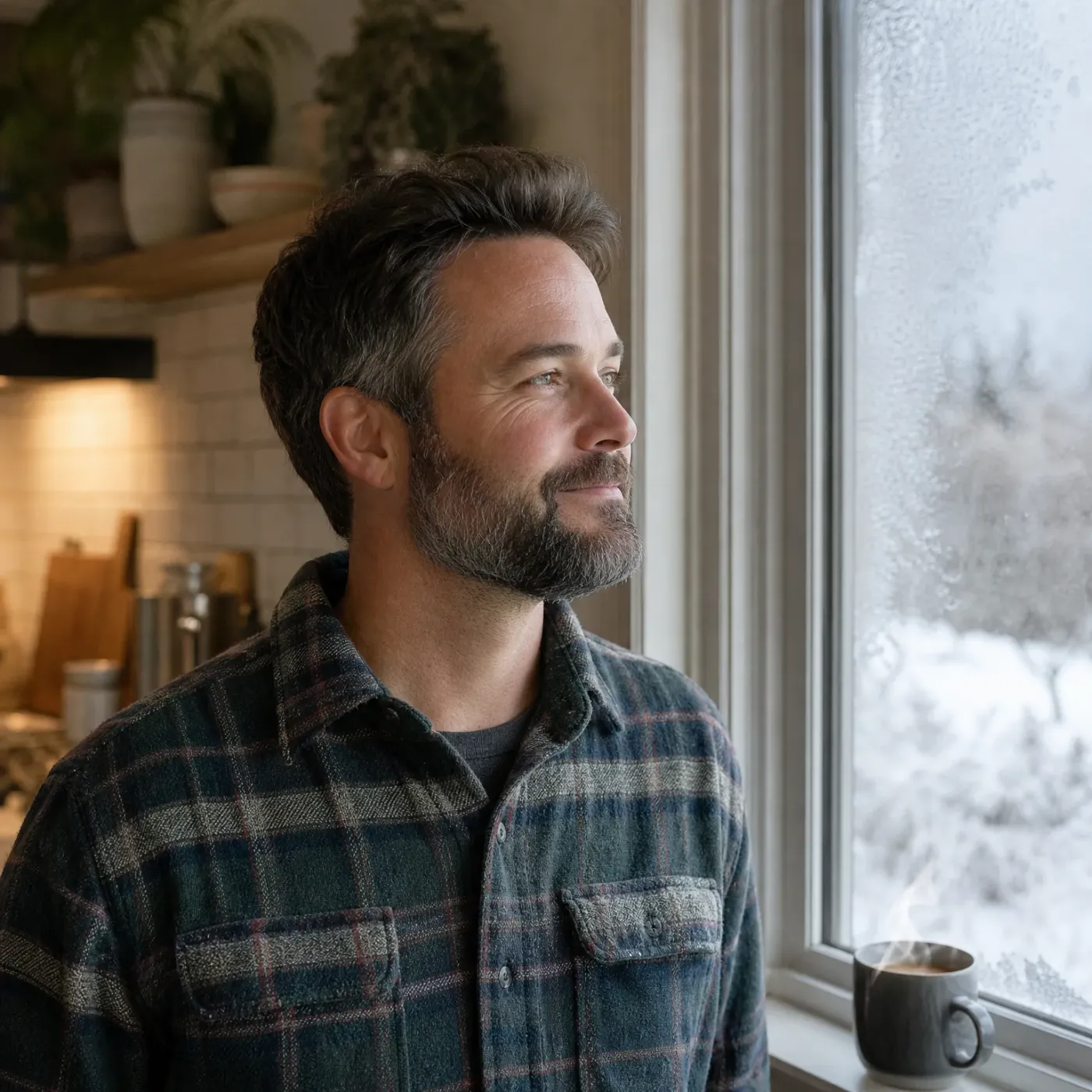
A bearded man in a plaid flannel shirt stands in a kitchen looking out a window toward snow-covered shrubs, with a steaming mug on the windowsill and potted plants on a shelf behind him.

One call, one contractor

The request goes to a licensed contractor local to your area who works on furnaces like yours all winter and knows what an outage usually knocks out.

Send it today

No fan, no flame, no click

If the furnace stayed dark after the switch and breaker check, the control board or igniter likely didn't survive the power cutting out mid-cycle.

Send it today

Winter nights average 40°F statewide

California nights average 40°F in December, January and February. That's cold enough that your furnace is doing real work most nights, not just taking the edge off. A furnace that won't restart after an outage leaves your house relying on 40°F air until someone fixes it.

NOAA nClimDiv 1991-2020 county normals weighted by homes

A furnace that won't restart after an outage is either a settings problem or a parts problem, and the switch and breaker test tells you which one you have. If it comes back, you're done. If it doesn't, something inside didn't survive the power dropping out mid-cycle, and that calls for someone who can open the panel and test it properly. The contractor who takes this request is local and works on furnaces through every California winter, so the failures that show up after an outage, a control board stuck mid-sequence, an igniter that didn't make it, are ones they've already seen this season. It's a single contractor getting the call, not several, so you're not fielding a round of competing quotes while your house sits cold. You've already done the part that was yours to do. What's left is a repair, and that's someone else's trade, not yours.

A dark wood cabinet with a paneled door and a ceramic pot of green foliage on top stands in a beige-walled room with white baseboard, a window at left, hardwood floor, and a patterned area rug.
A dark wood glass-front cabinet holding folded towels, woven baskets and a ceramic vase stands in a bathroom corner beside a window, with a potted fern and stacked towels on top and a freestanding tub partly visible at left.
A woven basket holding a green cushion and a cream fringed knit throw sits on a wood floor in a room corner beside a window and a dark wooden cabinet.
Corner of a room with a dark wood cabinet topped by a round vase, a linen curtain at a window, white baseboard, oak plank flooring with sunlight patches, and a woven jute rug in the foreground.
A dark wood sideboard against a pale wall holds a shallow stone bowl and a round ceramic vase with leafy branches, with sunlight from a curtained window falling across the wall, wood floor and woven rug.

Hand off the search today

Your request goes to one pro, not a list of companies.

Reach a local pro

No fee to send it, and nothing to sign.