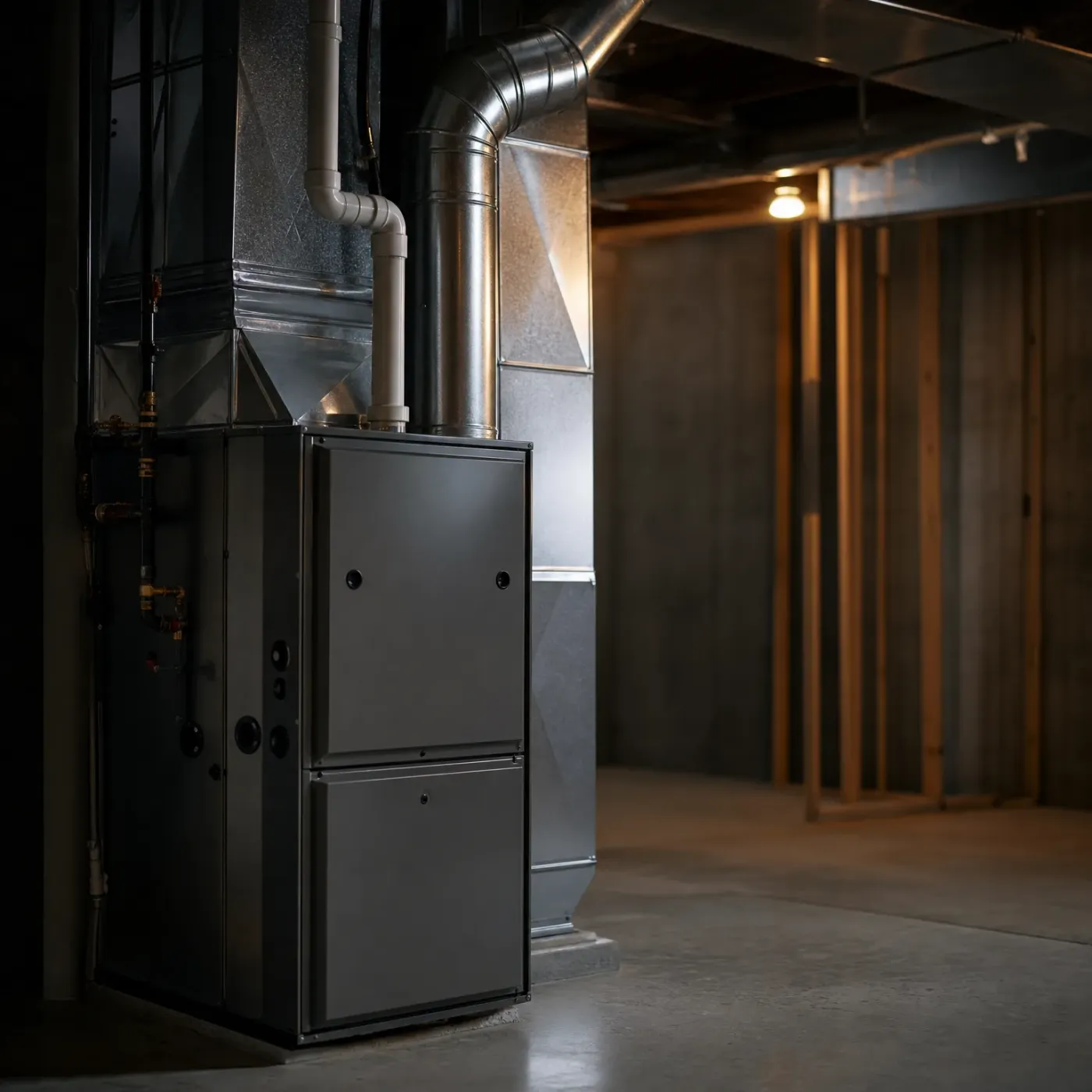




A dark gray furnace with two access panels stands in a basement, connected to galvanized sheet-metal ductwork and PVC pipes, with exposed wood framing and a bare bulb light in the background.

Let someone else find the pro

What size generator runs a furnace in California

A gas furnace runs on electricity too. The blower, the control board, the igniter all need power, so an outage shuts it down even with gas still flowing to the house. The right generator size depends on your furnace's starting watts, not just its running watts. Fill out the form and skip the search for someone who can size and install it right.

Let a pro reach out

A gas furnace in California usually only needs a generator in the 5,000 to 8,500 watt range, because the furnace itself isn't heating anything with electricity. It's just running a blower motor, a control board, and an igniter to move gas-heated air through the house. The blower motor is the part that decides your generator size, since it pulls a brief surge of starting watts, often two to three times its running watts, when it first kicks on. A furnace built for a home needs less generator power than central air conditioning would, since there's no compressor to start. Most households pair that furnace load with a few other circuits they want to keep alive during an outage, a refrigerator, some lights, maybe a sump pump, and that combined draw is what actually sets the generator size. Checking your furnace's nameplate for its starting watts, or having that number confirmed, tells you exactly where you land.

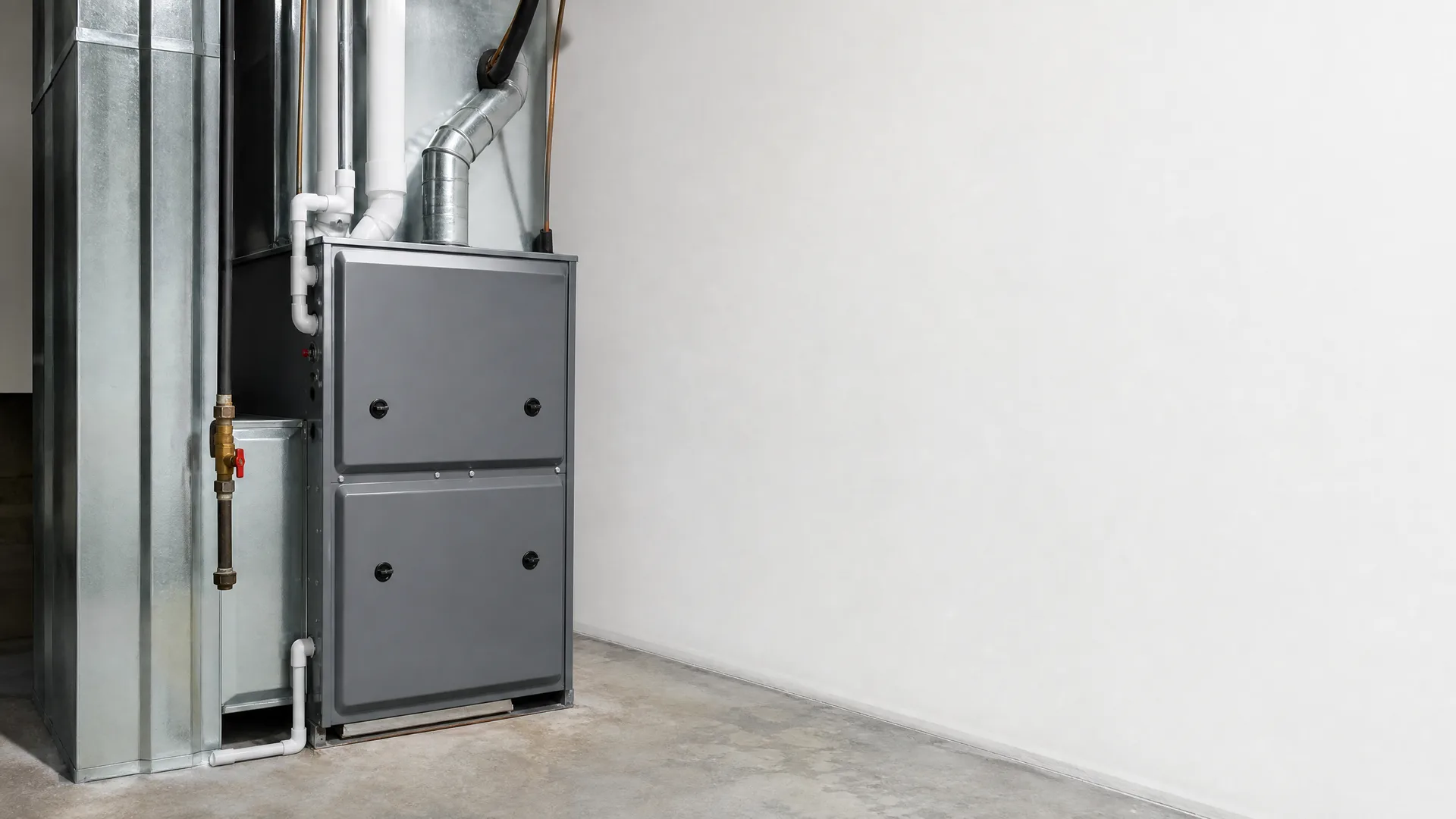
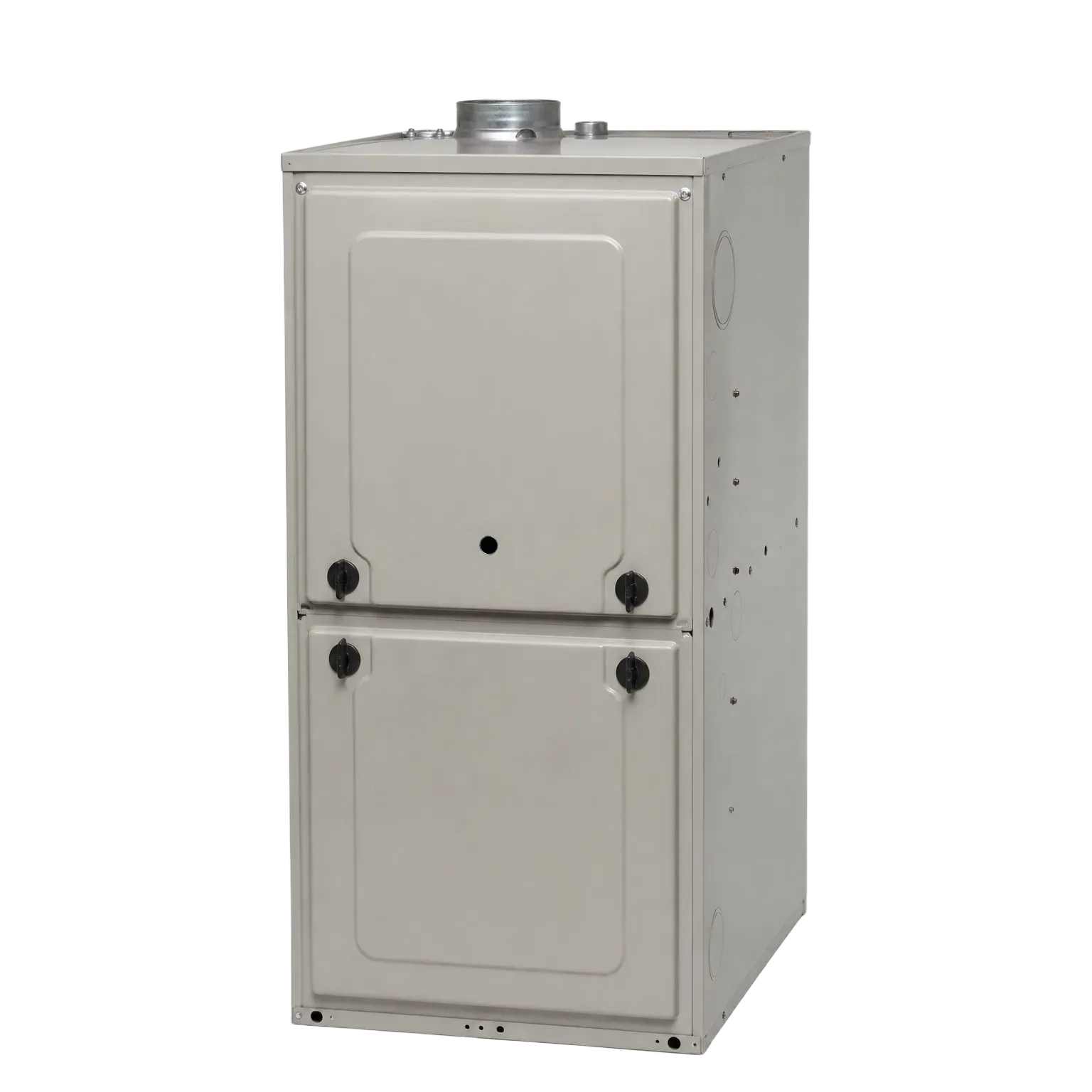
A gray residential furnace with two panel doors stands against a plain light wall in a concrete-floored room, connected to metal ductwork and white and copper pipes.

Why the starting watts matter

A blower motor draws far more power the instant it starts than it does once it's running. That first-second surge can run two to three times the motor's running watts. A generator sized only to the furnace's running load will stall or shut off the moment the blower kicks on. The listed starting watts on a generator has to clear that surge, not just match what the furnace draws once the motor is up to speed.

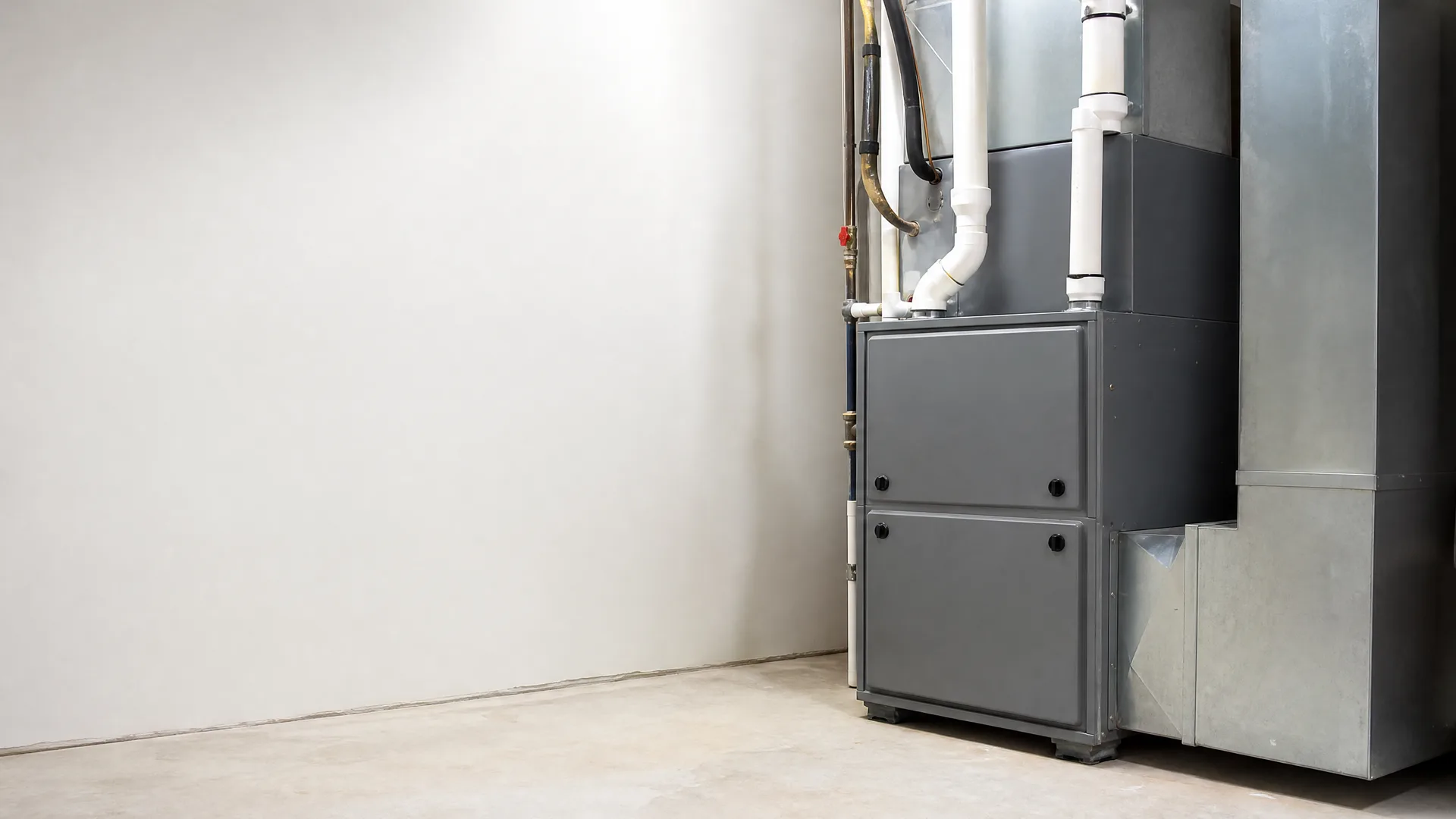
A gray high-efficiency furnace with white PVC venting pipes stands against a plain wall in a basement, connected to sheet-metal ductwork on a concrete floor.

What else shares the circuit

If the same generator is also running a refrigerator or a well pump, their starting watts stack with the furnace's. Most households run more than the furnace alone during an outage. Adding the running watts of other equipment to the furnace's starting watts gives a truer number than looking at the furnace by itself. A unit sized for the furnace alone can still come up short once the rest of the house is drawing from it too.

Portable or Standby for Your Furnace

Portable generator

  • A portable in the 7,000 to 8,500 watt range covers most furnace startup loads along with a few other circuits like the refrigerator and some lights.
  • You run cords from the generator to the furnace circuit, so placement outside and away from windows and doors matters every time you use it.
  • It has to be started and fueled by hand when the power goes out, which means someone has to be home and able to do it.
  • Fuel is usually gasoline, so you're storing it and rotating stock rather than drawing from a line already run to the house.
  • It costs less upfront than a standby unit and can also power other things around the house, not just the furnace.
  • It sits idle most of the year until an outage happens, so it needs to be tested and maintained to start reliably when needed.

Standby generator

  • A standby unit sized above the furnace's starting watts switches on automatically within seconds of an outage, with no one needing to be home.
  • It's wired directly into the house's electrical panel, so the furnace and other chosen circuits come back on without cords or manual setup.
  • Most run on natural gas or propane, pulling from a line already feeding the house rather than a fuel tank you refill.
  • It can be sized to carry the furnace along with the water heater, refrigerator, and other circuits at the same time, not just one.
  • Installation involves connecting it to the home's gas line and electrical panel, work that goes beyond plugging in a portable.
  • It costs more to install than a portable but runs unattended for as long as the outage lasts and the fuel supply holds.
A smiling man in a dark navy sweater sits on a light sofa in a living room, with a glass bowl of popcorn on a wooden coffee table and bookshelves behind him.
A smiling man in a dark green sweater sits on a tan leather sofa in a dimly lit living room, with a bowl of popcorn in the foreground and a kitchen area blurred behind him.
A smiling middle-aged man in a dark shirt sits on a gray sofa in a living room, with a bowl of popcorn on a side table and shelves, a window and kitchen area behind him.
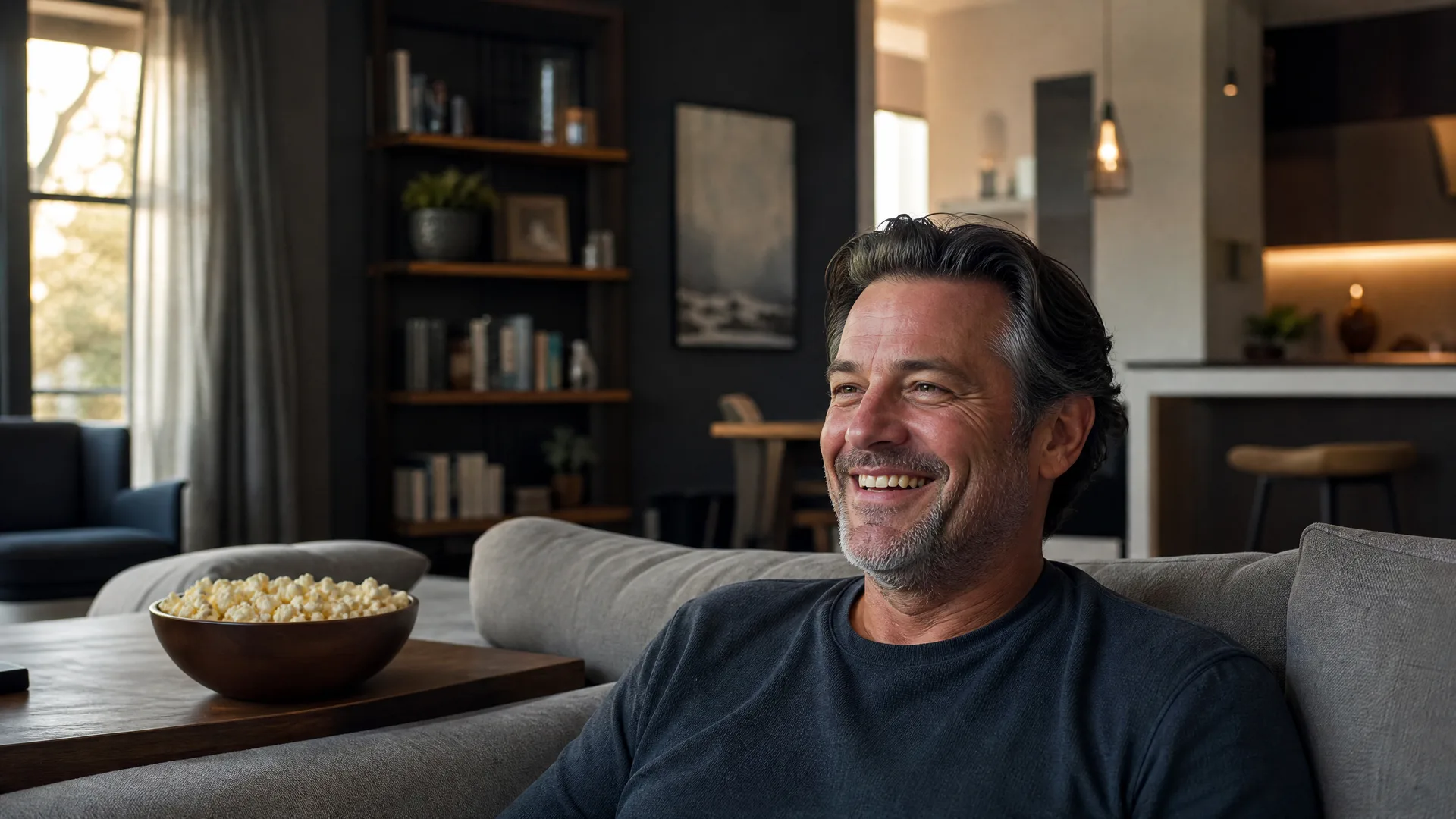
A smiling bearded man in a dark gray t-shirt sits on a gray couch in a living room, with a large glass bowl of popcorn on a wooden table in the foreground.

One request and it's handed off

Skip collecting and comparing quotes for the new furnace.

There's no charge for the request.

When the power goes out on a cold night, the furnace is the first thing you notice sitting idle, and the thermostat still showing a set temperature it can no longer reach.

A generator sized for the furnace's startup watts brings the blower and igniter back the moment it kicks on, so the house is working to warm up again instead of sitting there cold.

A woman with dark hair in a bun reclines on a sofa with her eyes closed, wrapped in a cream fleece blanket, a closed blue hardcover book resting in front of her, with a lit lamp and a vase of dried flowers in the background.
A smiling bearded man in a navy sweater sits at a candlelit dinner table with a glass of red wine, a bowl of salad, and plates of food in the foreground.

Sizing for the furnace alone

A generator picked to cover just the furnace, its blower, control board, and igniter, can run in the 5,000 to 8,500 watt range and get heat back on. That leaves little or nothing for the rest of the house. The refrigerator stays off, lights stay off, and if you're on a well, the pump stays off too. For a short outage this is often enough. For one that runs into a second or third day, you're weighing a warm house against a fridge full of food going bad, or hauling water.
Sizing for the whole house

Covering the furnace along with the refrigerator, some lighting circuits, and maybe a well pump pushes the number up, often into the range of a standby unit rather than a portable. This costs more upfront and usually means a transfer switch wired into the panel instead of extension cords run room to room. What you get back is not having to choose what stays on. An outage in January stops being a question of which rooms get cold or which food gets thrown out.

Winter nights average 40°F statewide

On a 40°F night, your furnace isn't running once in a while, it's cycling most of the night to hold the thermostat setting. That's more starts for the blower, which is the load your generator has to be sized for.

NOAA nClimDiv 1991-2020 county normals weighted by homes

A closed silver laptop and a ceramic mug of dark coffee sit on a wooden table in front of two chair backs, with a kitchen counter, tiled backsplash, wooden cutting boards, a vase of greenery and a potted plant by a window behind.

A 5,000 to 8,500 watt generator covers most furnaces here

Your furnace's blower, control board, and igniter are what need power, and sizing for their starting watts rather than their running watts is what keeps the generator from stalling when the outage hits on a cold night. For most furnaces in California that lands in the 5,000 to 8,500 watt range, with room left over depending on what else in the house needs to run at the same time.

Once you know that number, the rest of this is someone else's job to work out. Instead of calling around to find an electrician who installs generators, explaining your furnace and your panel over and over to each one, then sitting with a stack of quotes trying to tell them apart, you send one form. A licensed installer takes it from there, sized to your furnace and your house, and the search is off your plate.

A living room corner with a beige upholstered armchair holding navy and striped cushions, a small round wooden side table with a carved bowl and a potted green plant, a framed landscape picture on a pale wall, built-in shelving, and a curtained window.
At dusk, a dark board-and-batten house with a standing-seam metal roof and lit entry walkway of stone pavers, with two large outdoor heat pump units on a stone-walled pad at right and trees and hills in the background.

Furnace Installation

Done looking for a furnace pro

Step 1 of 3: Equipment
  • A dimly lit living room corner with a beige upholstered sofa holding a dark green cushion and a chunky knit throw, beside a wooden sideboard with a lit ceramic table lamp, a small potted plant, and a wooden bowl, with a framed artwork on the wall and a mug on a book in the foreground.
    • Describe your furnace job, and a local pro who handles it gets in touch.
    • A local installer who puts in furnaces gets your project.
  • A round wooden coffee table holding a round stone vase of green foliage, a lit candle in a glass container, and a small dark bowl, with a beige sofa, cushions and knit throw behind and a window at left.
    • After this form, you can stop searching for a furnace pro.
    • One request and the search for a pro is handled.
  • Sunlit living room with a wooden coffee table holding a ceramic vase of leafy branches and a carved wooden tray with two stacked books, in front of a beige sofa with tan and green cushions and a potted plant near a window.
    • Skip searching for a furnace pro and answer a few questions instead.
    • One form replaces the calls you'd make to find a furnace pro.
  • Interior corner with a lit ceramic table lamp and wooden bowl on a wood sideboard, a framed picture and branch-filled vase behind, a knit throw over an upholstered chair, and a lit candle in a glass holder, stoneware mug and round planter of green foliage on a wooden table in the foreground.
    • One installer gets your project, so there's no bidding war over it.
    • Your request goes to one pro, not a list of companies.