Your furnace kicks on and you hear it, a thin whistle somewhere around the unit or coming through the vents. It's not loud enough to call an emergency, but it's new, or it's gotten worse, and you want to know if it's something to deal with now or something that can wait until you're ready to make a call.
It's air being forced through a space too small for it
A whistle almost always means air is squeezing through a gap that's narrower than it should be. The most common cause is a dirty air filter, since a filter clogged with dust forces the blower to pull air through a smaller opening, and that pull makes the sound. A loose duct connection, a closing damper, or a return vent that's partly blocked by furniture can do the same thing. Gas furnaces push air hard to move heat through the house, and in a system with tight or older ductwork, it doesn't take much restriction to turn that airflow audible. The sound itself won't damage anything right away, but it's a sign the furnace is working harder than it needs to, and on a system that already runs most of the winter, that adds up.
Is that whistle something you can ignore
You hear it most when the furnace first kicks on, a thin, steady note that fades once the blower gets going, or stays the whole cycle. Sometimes it's louder at one vent than the rest. Sometimes it's not a whistle so much as a hiss near the unit itself, or a squeal that rises and falls. You might notice a room or two running colder than the others, or the furnace cycling more than it used to. None of that is an emergency. But a whistle usually means air is being forced through a gap it shouldn't fit through, and left alone, that's the furnace working harder than it needs to for the same heat, which shows up on your bill before it shows up as a bigger repair.
A furnace with a clear return path and a clean filter moves air quietly, with no whistle at the unit or the vents.
A furnace running on a blocked filter or a closed vent forces air through a narrow gap, and that's the whistle you hear.
A furnace moves a set amount of air every cycle. The blower doesn't care what's in the way, it just pulls. When the return side gets narrow, whether that's a dirty filter, a register someone shut, or a duct that was never sized right for the system, the air speeds up getting through that gap, and that's the whistle. It's a pressure problem, not a mechanical one. That's also why the sound often tells you where to look before anyone opens a panel. One loud vent and quiet ones elsewhere points at that single register or the duct feeding it. A whistle at the unit itself, especially right when it kicks on, points at the filter or the main return. None of this touches the burner or the igniter. Gas furnaces pull combustion air through their own separate intake, so a whistle from the blower side has nothing to do with the flame or how the gas burns. If the sound showed up right after a filter swap or duct work, that timing isn't a coincidence. Something about that change narrowed the path, and a furnace repair tech can tell you exactly where.
What's actually making that sound
A dirty filter is the most common cause, since a clogged furnace filter narrows the only path air has into the system.
The blower motor pulls air through the return duct no matter how tight that opening gets, so a blocked filter just turns up the noise.
A whistle at one vent and not the others usually means that register is closed or blocked, not that the furnace itself is failing.
Undersized or closed-off return ducts force the same volume of air through a smaller opening, and that pressure difference is what makes the sound.
Gas furnaces draw combustion air separately from the air they heat, so a whistle from airflow doesn't mean anything is wrong with the burner or the igniter.
A whistle that starts only after new ductwork, a filter change, or vent work points straight at the part that changed.
Before you get your furnace repairAfter you get your furnace repair
Skip calling around
Only one pro gets your request, so you hear from one company.
It costs nothing to send, and you don't have to hire anyone.
Leave It or Get It Checked
Leave it alone
The whistle usually means the furnace is working harder than it should, not that it's about to fail outright.
A blocked filter or closed vent doesn't fix itself, so the noise tends to stay the same or get louder over weeks.
The blower motor keeps pulling the same amount of air, so the extra strain lands on it every time the furnace runs.
With gas furnaces, long-term airflow problems can affect how evenly the unit heats your house, not just the noise you hear.
Power in California costs more than most of the country, so a furnace working against a restriction keeps that cost higher than it needs to be.
Waiting doesn't tell you whether the cause is a simple filter swap or something inside the furnace, and that's hard to guess from the sound alone.
Get it looked at
A contractor who services furnaces all season can usually place the whistle, filter, vent, or something else, within minutes of hearing it.
You explain the problem once, to the person who's actually going to fix it, instead of describing it over and over while you call around.
A local contractor already knows the kind of furnace setups common in California homes and what tends to cause this in them.
You're matched with one licensed contractor, so you're not fielding calls from several companies trying to win the job.
If the cause turns out to be something more than a filter, you'll know that early instead of after months of the blower working harder than it should.
You skip the part where you'd otherwise search, compare, and sort through quotes just to get someone qualified to take a look.
1
Air gets pulled in through the return duct and filter.
2
A blocked filter narrows that opening to a tight gap.
3
Air speeds up to force its way through the gap.
4
Fast air through a narrow space makes a whistle.
What that whistle is doing to your gas furnace right now
Every day that furnace pulls air through a narrowed gap, the blower motor works harder to move the same amount of air through your house. Power in California already costs more than most of the country, and a motor working against a blocked filter or a closed vent draws more of it, cycle after cycle. You may not see that on the bill as one line item, but the motor doesn't get a break from it.
Finding someone qualified to look at it is its own chore: searching contractor sites, calling a few, explaining the same whistle to each one, then sitting with quotes that don't line up. A match here sends one licensed contractor local to you, someone who works on furnaces like yours all winter and knows whether it's the filter, a vent, or something further into the system. You explain it once.
Quiet, and moving air the way it should
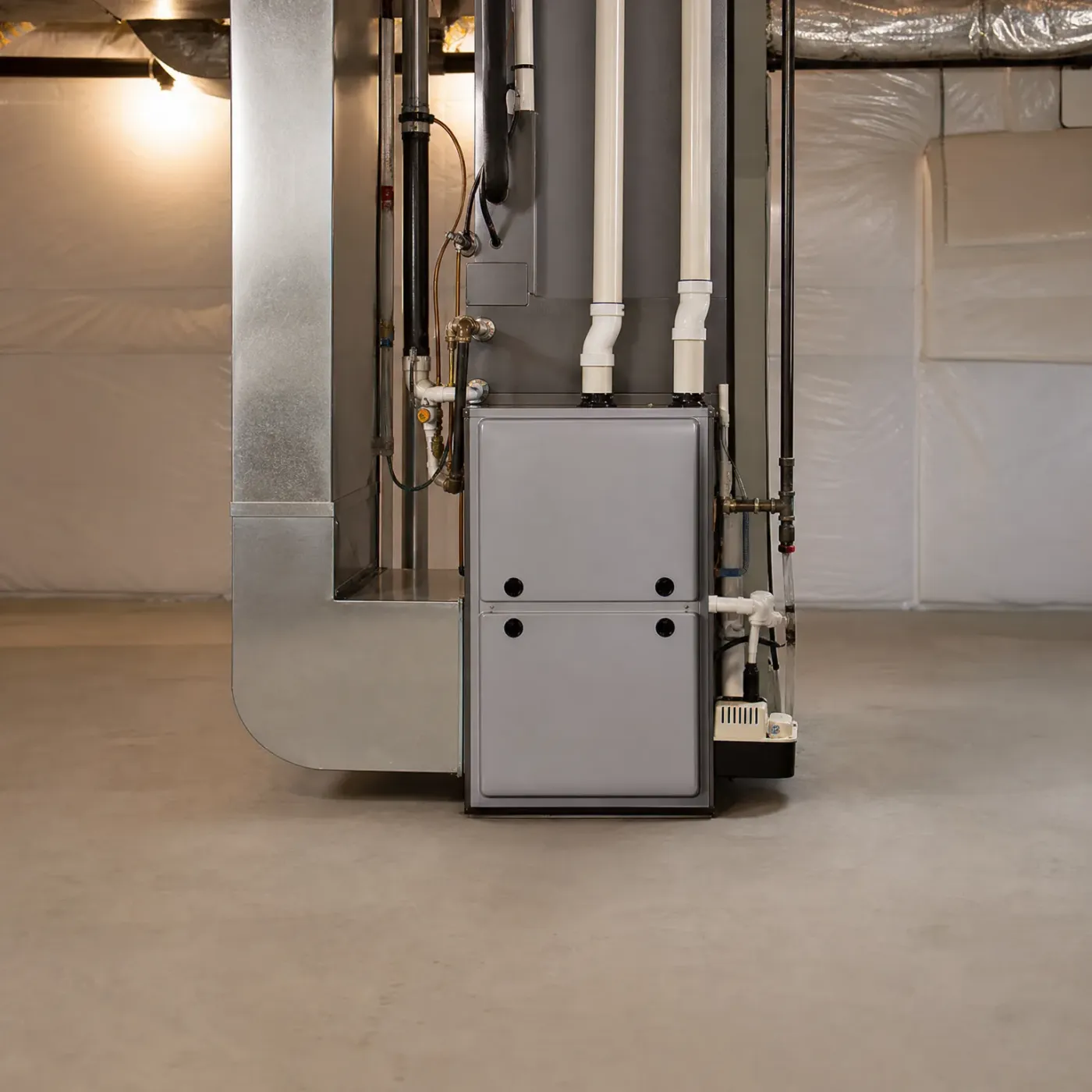
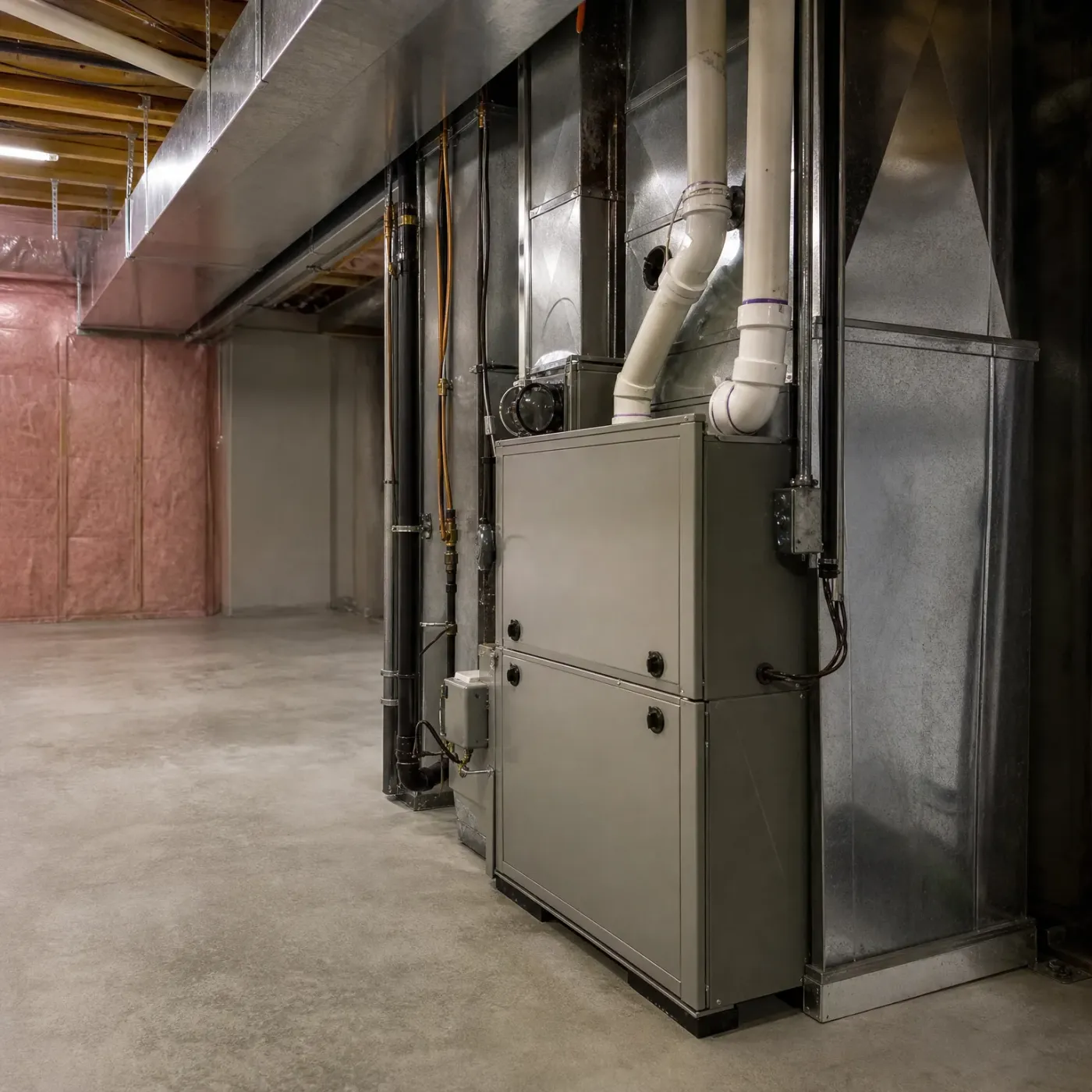
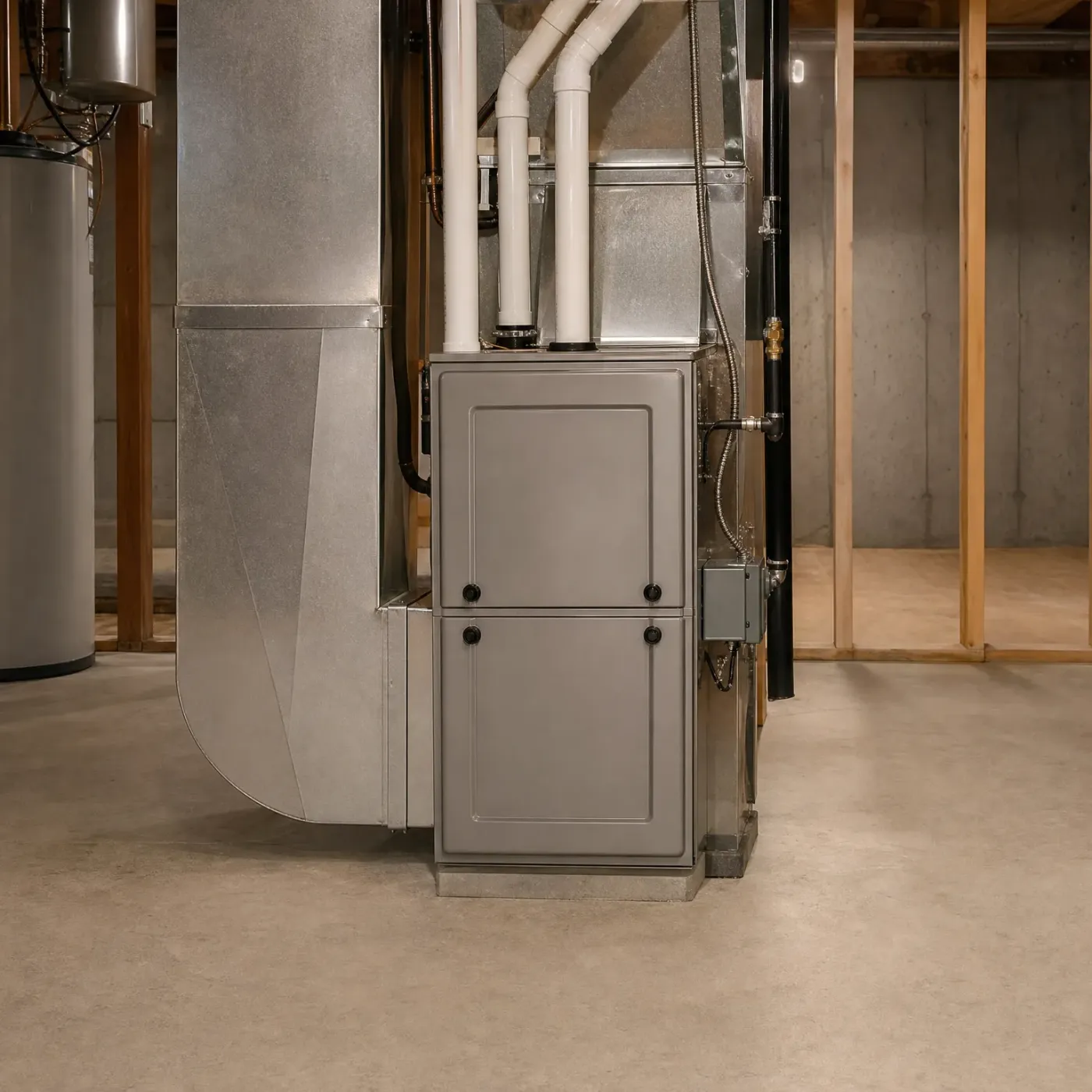
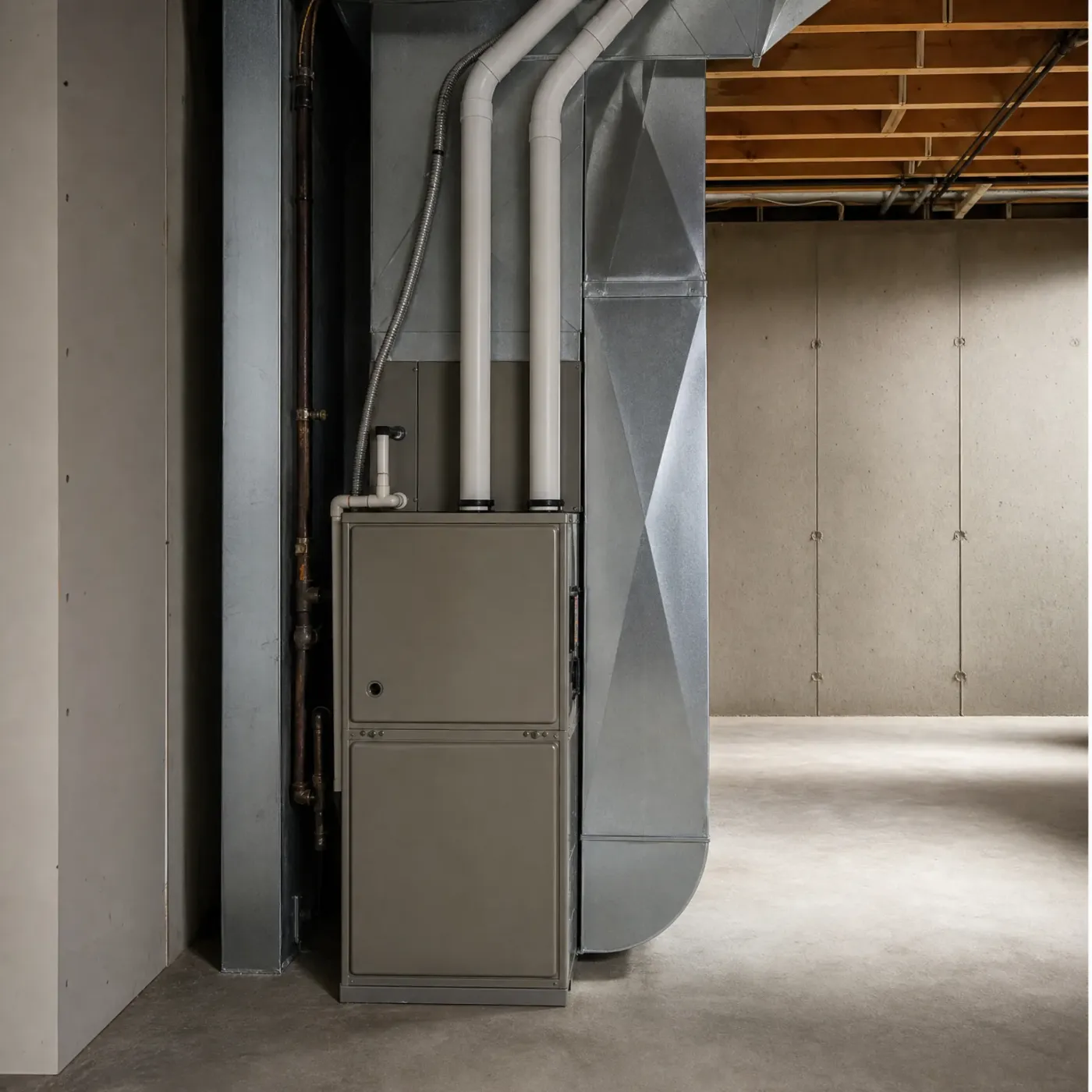
This furnace sits on a clear return path, ductwork and flue pipe routed clean through the basement. Air comes in through the filter without a fight, so the blower runs at a normal pace and you don't hear it. No whistle at the unit, none at the vents.
An older furnace, straining to breathe
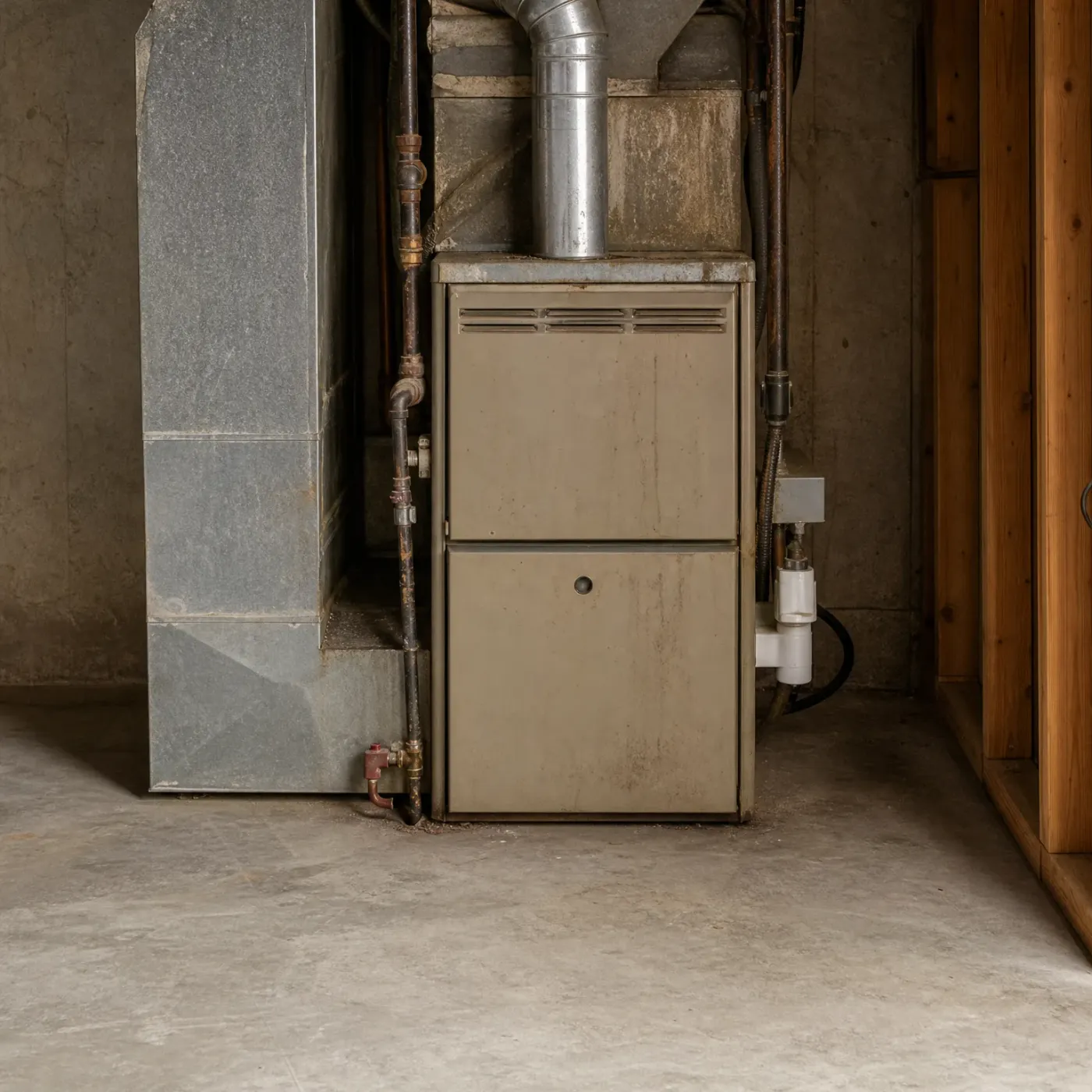
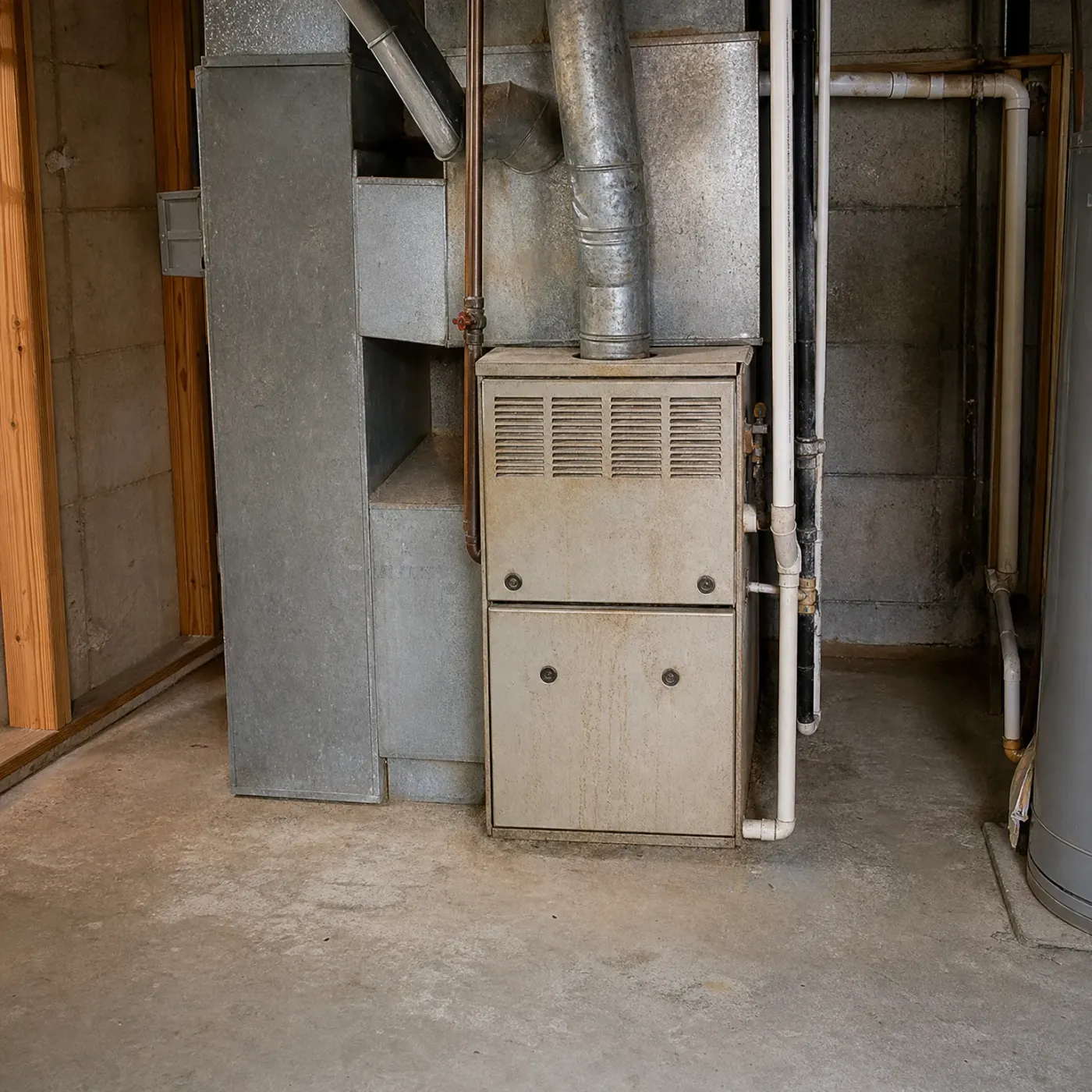
This one still has galvanized ductwork feeding it and a return plenum doing its job, but something upstream, a dirty filter, a closed vent, is narrowing the air coming in. The blower pulls harder to compensate, and that's the whistle working its way through the house.
Winter nights average 40°F statewide
Winter nights average 40°F across the state, so your furnace isn't running flat out the way one back east might. It's cycling on and off for shorter stretches, and that whistle shows up every time the blower kicks in, each cycle pulling air through whatever gap is narrowing it.
NOAA nClimDiv 1991-2020 county normals weighted by homes
A whistle is air forcing its way through a gap that shouldn't be there, usually a filter clogged enough to choke the return. It's not an emergency, but it doesn't clear up on its own, and the blower keeps working harder for as long as you leave it. A furnace tech who works on these systems all winter has heard this exact whistle plenty of times and knows within a few minutes whether it's the filter, a closed vent, or something further back in the ductwork. You get matched to one licensed contractor local to you, not a list of five companies calling you back at once, so you explain the problem once and deal with one person who already knows what to check first. No more sorting through quotes or running down who's even available this time of year. Once that whistle is gone, your furnace is pulling air the way it's supposed to, and the blower isn't straining to make up for it.