Tell us about the job
Takes about a minute. No obligation.
Sizing a furnace for a Butte County home is not a generic calculation. A contractor has to work out the true load this structure places on the burner and heat exchanger across a long heating season before they can quote anything meaningful. Homes in Butte County, CA run heat about six months a year, from November through April. The burner, the igniter, and the heat exchanger cycle repeatedly through all of those months, and a system that was undersized at installation accumulates wear on those parts faster than one sized to actual load. A poorly sealed duct run or an undersized heat exchanger shows up in fuel bills and early fatigue, not years down the road.
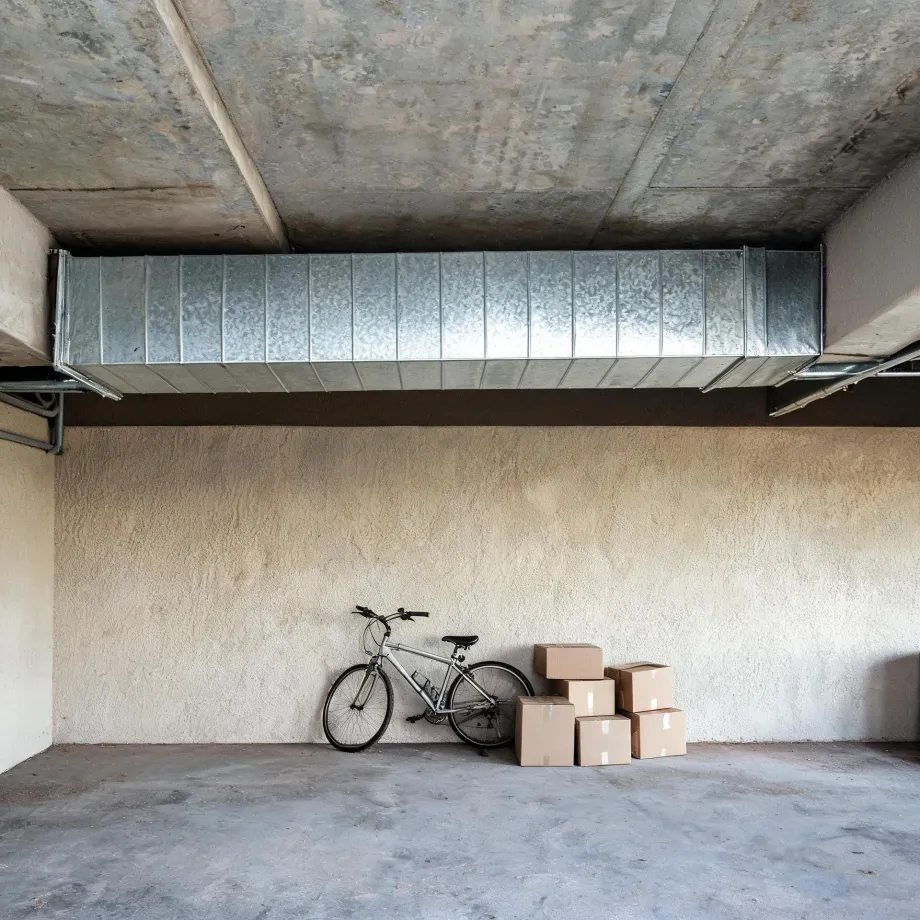
Ductwork sized for a different era of equipment is what a contractor opens the job around here. Half the homes in Butte County, California were built in 1981 or earlier (2020-2024 ACS 5-year). Ducting laid in for an older system carries a specific cross-section, a specific path through the house, and a specific return-air arrangement, and a new furnace has to work within all three or the install includes remediation before the unit ever fires. Electrical service is a separate question, but the duct layout is usually where the scope either holds steady or expands.
What Gets Installed With a New Furnace
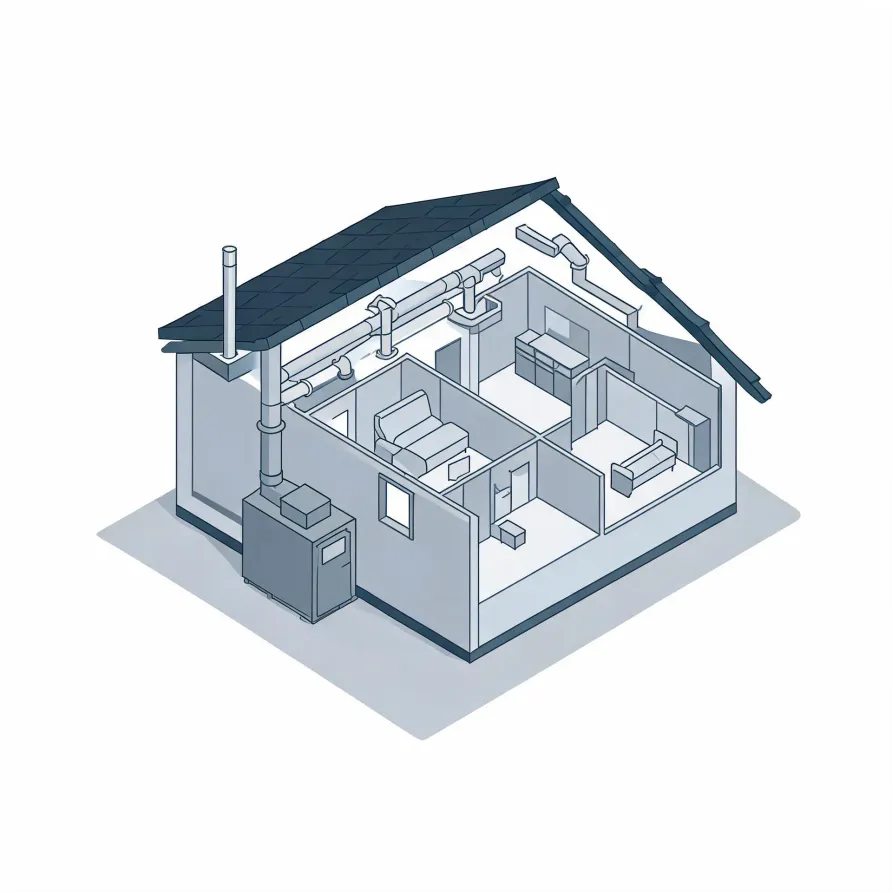
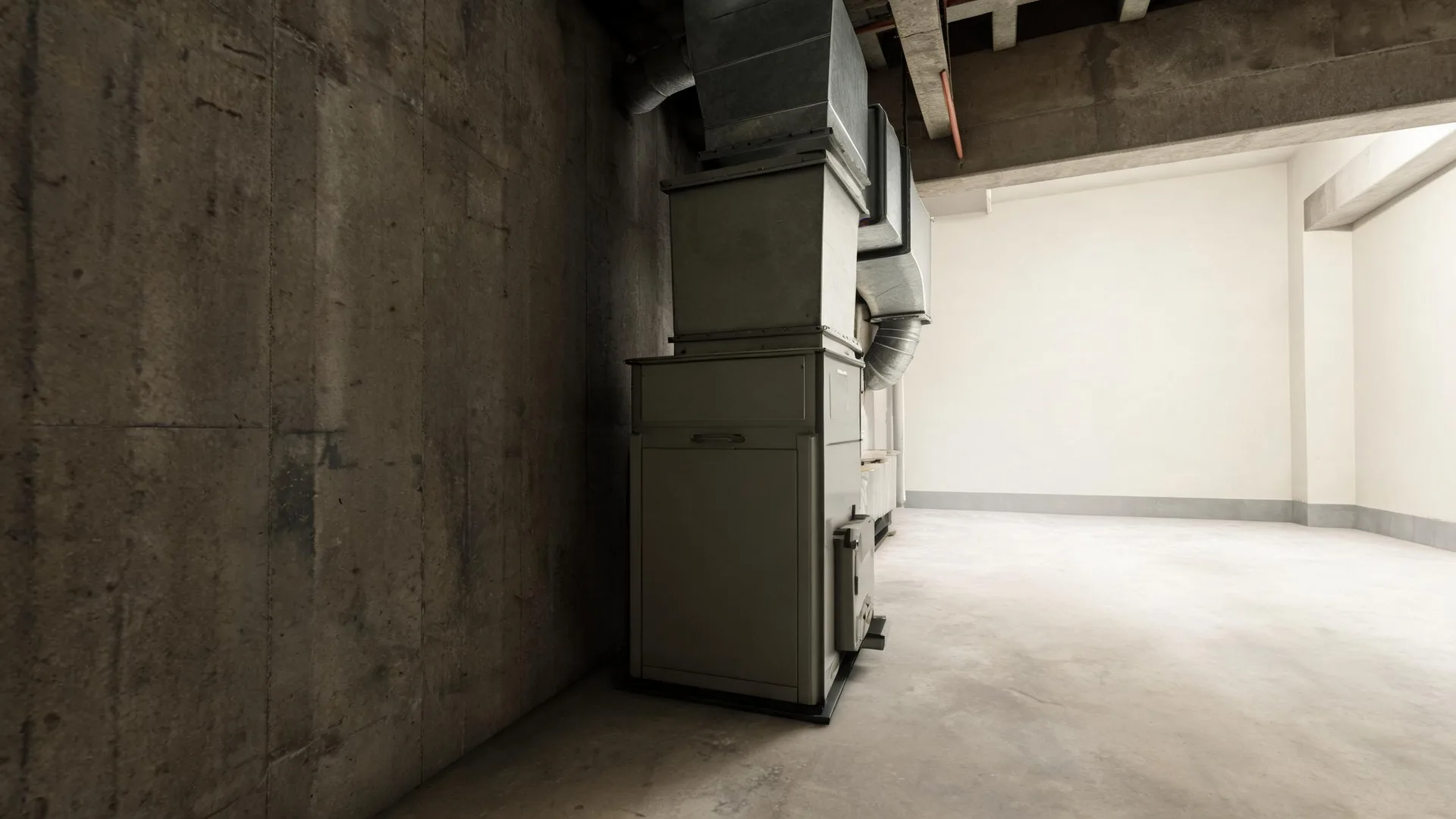
The furnace itself sits inside the house, most often in a basement, utility closet, or garage. It holds the burner assembly, the heat exchanger, and the blower in a single cabinet. A flue pipe runs from that cabinet to an outside wall or up through the roof, carrying combustion gases out of the home.
The thermostat mounts on an interior wall and is the control point the homeowner sees and touches every day. Near the furnace, a contractor also installs the gas line connection and a dedicated shut-off valve, along with a fresh air intake pipe on sealed-combustion models that draws outside air directly into the burner.
The drawing shows a typical layout, and a licensed contractor determines exactly what applies to your house.
Find a contractor in Butte CountyButte County by the Numbers
135 severe weather events were recorded in Butte County, California between 2015 and 2024.
NOAA National Centers for Environmental Information, Storm Events Database, bulk CSV export, events 2015-01-01 through 2024-12-31.Half the homes in Butte County, California were built in 1981 or earlier (2020-2024 ACS 5-year).
U.S. Census Bureau, 2020-2024 American Community Survey 5-Year EstimatesButte County, California holds 92,813 housing units (2020-2024 ACS 5-year).
U.S. Census Bureau, 2020-2024 American Community Survey 5-Year EstimatesOwners occupy 57.3% of the occupied homes in Butte County, California (2020-2024 ACS 5-year).
U.S. Census Bureau, 2020-2024 American Community Survey 5-Year EstimatesFurnace Installation Rules & Standards for Butte County, California5 codes, licenses & specs
What happens during an HVAC installation in Butte County
Non-weatherized gas furnaces manufactured on or after November 19, 2015 must reach 80.0 percent AFUE.
Non-weatherized oil-fired furnaces manufactured on or after November 19, 2015 must reach 83.0 percent AFUE.
Mobile home gas furnaces manufactured on or after November 19, 2015 must reach 80.0 percent AFUE.
Non-weatherized gas furnaces manufactured on or after December 18, 2028 must reach 95.0 percent AFUE, up from the 80.0 percent minimum that applies to units manufactured before that date.
Licensing and Legal Requirements in Butte County, California
California requires a state contractor license: it is a misdemeanour to engage in the business of, or act in the capacity of, a contractor in California without one, unless the work is exempt.
Severe Weather Events in Butte County
Weather puts measurable stress on heating equipment, shaping how hard a furnace has to work and how long it lasts under local conditions. What holds for one part of California does not hold for Butte County, which is why installation decisions here are best made with a clear picture of what the climate actually delivers.
135 severe weather events, 2015–2024. Source: NOAA National Centers for Environmental Information, Storm Events Database.