Tell us about the job
Takes about a minute. No obligation.
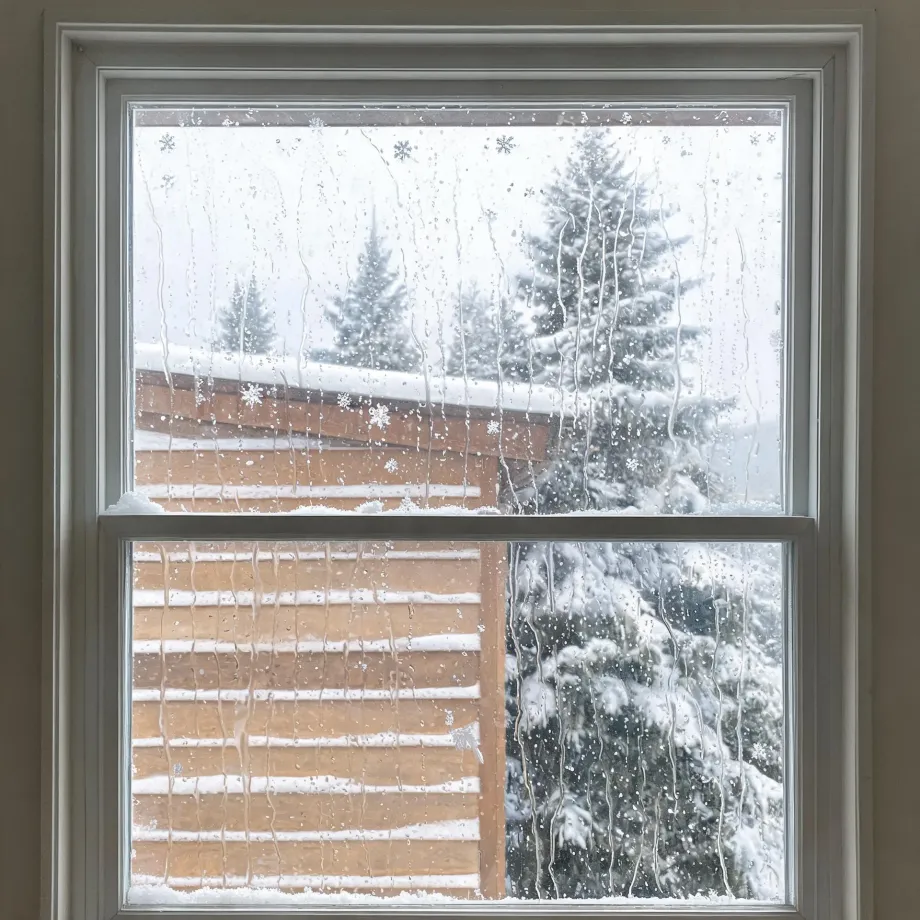
Sizing a furnace for this county starts with how long the burner actually runs each year. Homes in Humboldt County, CA run heat about eight months a year, from October through May. The heat exchanger, the burner, and the ignition system cycle through that whole stretch, and a unit that is undersized or loosely commissioned has little idle time to offset the accumulation. A contractor working a new install here factors that load into equipment selection before quoting anything, because a system that scrapes by in a mild climate can fall short before it reaches its rated service life in this one.
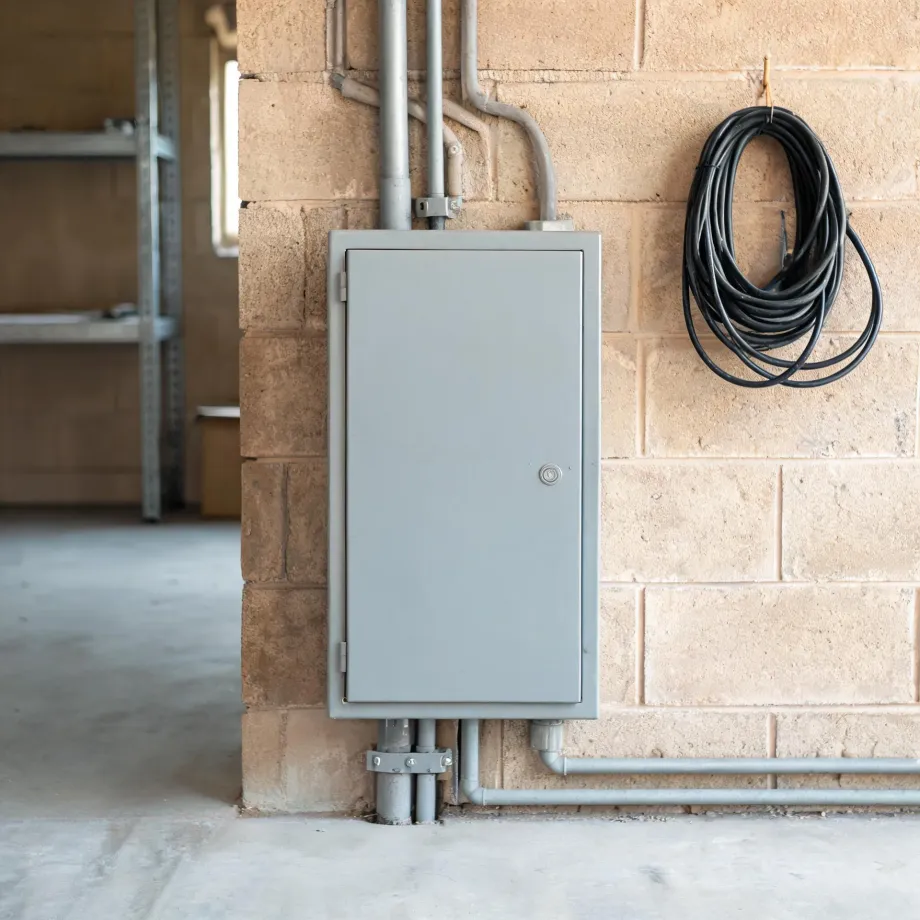
Ductwork routed for a system that no longer exists in these houses is where a furnace installation gets decided. Half the homes in Humboldt County, California were built in 1973 or earlier (2020-2024 ACS 5-year). That means a significant share of the local housing stock was built around airflow layouts and load assumptions that do not match what a modern furnace puts out. A contractor installing a new unit will open the system and check whether existing duct runs, branches, and returns move air the way the new equipment needs them to. If they do not, the ductwork gets modified before the furnace goes in.
What Gets Installed With a New Furnace
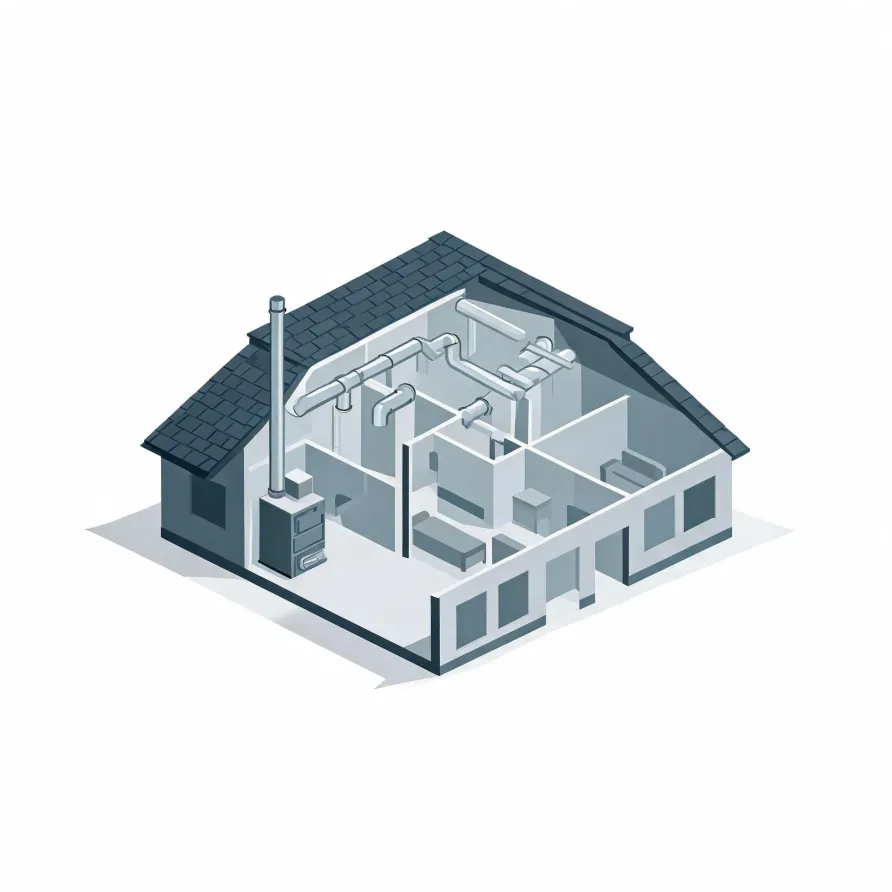
The furnace itself sits in a utility area, basement, closet, or garage, and it is the unit that produces heat for the house. A heat exchanger inside it transfers heat to the air that moves through your home, and a burner assembly feeds that exchanger using a gas line connected at the unit.
A flue pipe runs from the furnace to an exterior vent, carrying combustion gases out of the house. The blower motor and fan sit inside the furnace cabinet and push conditioned air into the supply side of your duct system. A thermostat mounts on an interior wall and serves as the control point for the whole system.
The drawing shows a typical layout, and a licensed contractor determines exactly which components and configurations apply to your home.
Find a contractor in Humboldt CountyHumboldt County, by the numbers
282 severe weather events were recorded in Humboldt County, California between 2015 and 2024.
NOAA National Centers for Environmental Information, Storm Events Database, bulk CSV export, events 2015-01-01 through 2024-12-31.Half the homes in Humboldt County, California were built in 1973 or earlier (2020-2024 ACS 5-year).
U.S. Census Bureau, 2020-2024 American Community Survey 5-Year EstimatesHumboldt County, California holds 62,883 housing units (2020-2024 ACS 5-year).
U.S. Census Bureau, 2020-2024 American Community Survey 5-Year EstimatesOwners occupy 56.5% of the occupied homes in Humboldt County, California (2020-2024 ACS 5-year).
U.S. Census Bureau, 2020-2024 American Community Survey 5-Year EstimatesFurnace Installation Rules for Humboldt County, California5 sourced standards and codes
What the installation actually looks like
Non-weatherized gas furnaces manufactured on or after November 19, 2015 must reach 80.0 percent AFUE.
Non-weatherized oil-fired furnaces manufactured on or after November 19, 2015 must reach 83.0 percent AFUE.
Mobile home gas furnaces manufactured on or after November 19, 2015 must reach 80.0 percent AFUE.
Non-weatherized gas furnaces manufactured on or after December 18, 2028 must reach 95.0 percent AFUE, up from the 80.0 percent minimum that applies to units manufactured before that date.
Licensing Rules for HVAC Work in Humboldt County, California
California requires a state contractor license: it is a misdemeanour to engage in the business of, or act in the capacity of, a contractor in California without one, unless the work is exempt.
Severe Weather Events in Humboldt County
Weather puts a load on heating equipment that mild-climate specs never account for. How hard a furnace has to work, and how often, is a local question shaped by what the county actually sees.
282 severe weather events, 2015–2024. Source: NOAA National Centers for Environmental Information, Storm Events Database.