Tell us about the job
Takes about a minute. No obligation.
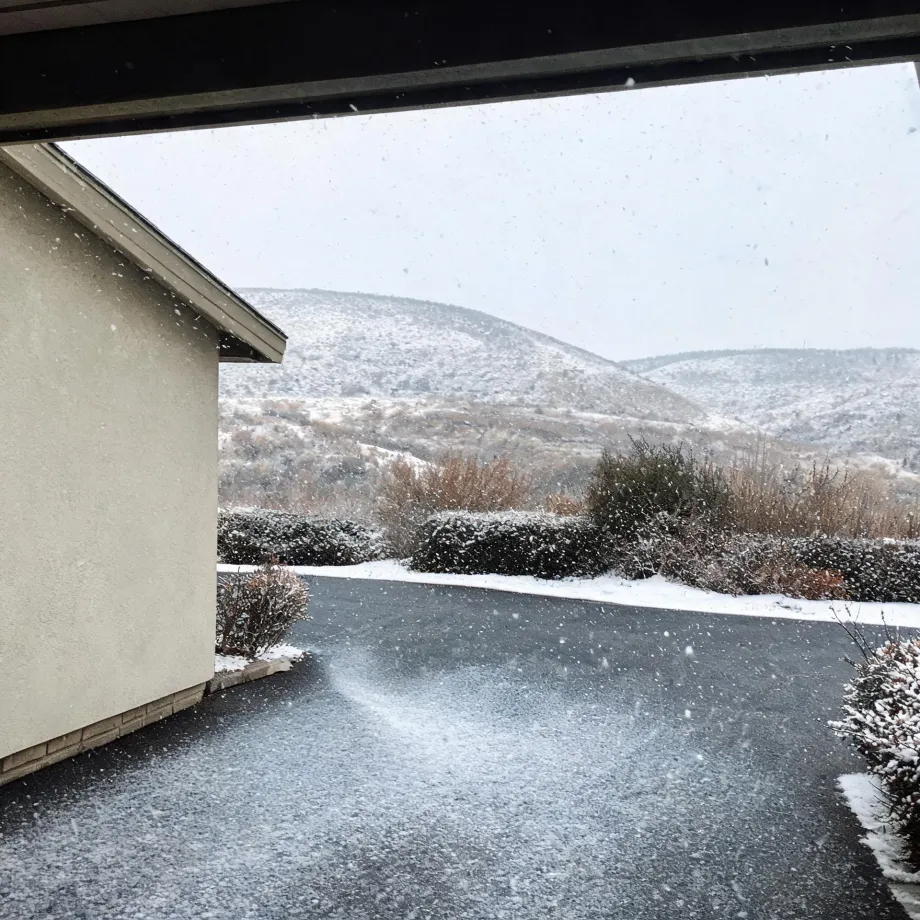
Sizing a furnace for Sierra County starts with understanding what the burner and heat exchanger are actually asked to carry each year. Homes in Sierra County, CA run heat about ten months a year, from September through June. A system that is undersized, or whose combustion components were not set up correctly at install, will accumulate wear on those parts faster than a correctly specified system does, because there is very little idle time in which minor stress goes nowhere. The contractor quoting a new install has to treat capacity and installation quality as the same question.
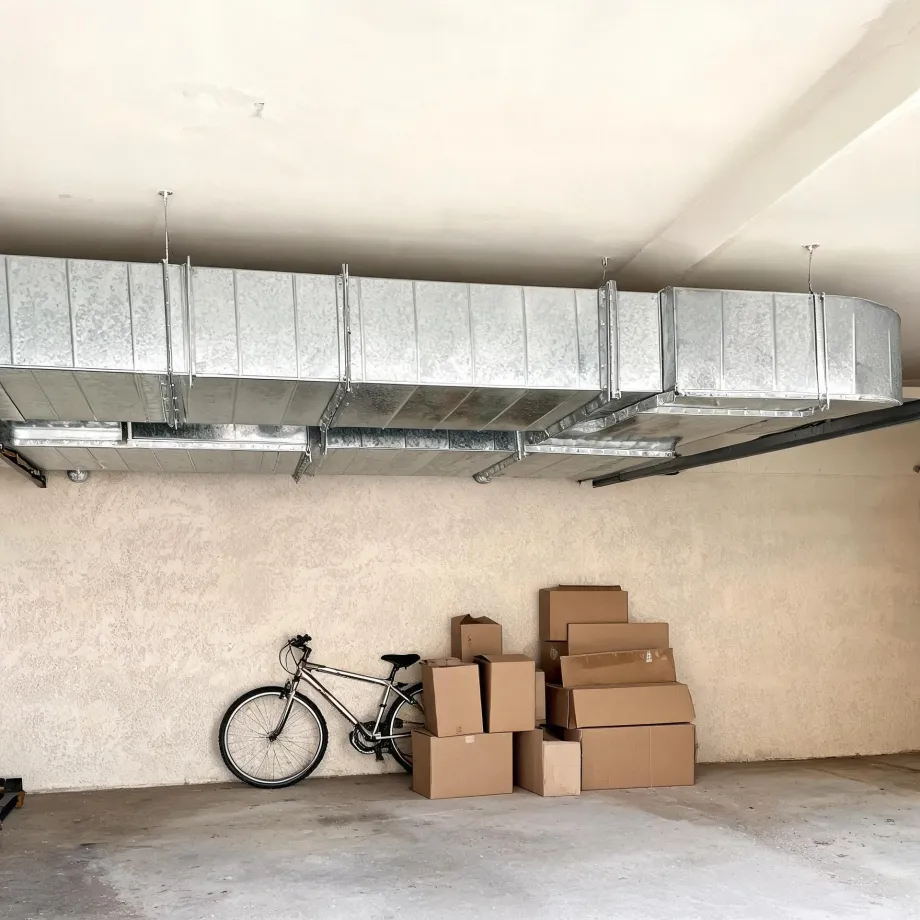
Ductwork sized for a previous generation of equipment is what a contractor pulls permits around in much of this county. Half the homes in Sierra County, California were built in 1971 or earlier (2020-2024 ACS 5-year). That span between the building and what runs in it now is long enough that the original duct layout was designed around a system no longer in the house, which means the new furnace has to fit what the walls already carry, branching, trunk dimensions, return placement, all of it fixed by decisions made before the current owner bought the place. The electrical service follows the same logic. A contractor quoting a furnace installation here prices the box last.
What Gets Installed With a New Furnace
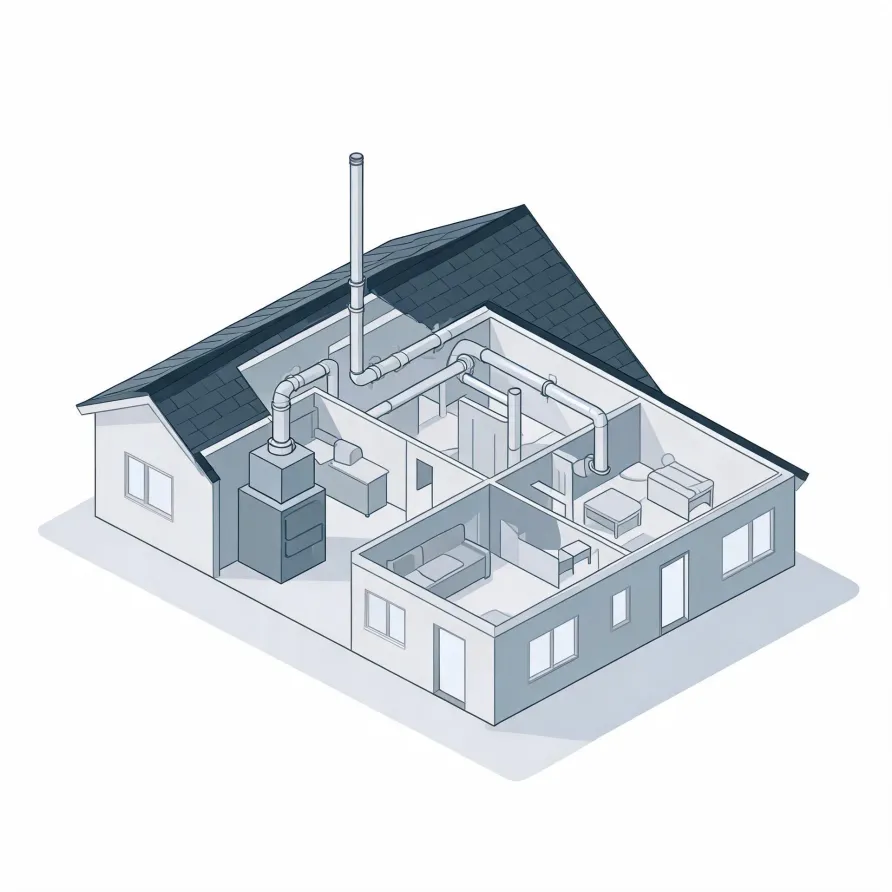
The furnace itself sits in a utility room, basement, closet, or garage and is the unit that produces heat. A heat exchanger lives inside it, separating combustion gases from the air that moves through your home. The flue pipe runs from the furnace to an exterior wall or roofline, carrying exhaust gases out.
The blower motor sits inside the furnace cabinet and pushes conditioned air through the supply side of the duct system. The thermostat mounts on an interior wall and is the control point that tells the furnace when to fire and when to stop. A gas line connects to the burner assembly, and a condensate drain line runs to a floor drain on high-efficiency models.
The drawing shows a typical layout, and a licensed contractor determines which components and configurations apply to your specific home.
Find a contractor in Sierra CountySierra County, by the numbers
347 severe weather events were recorded in Sierra County, California between 2015 and 2024.
NOAA National Centers for Environmental Information, Storm Events Database, bulk CSV export, events 2015-01-01 through 2024-12-31.Half the homes in Sierra County, California were built in 1971 or earlier (2020-2024 ACS 5-year).
U.S. Census Bureau, 2020-2024 American Community Survey 5-Year EstimatesSierra County, California holds 2,120 housing units (2020-2024 ACS 5-year).
U.S. Census Bureau, 2020-2024 American Community Survey 5-Year EstimatesOwners occupy 72.1% of the occupied homes in Sierra County, California (2020-2024 ACS 5-year).
U.S. Census Bureau, 2020-2024 American Community Survey 5-Year EstimatesFurnace Installation Rules & Standards for Sierra County, California5 sourced regulations and standards
What the Installation Actually Looks Like
Non-weatherized gas furnaces manufactured on or after November 19, 2015 must reach 80.0 percent AFUE.
Non-weatherized oil-fired furnaces manufactured on or after November 19, 2015 must reach 83.0 percent AFUE.
Mobile home gas furnaces manufactured on or after November 19, 2015 must reach 80.0 percent AFUE.
Non-weatherized gas furnaces manufactured on or after December 18, 2028 must reach 95.0 percent AFUE, up from the 80.0 percent minimum that applies to units manufactured before that date.
What Sierra County and California Require for HVAC Installation
California requires a state contractor license: it is a misdemeanour to engage in the business of, or act in the capacity of, a contractor in California without one, unless the work is exempt.
Severe Weather Events in Sierra County
Extreme weather puts real strain on heating equipment, and Sierra County's conditions are not uniform across the state. A furnace sized and installed for local weather holds up differently than one spec'd without that context.
347 severe weather events, 2015–2024. Source: NOAA National Centers for Environmental Information, Storm Events Database.