Tell us about the job
Takes about a minute. No obligation.
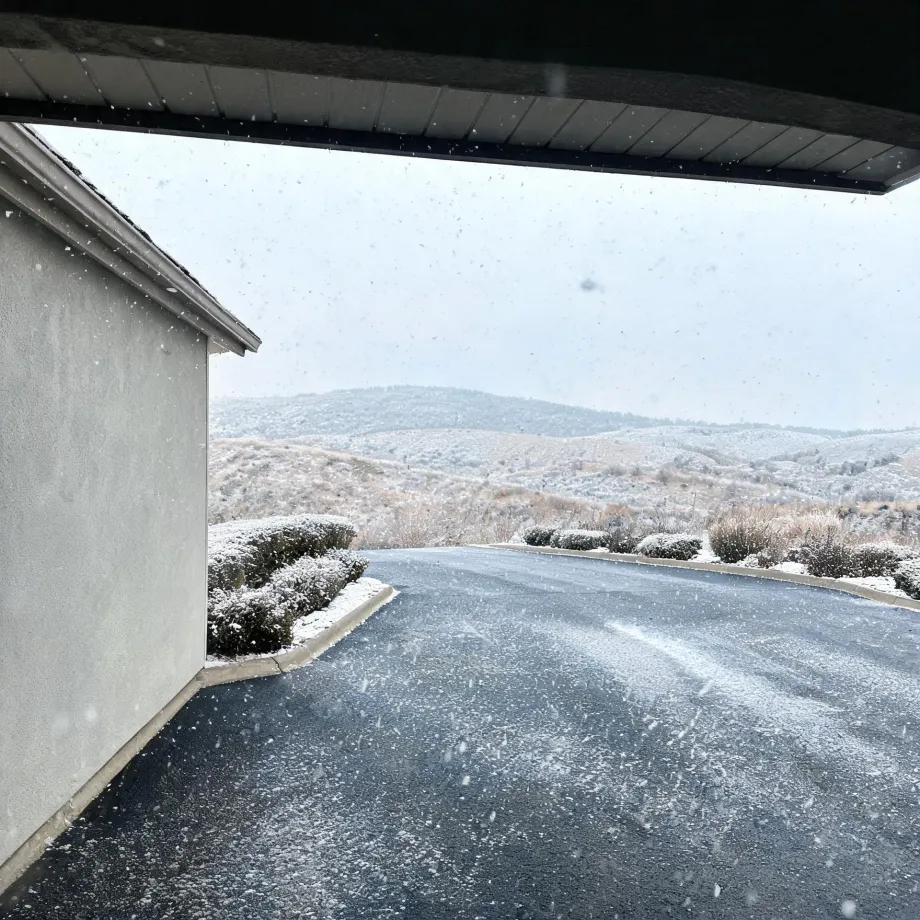
A furnace in Marin runs its burner and ignition system hard. Homes in Marin County, CA run heat about nine months a year, from October through June. Across that span, the heat exchanger cycles through thousands of expansion and contraction events, and the ignitor takes a stress load that shorter seasons spare elsewhere. When a furnace fails here, a contractor checks the ignition assembly and heat exchanger first, because that is where the accumulated wear shows up. Cracks in the exchanger or a weakened ignitor are not random findings; they follow directly from what the equipment has been asked to do, season after season.
Ductwork in a house carries a history, and in Marin County that history runs deep. Half the homes in Marin County, California were built in 1967 or earlier (2020-2024 ACS 5-year). A furnace opened in stock like this frequently turns up heat exchangers, ignitors, and burner components tied to equipment lines that manufacturers retired long ago. That changes what a repair costs and how long it takes, because a contractor sourcing discontinued parts works through a different supply chain than one pulling from current inventory. The age of the house does not predict this on its own, but the age of the housing stock tells you how often a contractor here is solving that exact problem.
The Parts of a Furnace a Contractor Checks First
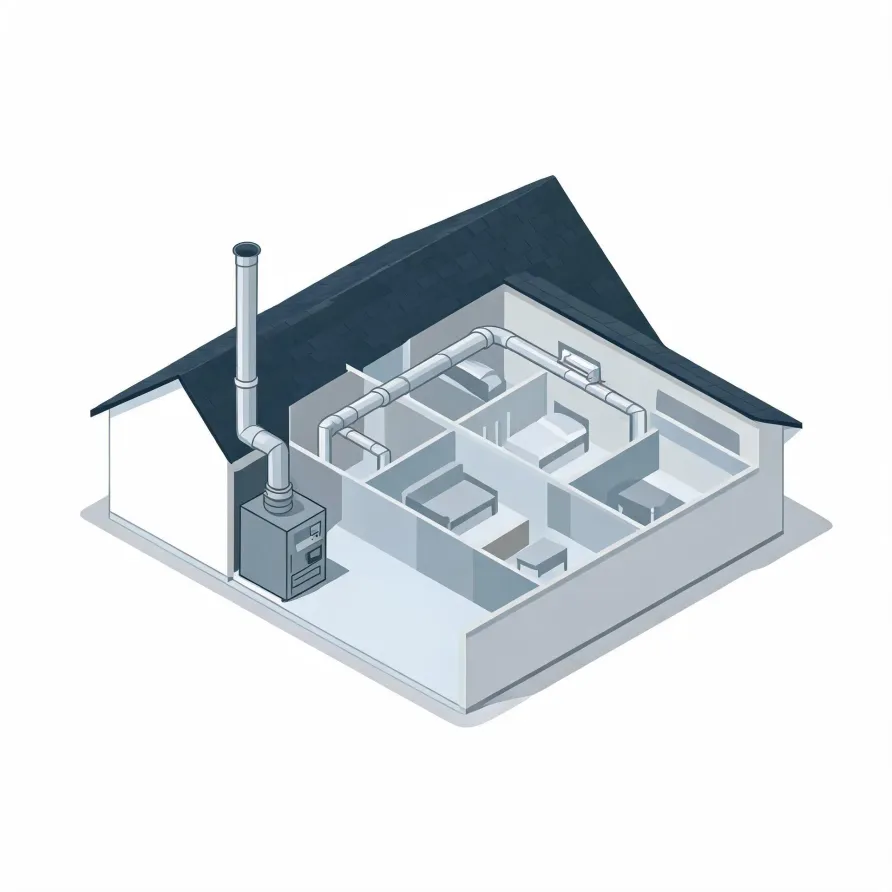
The furnace itself sits in a utility room, basement, or garage and is the piece a contractor goes to first. Inside it, the heat exchanger is the part that separates combustion gases from the air your household breathes. A cracked or corroded heat exchanger is a serious finding. The burners, also inside the cabinet, are where the flame originates, and a contractor reads them for signs of uneven ignition or carbon buildup.
The blower motor sits at the base of the furnace cabinet and pushes conditioned air into the duct system. The control board coordinates ignition, blower timing, and safety shutoffs. Near the burners, the igniter and flame sensor work together to start a burn cycle and confirm it took hold. When a furnace short-cycles or refuses to start, those two small components are often where a contractor looks.
The drawing shows a typical furnace layout, and a licensed contractor determines which components apply to the specific system in your home.
Find a contractor in Marin CountyMarin County, by the numbers
134 severe weather events were recorded in Marin County, California between 2015 and 2024.
NOAA National Centers for Environmental Information, Storm Events Database, bulk CSV export, events 2015-01-01 through 2024-12-31.Half the homes in Marin County, California were built in 1967 or earlier (2020-2024 ACS 5-year).
U.S. Census Bureau, 2020-2024 American Community Survey 5-Year EstimatesMarin County, California holds 112,116 housing units (2020-2024 ACS 5-year).
U.S. Census Bureau, 2020-2024 American Community Survey 5-Year EstimatesOwners occupy 64.7% of the occupied homes in Marin County, California (2020-2024 ACS 5-year).
U.S. Census Bureau, 2020-2024 American Community Survey 5-Year EstimatesCodes & Standards for Furnace Repair in Marin County, California5 sourced rules & standards
What the repair visit looks like
Non-weatherized gas furnaces manufactured on or after November 19, 2015 must reach 80.0 percent AFUE.
Non-weatherized oil-fired furnaces manufactured on or after November 19, 2015 must reach 83.0 percent AFUE.
Mobile home gas furnaces manufactured on or after November 19, 2015 must reach 80.0 percent AFUE.
Non-weatherized gas furnaces manufactured on or after December 18, 2028 must reach 95.0 percent AFUE, up from the 80.0 percent minimum that applies to units manufactured before that date.
Licensing and Legal Requirements in Marin County, California
California requires a state contractor license: it is a misdemeanour to engage in the business of, or act in the capacity of, a contractor in California without one, unless the work is exempt.
Weather Events in Marin County That Stress HVAC Systems
Furnaces work harder when the weather swings. Each recorded event in the chart below represents load on heating equipment, and that load is what drives repair needs in Marin County.
134 severe weather events, 2015–2024. Source: NOAA National Centers for Environmental Information, Storm Events Database.