Tell us about the job
Takes about a minute. No obligation.
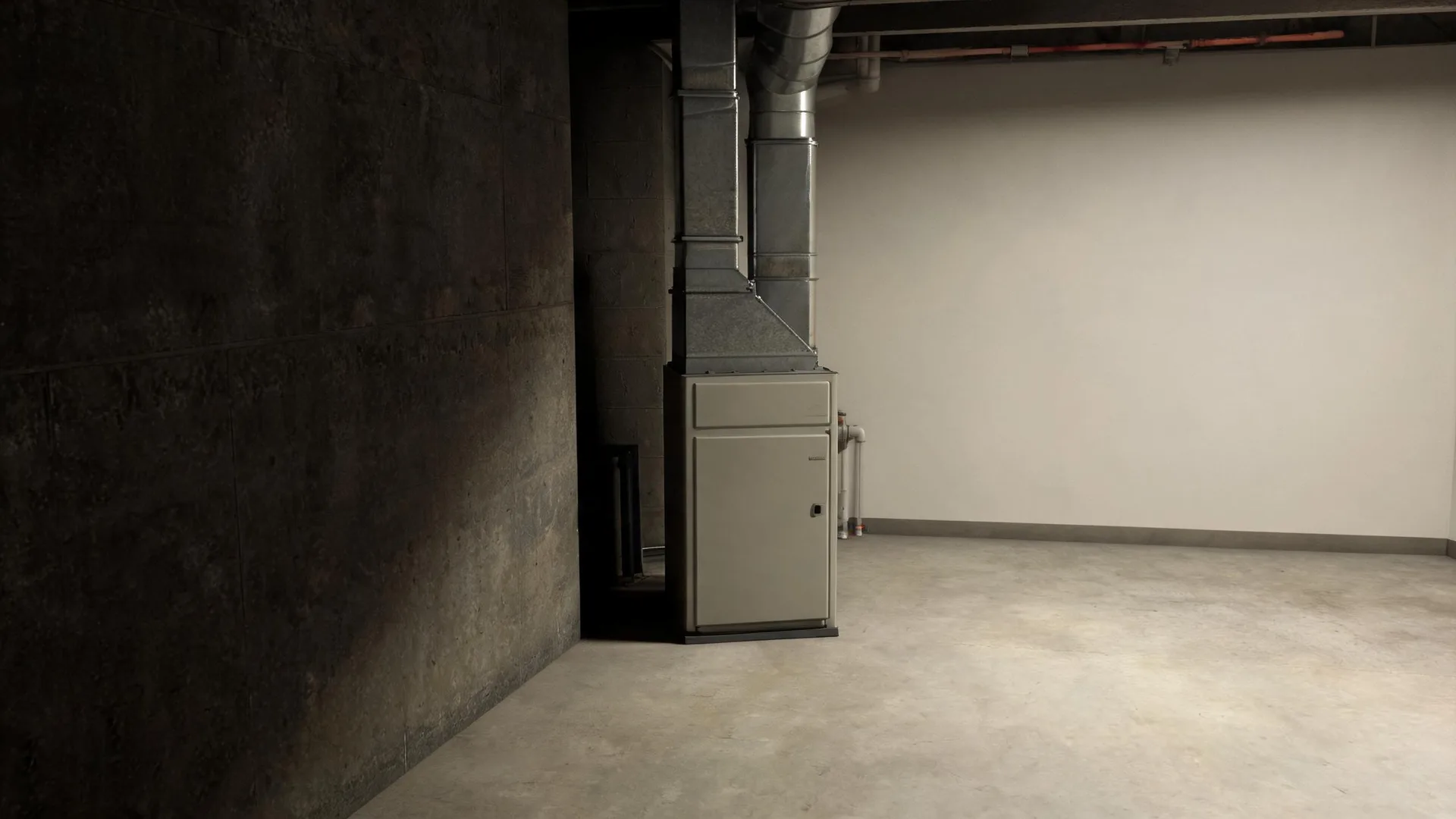
Homes in Nevada County, CA run heat about eight months a year, from October through May. A furnace cycling through a season that long puts its heaviest load on the burner, the heat exchanger, and the ignition system. By the time a homeowner notices a fault, those parts have already run through hundreds of start-stop cycles across the years the system has been in service. A contractor arriving for a repair here checks the heat exchanger for cracks and the ignition components for degradation before moving on to anything else, because that is where the wear lands first.
Furnaces in houses this old have often run through more than one replacement cycle, and each swap leaves its own trace inside the cabinet. Half the homes in Nevada County, California were built in 1983 or earlier (2020-2024 ACS 5-year). That history shows up when a contractor opens the unit: a heat exchanger cracked along seams that were stressed by a burner it was never matched to, or a control board swapped in at some point for a part that is now discontinued itself. The parts a furnace of this vintage accepts are the first thing a contractor has to confirm before a repair quote means anything.
The Parts of a Furnace a Contractor Checks First
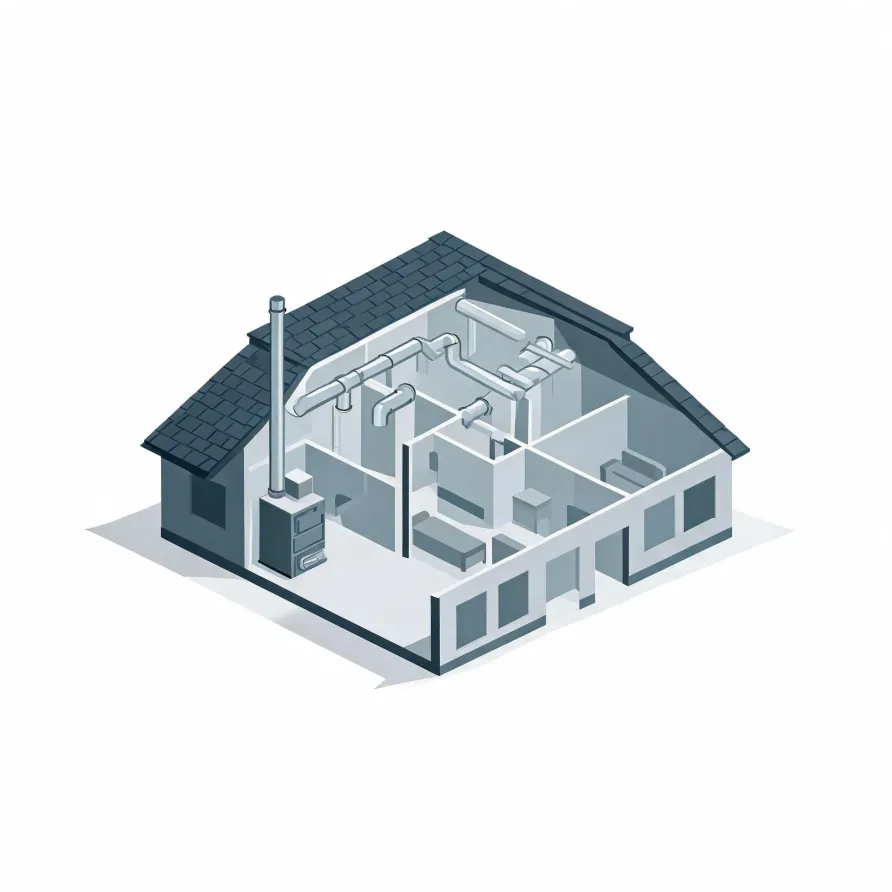
The heat exchanger sits at the core of the furnace cabinet and is where combustion gases warm the air that circulates through your home. A cracked or corroded heat exchanger is a serious fault. The burner assembly sits just below it and is where the contractor looks when the furnace fails to ignite or runs unevenly.
The blower motor and its fan wheel sit at the base of the cabinet and push conditioned air out into the supply ducts. The control board, mounted inside the cabinet, reads the signals from your thermostat and tells every other part when to run. The flue pipe runs from the top of the furnace to an exterior vent and carries combustion exhaust out of the house.
The drawing shows a typical furnace layout, and a licensed contractor will determine which components apply to the specific equipment and configuration in your home.
Find a contractor in Nevada CountyNevada County by the Numbers
643 severe weather events were recorded in Nevada County, California between 2015 and 2024.
NOAA National Centers for Environmental Information, Storm Events Database, bulk CSV export, events 2015-01-01 through 2024-12-31.Half the homes in Nevada County, California were built in 1983 or earlier (2020-2024 ACS 5-year).
U.S. Census Bureau, 2020-2024 American Community Survey 5-Year EstimatesNevada County, California holds 54,309 housing units (2020-2024 ACS 5-year).
U.S. Census Bureau, 2020-2024 American Community Survey 5-Year EstimatesOwners occupy 75.5% of the occupied homes in Nevada County, California (2020-2024 ACS 5-year).
U.S. Census Bureau, 2020-2024 American Community Survey 5-Year EstimatesCodes & Standards Governing Furnace Repair in Nevada County, California5 sourced rules & standards
What happens when a contractor comes out
Non-weatherized gas furnaces manufactured on or after November 19, 2015 must reach 80.0 percent AFUE.
Non-weatherized oil-fired furnaces manufactured on or after November 19, 2015 must reach 83.0 percent AFUE.
Mobile home gas furnaces manufactured on or after November 19, 2015 must reach 80.0 percent AFUE.
Non-weatherized gas furnaces manufactured on or after December 18, 2028 must reach 95.0 percent AFUE, up from the 80.0 percent minimum that applies to units manufactured before that date.
What Nevada County and California Require for HVAC Repair
California requires a state contractor license: it is a misdemeanour to engage in the business of, or act in the capacity of, a contractor in California without one, unless the work is exempt.
Severe Weather Events in Nevada County
Extreme weather puts direct stress on heating equipment, pushing furnaces through hard cycles that wear components faster than ordinary use. How much of that a furnace in Nevada County has absorbed shapes what a repair technician finds when one stops working.
643 severe weather events, 2015–2024. Source: NOAA National Centers for Environmental Information, Storm Events Database.