Tell us about the job
Takes about a minute. No obligation.
Sizing a furnace here is not a generic exercise a contractor can phone in from a catalog. Homes in Inyo County, CA run heat about six months a year, from November through April. The burner and heat exchanger cycle through that entire stretch with no long summer reprieve to mask a marginal install, and a unit that was undersized at the outset works harder than it should from the first cold week onward. A contractor quoting a replacement in this county has to establish the correct load for the house before settling on equipment, because a furnace that fits the math on paper but not the actual structure will accumulate wear on the ignition system and heat exchanger faster than one sized to the building it serves.
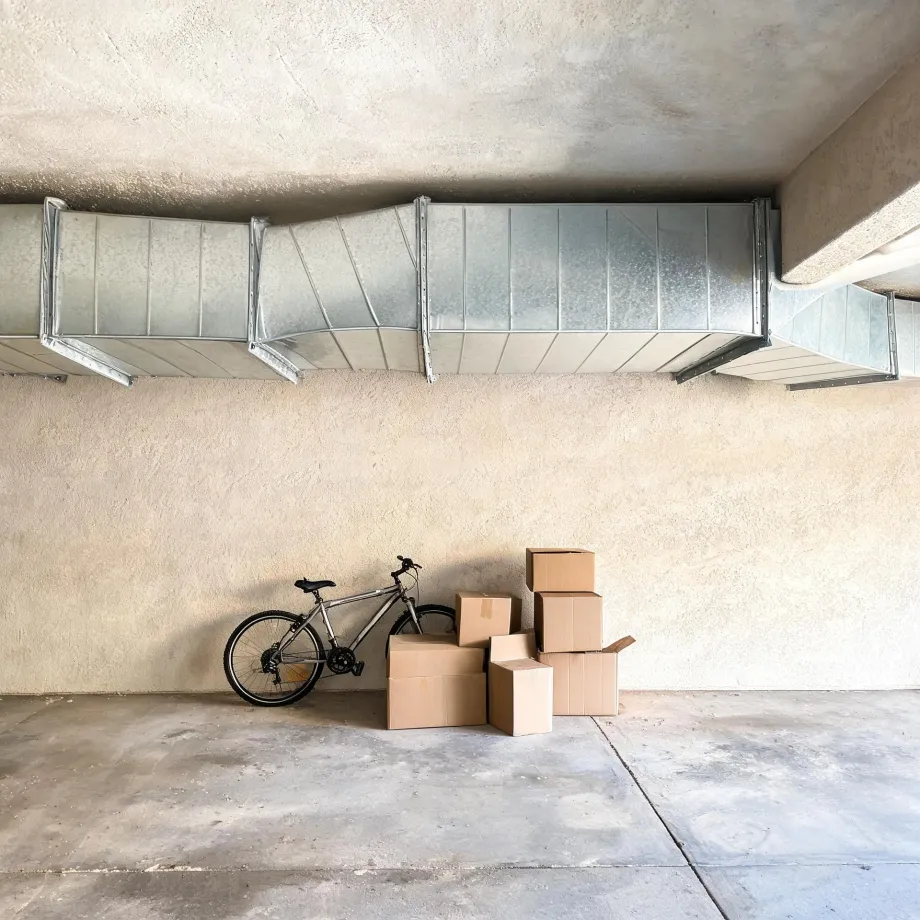
Ductwork in a house this age was designed around whatever system first went into it, and that original layout shapes what a contractor can do with a new furnace today. Half the homes in Inyo County, California were built in 1975 or earlier (2020-2024 ACS 5-year). That means the trunk lines, the branch runs, and the return path may not move air the way a current unit needs them to. A contractor sizing a new furnace here checks the duct system first, because a mismatch there produces comfort problems the equipment itself cannot fix. The electrical service gets the same look, since what the panel was built to handle and what a modern unit draws are questions that have to be answered before anything else is priced.
What Gets Installed With a New Furnace
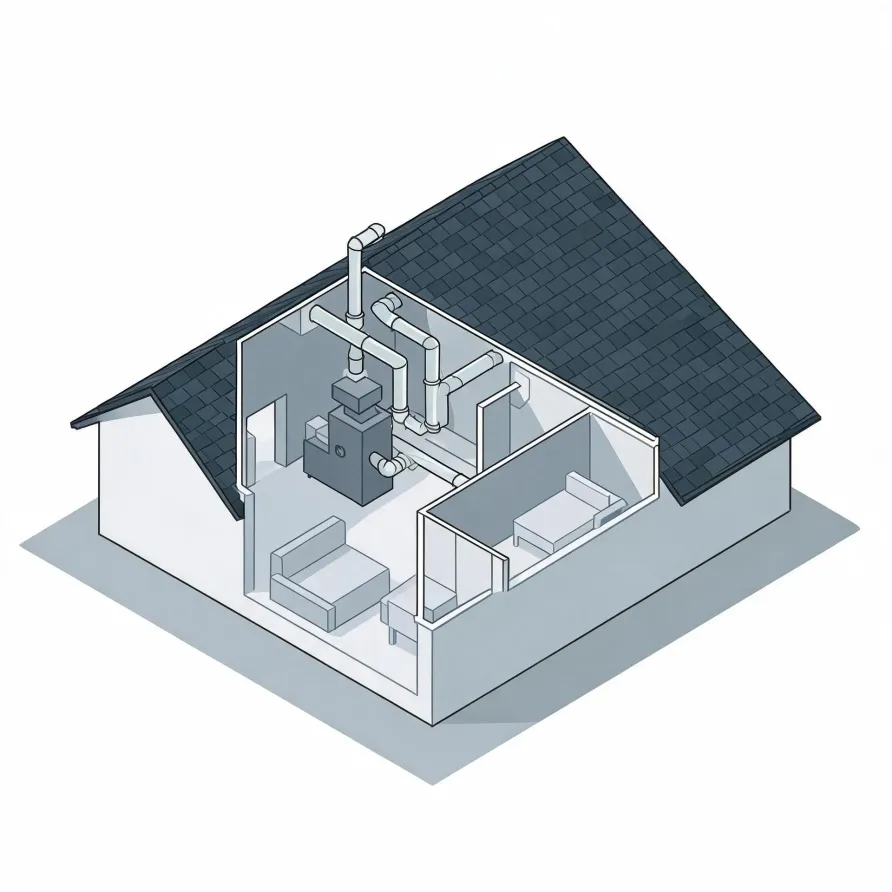
The furnace itself sits in a utility closet, basement, attic, or garage depending on how the house is built. It is the box that generates heat. Inside it are the burners, the heat exchanger, and the blower, and all of those come as part of the unit a contractor sets in place.
The flue pipe runs from the furnace to the outside of the house and carries combustion gases out. The thermostat goes on an interior wall and tells the furnace when to fire. A contractor also installs the gas line connection and the condensate drain if the unit is a high-efficiency model.
The drawing shows a representative layout, and a licensed contractor determines exactly what applies to your house and its existing setup.
Find a contractor in Inyo CountyInyo County, by the numbers
168 severe weather events were recorded in Inyo County, California between 2015 and 2024.
NOAA National Centers for Environmental Information, Storm Events Database, bulk CSV export, events 2015-01-01 through 2024-12-31.Half the homes in Inyo County, California were built in 1975 or earlier (2020-2024 ACS 5-year).
U.S. Census Bureau, 2020-2024 American Community Survey 5-Year EstimatesInyo County, California holds 9,524 housing units (2020-2024 ACS 5-year).
U.S. Census Bureau, 2020-2024 American Community Survey 5-Year EstimatesOwners occupy 66.4% of the occupied homes in Inyo County, California (2020-2024 ACS 5-year).
U.S. Census Bureau, 2020-2024 American Community Survey 5-Year EstimatesFurnace Installation Rules for Inyo County, California5 codes, standards, and laws
What the installation actually looks like
Non-weatherized gas furnaces manufactured on or after November 19, 2015 must reach 80.0 percent AFUE.
Non-weatherized oil-fired furnaces manufactured on or after November 19, 2015 must reach 83.0 percent AFUE.
Mobile home gas furnaces manufactured on or after November 19, 2015 must reach 80.0 percent AFUE.
Non-weatherized gas furnaces manufactured on or after December 18, 2028 must reach 95.0 percent AFUE, up from the 80.0 percent minimum that applies to units manufactured before that date.
Licensing and Legal Requirements in Inyo County, California
California requires a state contractor license: it is a misdemeanour to engage in the business of, or act in the capacity of, a contractor in California without one, unless the work is exempt.
Weather Stress on HVAC Equipment in Inyo County
Heating equipment works harder when the climate swings wide, and Inyo County's conditions shape how much that equipment is asked to do year over year. Furnace sizing, installation decisions, and long-term performance are all tied to what the local weather actually puts on the system.
168 severe weather events, 2015–2024. Source: NOAA National Centers for Environmental Information, Storm Events Database.