Tell us about the job
Takes about a minute. No obligation.
Burners and heat exchangers in Glenn County furnaces carry a lot of cycling before a fault shows up. Homes in Glenn County, CA run heat about six months a year, from November through April. An igniter that cracks or a heat exchanger that develops a stress fracture does so because those parts cycle on and off repeatedly through a long run of cold months, and a contractor diagnosing a breakdown here checks those components first. A failed control board or a worn gas valve follows from the same load history, but ignition and heat transfer parts give out sooner.
Ductwork in a house this vintage was put in for a furnace that is almost certainly gone now, replaced once or twice since, and the opened unit in a repair call carries that accumulated history in its heat exchanger, burner assembly, and control board. Half the homes in Glenn County, California were built in 1977 or earlier (2020-2024 ACS 5-year). That means a contractor pulling a furnace apart here runs a real chance of finding a component whose replacement part has been discontinued, redesigned to a different spec, or is available only through specialty suppliers at a longer lead time. The age of the building does not settle that question. What settles it is what the opened unit turns out to be and what the supply chain for it still looks like.
The Parts of a Furnace a Contractor Checks First
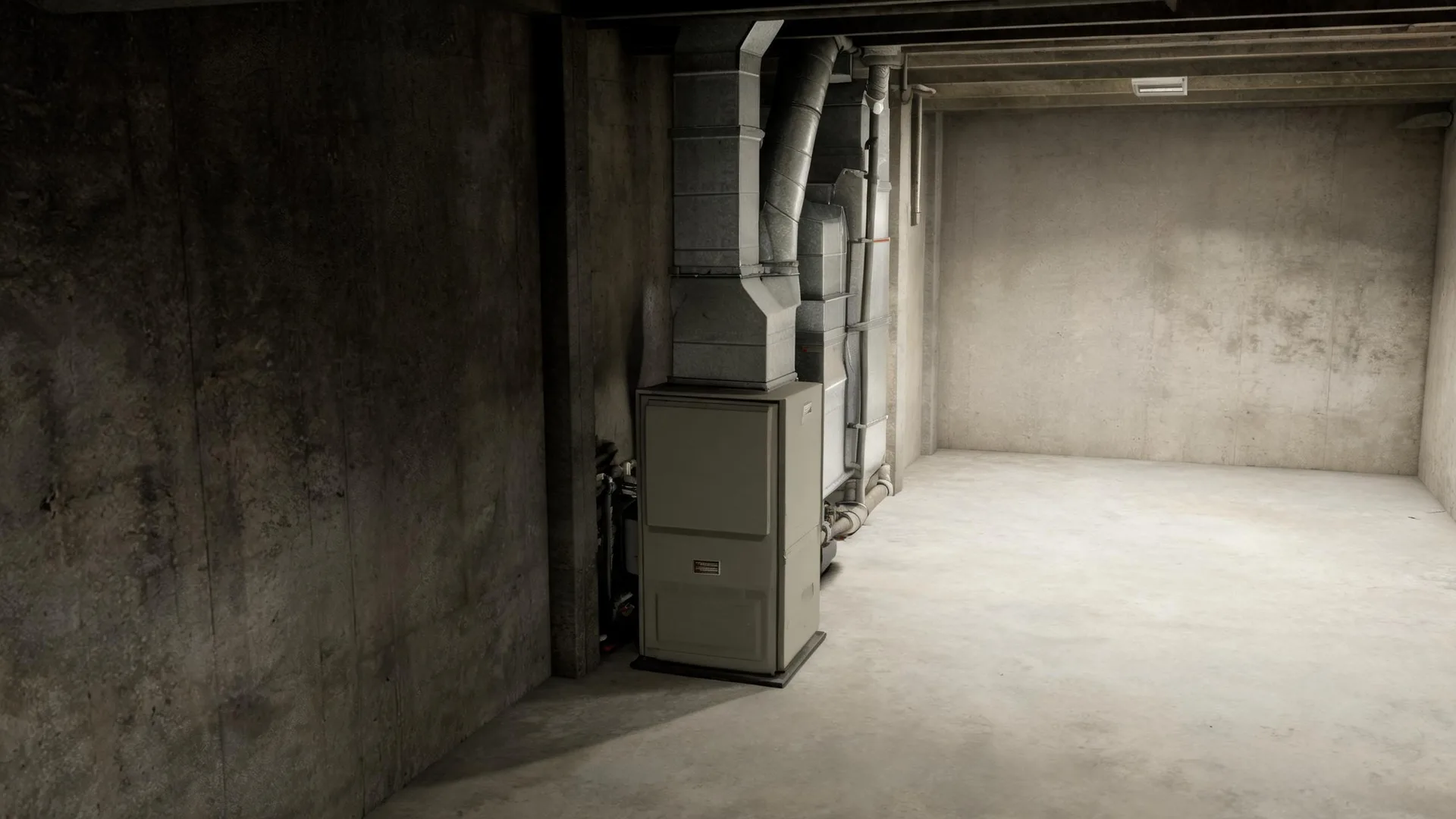
The heat exchanger sits at the core of the furnace cabinet in your basement, utility closet, or garage, and it is the piece that warms the air before it moves through the house. Cracks or corrosion here are serious finds. The burner assembly feeds directly into it, and a contractor will check whether the burners are firing evenly and whether the flame sensor is reading them correctly.
The blower motor pulls air across the heat exchanger and pushes it into the supply side of your duct system. A failed capacitor, a worn motor bearing, or a clogged blower wheel all show up at this part. The control board ties the system together, receiving signals from the thermostat and telling each component when to run, so a board fault can mimic problems that actually belong elsewhere.
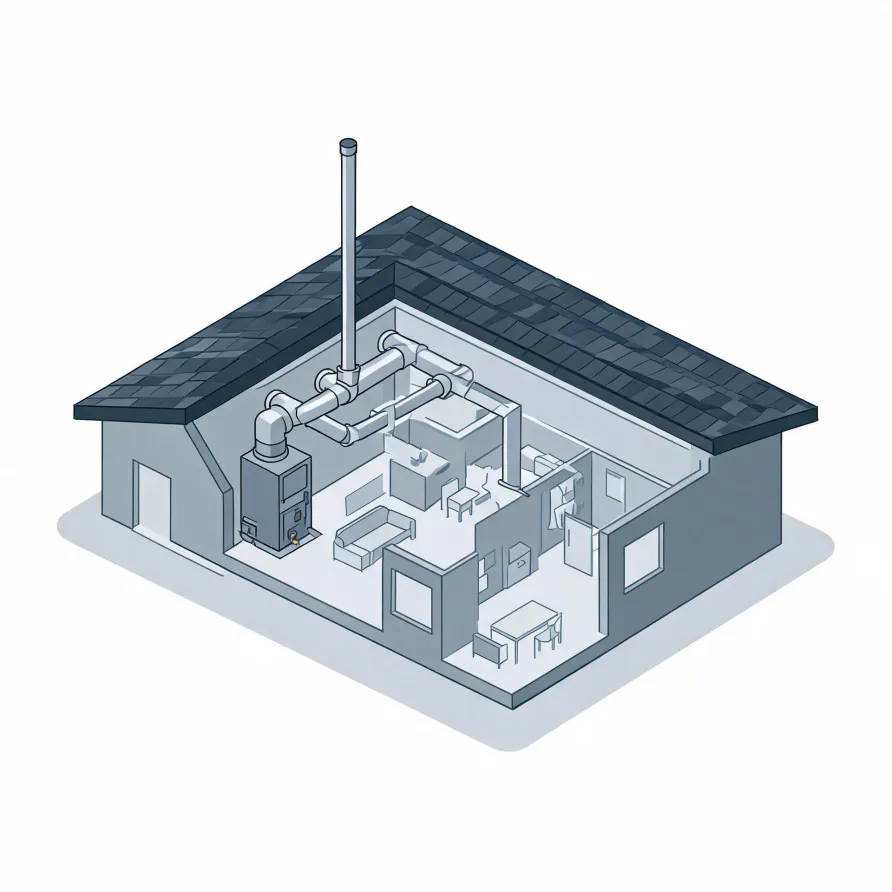
The drawing shows a typical furnace layout, and a licensed contractor will determine which components apply to your specific system and what condition each one is in.
Find a contractor in Glenn CountyGlenn County, by the numbers
30 severe weather events were recorded in Glenn County, California between 2015 and 2024.
NOAA National Centers for Environmental Information, Storm Events Database, bulk CSV export, events 2015-01-01 through 2024-12-31.Half the homes in Glenn County, California were built in 1977 or earlier (2020-2024 ACS 5-year).
U.S. Census Bureau, 2020-2024 American Community Survey 5-Year EstimatesGlenn County, California holds 11,073 housing units (2020-2024 ACS 5-year).
U.S. Census Bureau, 2020-2024 American Community Survey 5-Year EstimatesOwners occupy 61.2% of the occupied homes in Glenn County, California (2020-2024 ACS 5-year).
U.S. Census Bureau, 2020-2024 American Community Survey 5-Year EstimatesCodes & Standards Covering Furnace Repair in Glenn County, California5 sourced rules and standards
What HVAC Repair Looks Like in Glenn County
Non-weatherized gas furnaces manufactured on or after November 19, 2015 must reach 80.0 percent AFUE.
Non-weatherized oil-fired furnaces manufactured on or after November 19, 2015 must reach 83.0 percent AFUE.
Mobile home gas furnaces manufactured on or after November 19, 2015 must reach 80.0 percent AFUE.
Non-weatherized gas furnaces manufactured on or after December 18, 2028 must reach 95.0 percent AFUE, up from the 80.0 percent minimum that applies to units manufactured before that date.
Licensing and Legal Requirements in Glenn County, California
California requires a state contractor license: it is a misdemeanour to engage in the business of, or act in the capacity of, a contractor in California without one, unless the work is exempt.
Weather Stress on HVAC Equipment in Glenn County
Heating equipment works harder when outdoor conditions swing wide, and those swings leave a record. Repair demand in Glenn County follows that same record, which is why local weather history belongs alongside any honest look at what furnaces here are asked to do.
30 severe weather events, 2017–2024. Source: NOAA National Centers for Environmental Information, Storm Events Database.