Tell us about the job
Takes about a minute. No obligation.
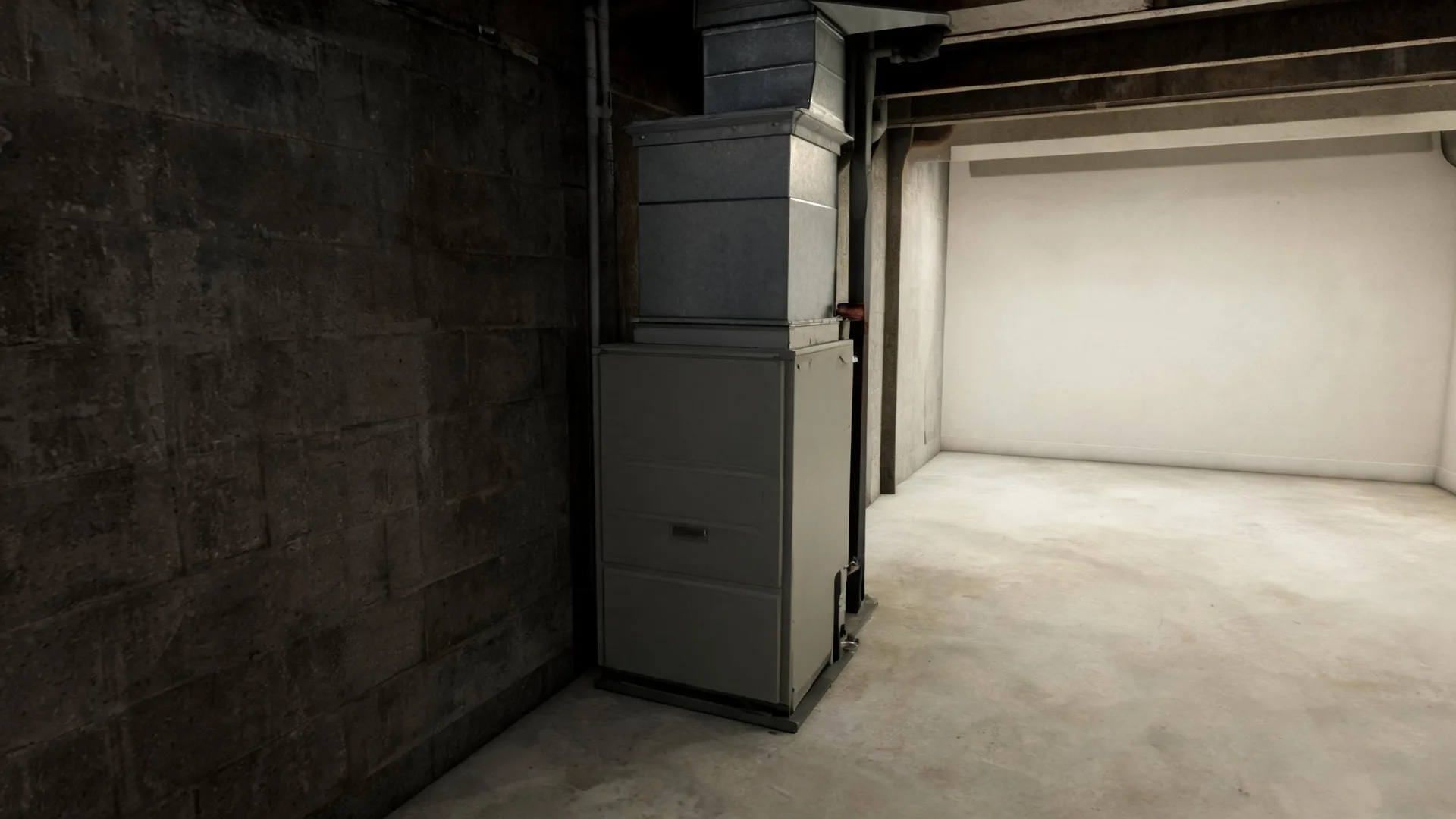
A furnace repair in San Luis Obispo County starts at the components that cycle every time the system calls for heat: the burner, the heat exchanger, and the ignition system. Homes in San Luis Obispo County, CA run heat about six months a year, from November through April. That cycling adds up across a heating season, and a contractor looking at a failed igniter or a cracked heat exchanger is looking at parts that earned the damage. Peripheral faults do get found, but the wear pattern on combustion components gives the diagnosis its first direction.
Furnaces in houses this old have often been replaced at least once, sometimes more, and the repair question a contractor opens the unit to answer is whether the parts it takes are still manufactured. Half the homes in San Luis Obispo County, California were built in 1983 or earlier (2020-2024 ACS 5-year). A heat exchanger crack or a failed inducer motor in a furnace that predates current parts catalogs can mean a straightforward repair or a sourcing problem, and the contractor finds out which only after the cabinet is off. Stock this age carries that uncertainty in a way newer housing does not.
The Parts of a Furnace a Contractor Checks First
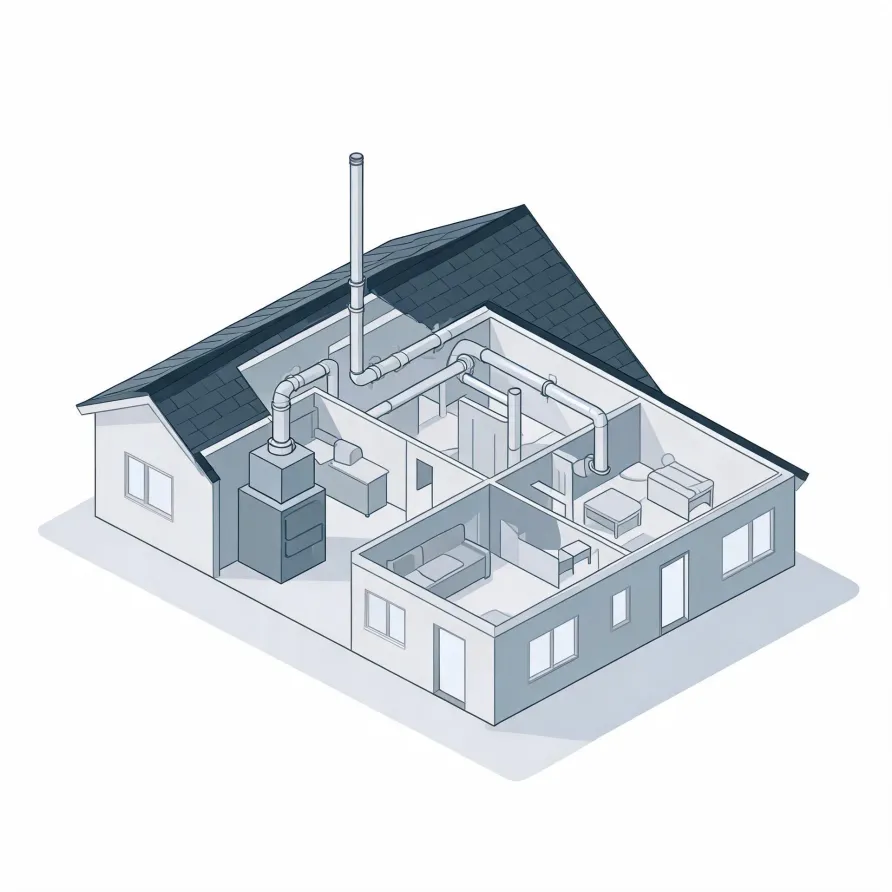
The heat exchanger sits inside the furnace cabinet and is where most repair calls begin. Cracks or buildup there affect the whole system. The burner assembly, also inside the cabinet, is what a contractor looks at when ignition is the problem, and the igniter itself is a small but common failure point.
The blower motor sits at the base of the cabinet and pushes conditioned air out through the house. Alongside it, the control board reads signals from the thermostat and tells every other part when to act. When a furnace behaves erratically, the control board is often where a contractor looks after ruling out the simpler parts.
The drawing shows a general furnace layout, and a licensed contractor determines which components apply to your specific system and situation.
Find a contractor in San Luis Obispo CountySan Luis Obispo County by the Numbers
31 severe weather events were recorded in San Luis Obispo County, California between 2015 and 2024.
NOAA National Centers for Environmental Information, Storm Events Database, bulk CSV export, events 2015-01-01 through 2024-12-31.Half the homes in San Luis Obispo County, California were built in 1983 or earlier (2020-2024 ACS 5-year).
U.S. Census Bureau, 2020-2024 American Community Survey 5-Year EstimatesSan Luis Obispo County, California holds 125,669 housing units (2020-2024 ACS 5-year).
U.S. Census Bureau, 2020-2024 American Community Survey 5-Year EstimatesOwners occupy 62.1% of the occupied homes in San Luis Obispo County, California (2020-2024 ACS 5-year).
U.S. Census Bureau, 2020-2024 American Community Survey 5-Year EstimatesCodes & Standards Governing Furnace Repair in San Luis Obispo County, California5 sourced rules and standards
What the repair visit looks like
Non-weatherized gas furnaces manufactured on or after November 19, 2015 must reach 80.0 percent AFUE.
Non-weatherized oil-fired furnaces manufactured on or after November 19, 2015 must reach 83.0 percent AFUE.
Mobile home gas furnaces manufactured on or after November 19, 2015 must reach 80.0 percent AFUE.
Non-weatherized gas furnaces manufactured on or after December 18, 2028 must reach 95.0 percent AFUE, up from the 80.0 percent minimum that applies to units manufactured before that date.
What San Luis Obispo County and California Require for HVAC Repair Work
California requires a state contractor license: it is a misdemeanour to engage in the business of, or act in the capacity of, a contractor in California without one, unless the work is exempt.