Tell us about the job
Takes about a minute. No obligation.
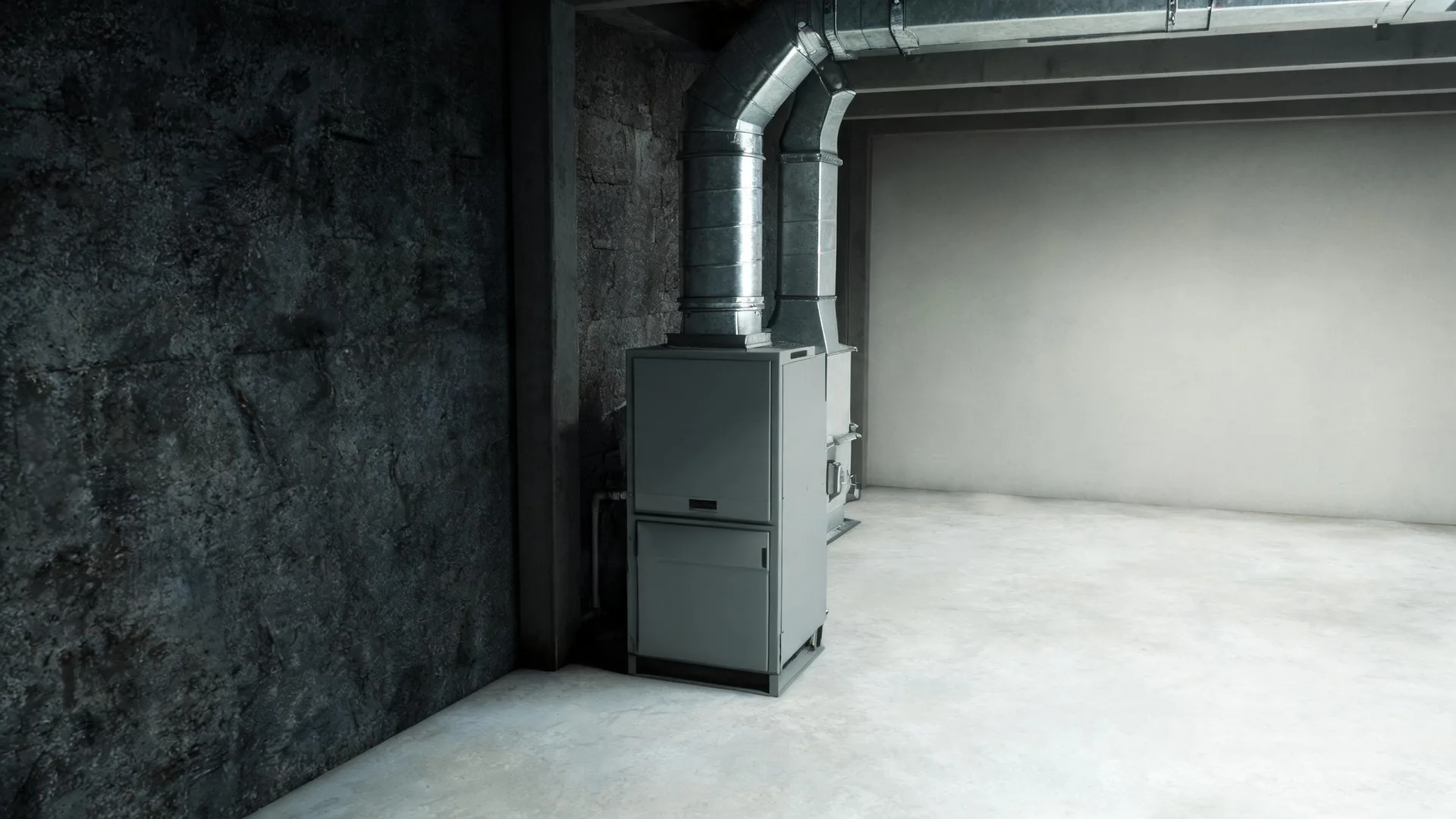
A furnace repair in Santa Barbara County starts with the parts that actually do the work: the burner, the heat exchanger, and the ignition system. Homes in Santa Barbara County, CA run heat about seven months a year, from November through May. That much cycling wears the ignition system incrementally, stresses heat exchanger welds, and eventually shows up as a crack or a misfire rather than a wiring fault. A contractor who skips combustion inspection and goes straight to the control board is skipping the components that took the load.
Ductwork sized and routed for older equipment tells a contractor something specific once the furnace cabinet is open: what failed is one question, and whether the part it takes is still in production is a separate one. Half the homes in Santa Barbara County, California were built in 1974 or earlier (2020-2024 ACS 5-year). That much of the housing was built around equipment generations removed from current manufacture means a repair here regularly runs into heat exchangers, blower wheels, and control boards whose replacement parts require sourcing beyond a standard distributor shelf. A contractor working on a furnace in this county quotes the labor and then confirms the parts exist before that quote holds.
The Parts of a Furnace a Contractor Checks First
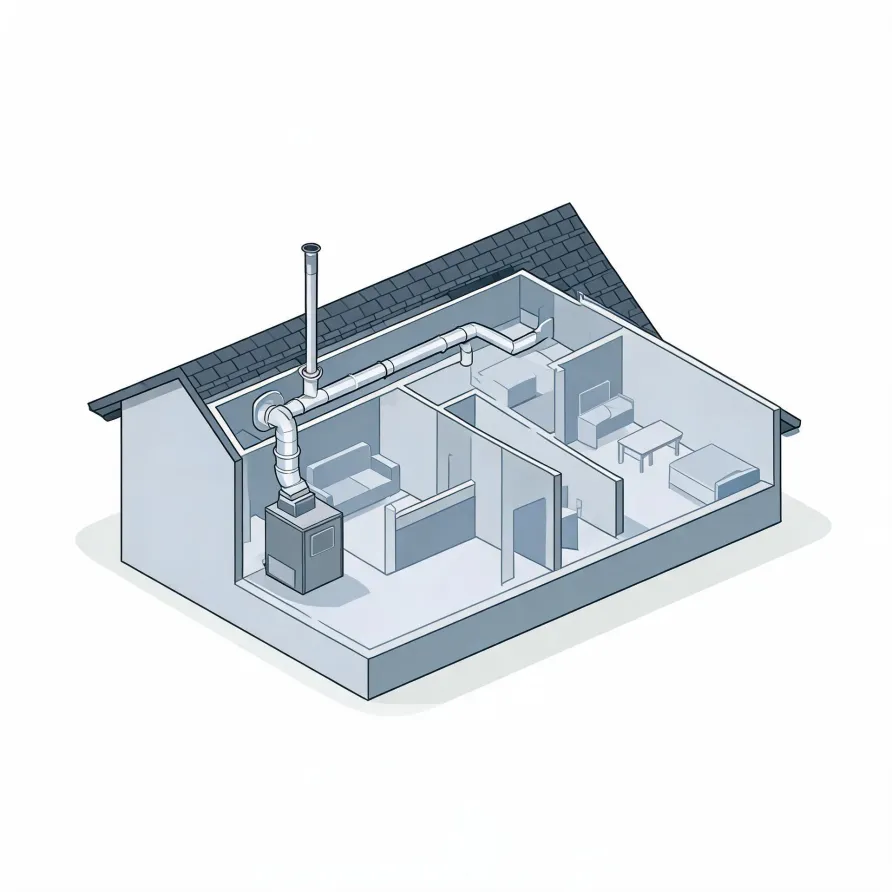
The heat exchanger sits inside the furnace cabinet, usually in a utility closet, basement, or garage, and it is the piece that warms the air moving through your home. When it cracks or corrodes, combustion gases can enter the airstream. The burner assembly sits just below it, and a contractor will check it early when a furnace is failing to light or holding a steady flame.
The blower motor pulls air across the heat exchanger and pushes it into the supply ducts. It sits at the base of the cabinet. Alongside it, the control board, the igniter, the flame sensor, and the gas valve each govern a step in the ignition and run cycle, and any one of them can stop the furnace from completing that cycle.
The drawing shows a typical furnace layout, and a licensed contractor determines which components apply to the specific equipment and installation in your house.
Find a contractor in Santa Barbara CountySanta Barbara County, by the numbers
36 severe weather events were recorded in Santa Barbara County, California between 2015 and 2024.
NOAA National Centers for Environmental Information, Storm Events Database, bulk CSV export, events 2015-01-01 through 2024-12-31.Half the homes in Santa Barbara County, California were built in 1974 or earlier (2020-2024 ACS 5-year).
U.S. Census Bureau, 2020-2024 American Community Survey 5-Year EstimatesSanta Barbara County, California holds 160,592 housing units (2020-2024 ACS 5-year).
U.S. Census Bureau, 2020-2024 American Community Survey 5-Year EstimatesOwners occupy 52.4% of the occupied homes in Santa Barbara County, California (2020-2024 ACS 5-year).
U.S. Census Bureau, 2020-2024 American Community Survey 5-Year EstimatesCodes & Standards That Apply to Furnace Repair in Santa Barbara County, California5 sourced rules and standards
What happens when a contractor comes out
Non-weatherized gas furnaces manufactured on or after November 19, 2015 must reach 80.0 percent AFUE.
Non-weatherized oil-fired furnaces manufactured on or after November 19, 2015 must reach 83.0 percent AFUE.
Mobile home gas furnaces manufactured on or after November 19, 2015 must reach 80.0 percent AFUE.
Non-weatherized gas furnaces manufactured on or after December 18, 2028 must reach 95.0 percent AFUE, up from the 80.0 percent minimum that applies to units manufactured before that date.
Licensing and Legal Requirements in Santa Barbara County, California
California requires a state contractor license: it is a misdemeanour to engage in the business of, or act in the capacity of, a contractor in California without one, unless the work is exempt.
Weather Stress on HVAC Equipment in Santa Barbara County
Heating equipment works harder when outdoor conditions swing hard, and those swings accumulate as wear over time. How often that happens here shapes how much repair demand a furnace in Santa Barbara County actually faces.
36 severe weather events, 2017–2024. Source: NOAA National Centers for Environmental Information, Storm Events Database.