Tell us about the job
Takes about a minute. No obligation.
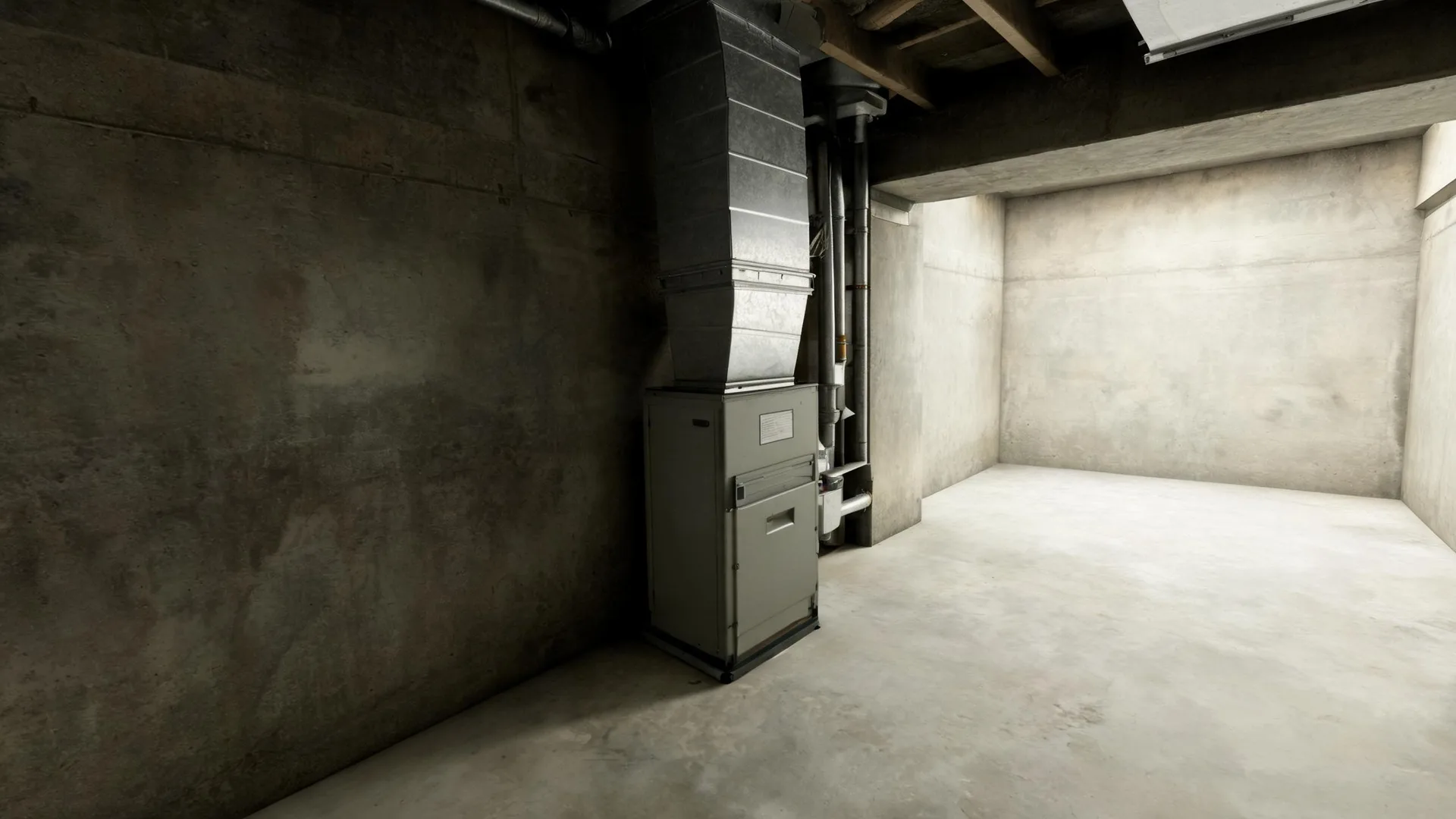
A contractor diagnosing a furnace in Tuolumne County starts with the parts that cycle most: the igniter, the heat exchanger, and the burner assembly. Homes in Tuolumne County, CA run heat about nine months a year, from October through June. That much cycling builds wear on the ignition system steadily, and by the time a homeowner calls, the igniter has often already been close to failure for a season or more. A contractor who skips past those components to chase an easier answer will likely miss what actually drove the breakdown.
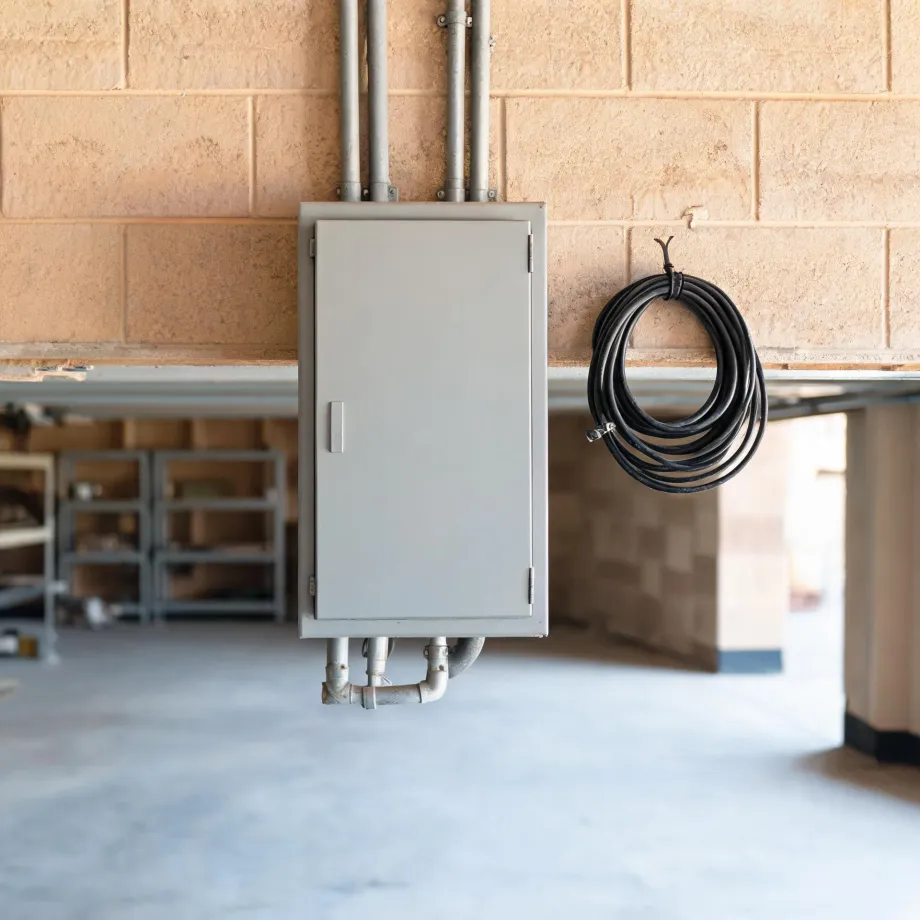
Ductwork in a house this old was run for a furnace that is long gone. Whatever is running now was fitted into that original shell, and when it breaks, the repair hinges on whether a contractor can still source what that specific system takes. Half the homes in Tuolumne County, California were built in 1980 or earlier (2020-2024 ACS 5-year). That history matters most once the unit is open: a heat exchanger or control board from a system of that vintage is not always on a distributor's shelf, and what a contractor finds inside the cabinet determines whether the repair is a part swap or a longer conversation about what comes next.
The Parts of a Furnace a Contractor Checks First
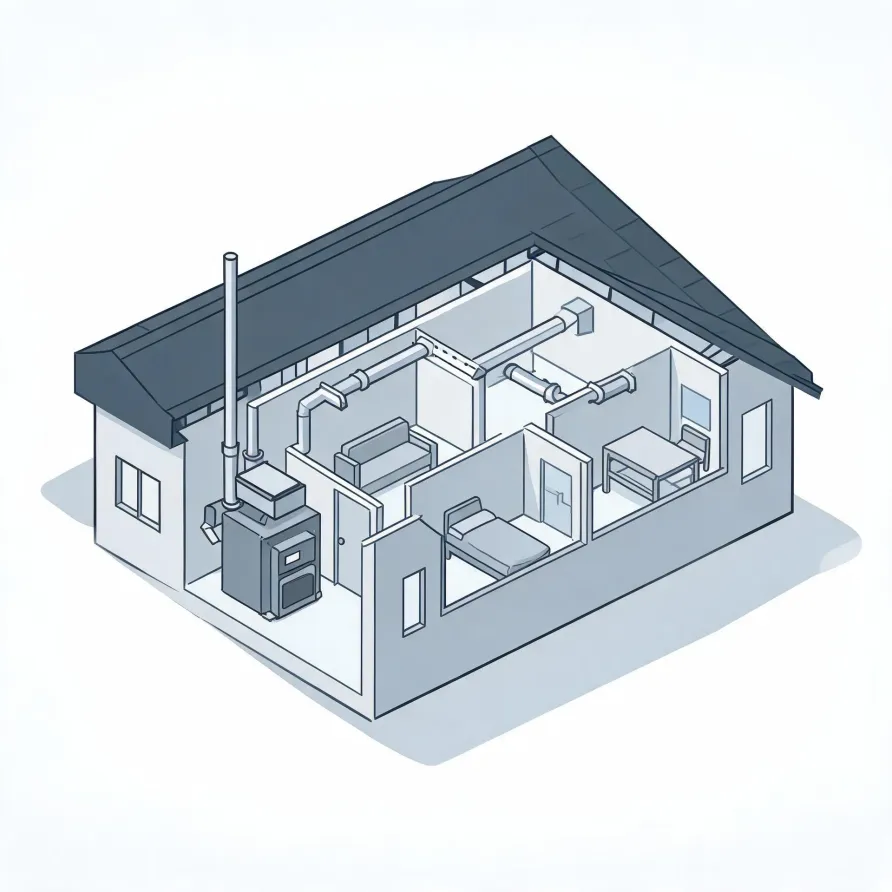
The heat exchanger sits inside the furnace cabinet in the utility room or closet and is the piece a contractor goes to early. Cracks or corrosion there mean combustion gases can get into the airstream. The burner assembly, which sits just below it, is the other primary suspect when a furnace stops producing heat.
The blower motor and its fan wheel sit at the base of the cabinet and push conditioned air into the supply plenum. The inducer motor, which pulls combustion gases out through the flue, mounts near the top of the cabinet, and the control board that coordinates all of it sits along the interior wall of the same enclosure.
The drawing shows a typical furnace layout, and a licensed contractor determines which components apply to your specific system and what condition each one is in.
Find a contractor in Tuolumne CountyTuolumne County by the Numbers
418 severe weather events were recorded in Tuolumne County, California between 2015 and 2024.
NOAA National Centers for Environmental Information, Storm Events Database, bulk CSV export, events 2015-01-01 through 2024-12-31.Half the homes in Tuolumne County, California were built in 1980 or earlier (2020-2024 ACS 5-year).
U.S. Census Bureau, 2020-2024 American Community Survey 5-Year EstimatesTuolumne County, California holds 31,589 housing units (2020-2024 ACS 5-year).
U.S. Census Bureau, 2020-2024 American Community Survey 5-Year EstimatesOwners occupy 73.9% of the occupied homes in Tuolumne County, California (2020-2024 ACS 5-year).
U.S. Census Bureau, 2020-2024 American Community Survey 5-Year EstimatesCodes & Standards for Furnace Repair in Tuolumne County, California5 sourced rules & standards
What happens when a contractor comes out to your home
Non-weatherized gas furnaces manufactured on or after November 19, 2015 must reach 80.0 percent AFUE.
Non-weatherized oil-fired furnaces manufactured on or after November 19, 2015 must reach 83.0 percent AFUE.
Mobile home gas furnaces manufactured on or after November 19, 2015 must reach 80.0 percent AFUE.
Non-weatherized gas furnaces manufactured on or after December 18, 2028 must reach 95.0 percent AFUE, up from the 80.0 percent minimum that applies to units manufactured before that date.
Licensing and Legal Requirements in Tuolumne County, California
California requires a state contractor license: it is a misdemeanour to engage in the business of, or act in the capacity of, a contractor in California without one, unless the work is exempt.
Weather Events in Tuolumne County That Stress HVAC Systems
Extreme weather puts direct mechanical load on furnaces, forcing them to run harder and longer than typical conditions demand. How much stress a system accumulates over time is shaped by local weather, which is why repair needs in Tuolumne County are a local question.
418 severe weather events, 2015–2024. Source: NOAA National Centers for Environmental Information, Storm Events Database.