Tell us about the job
Takes about a minute. No obligation.
A furnace repair here starts with the burner, the heat exchanger, and the ignition system, because those are the parts doing the work. Homes in Stanislaus County, CA run heat about six months a year, from November through April. By the time a homeowner notices uneven heat or a short-cycling unit, the igniter and flame sensor have already logged a full season of starts and stops. Contractors in this area find stress cracks and carbon buildup on heat exchangers that look recent but are not. The wear was accumulating quietly.
Furnace repair in a house this age turns on what the ductwork looks like once a contractor gets into it. Half the homes in Stanislaus County, California were built in 1981 or earlier (2020-2024 ACS 5-year). Seals that were adequate when the system was first run have had time to separate, and insulation wrapped around flex duct loses its hold in ways that shift the load the furnace is working against. A contractor who opens only the unit and prices only the parts it takes is quoting against incomplete information. What the duct runs have become is the variable that decides whether a repaired furnace actually performs.
The Parts of a Furnace a Contractor Checks First
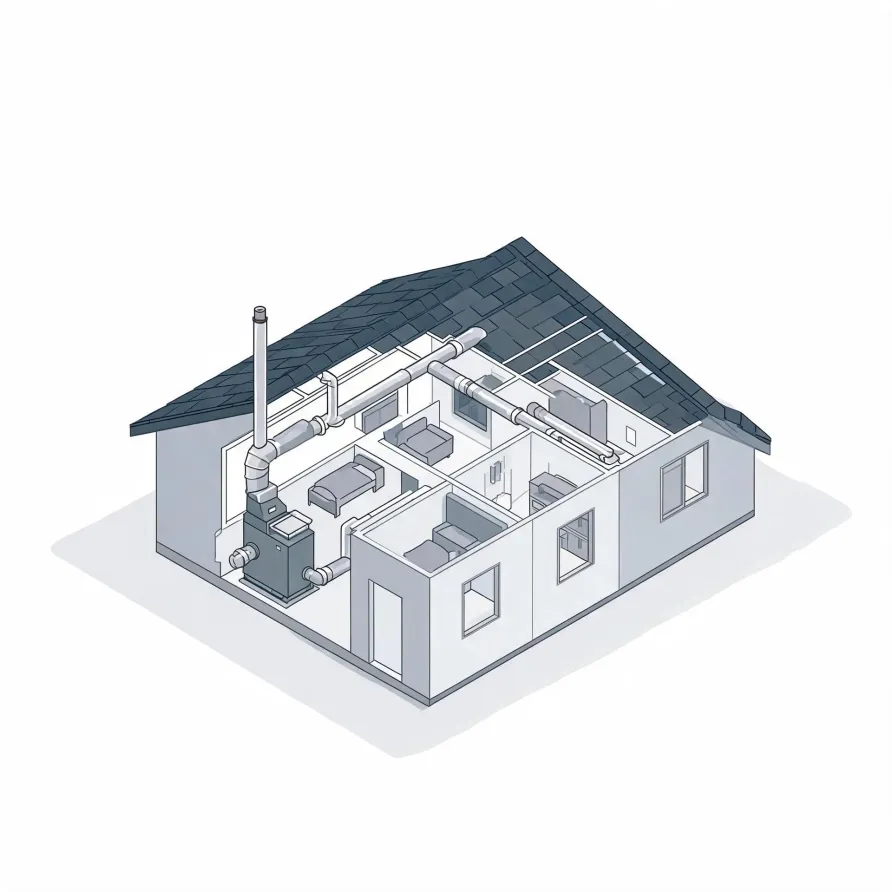
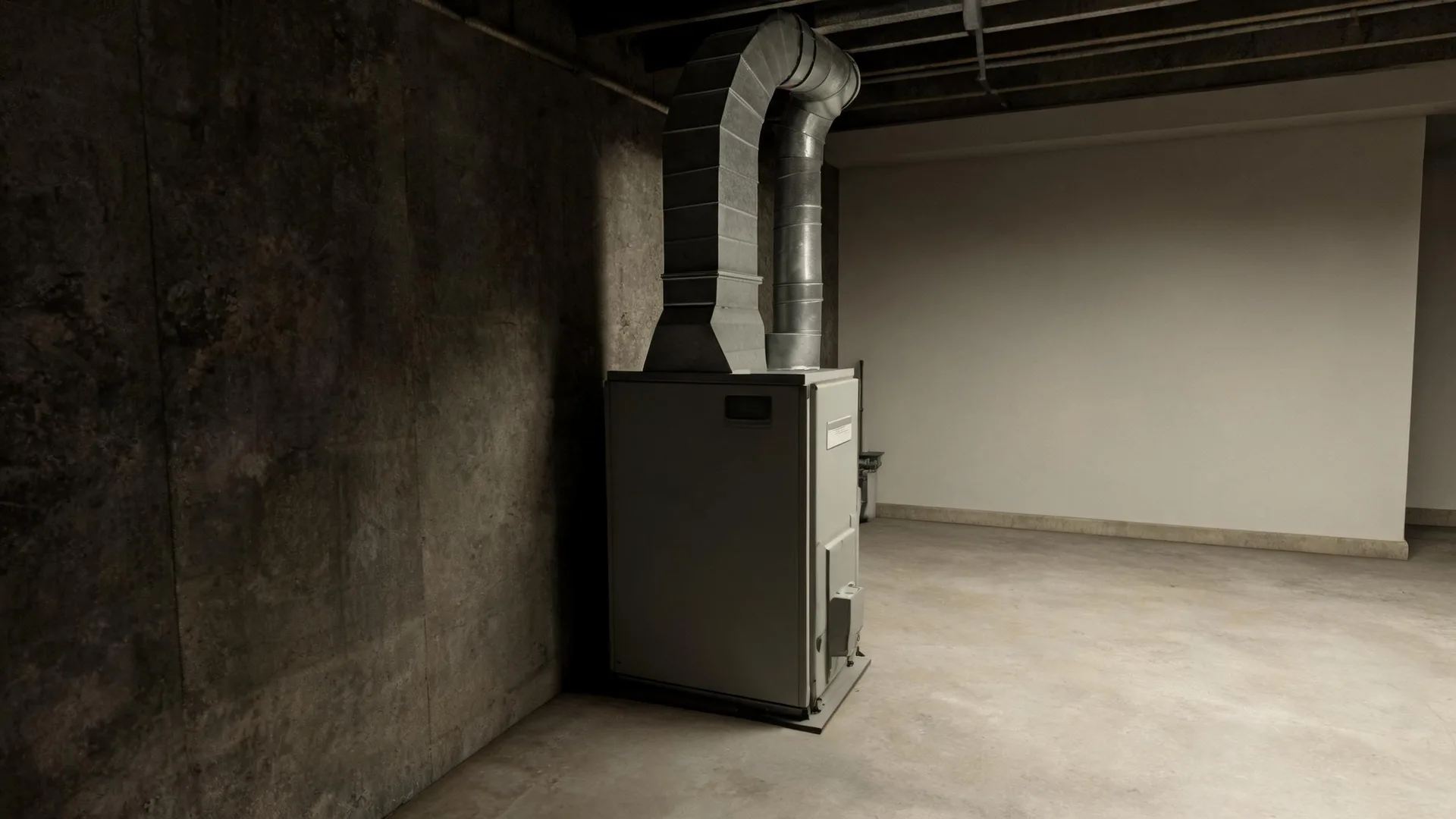
The heat exchanger sits inside the furnace cabinet, usually in a basement, utility closet, or garage, and it is the wall between combustion gases and the air your family breathes. A crack there is serious. The burners sit just below it and are where a contractor often starts when a furnace is producing weak heat or none at all.
The blower motor and its fan wheel sit at the bottom of the cabinet and push conditioned air out into the house. The control board, also inside the cabinet, reads the signals from your thermostat and tells each component when to act. A failed board can mimic the symptoms of several other faults, which is why a contractor checks it alongside the individual parts it commands.
The drawing shows a typical furnace layout, and a licensed contractor determines which components apply to your specific system and situation.
Find a contractor in Stanislaus CountyStanislaus County, by the numbers
24 severe weather events were recorded in Stanislaus County, California between 2015 and 2024.
NOAA National Centers for Environmental Information, Storm Events Database, bulk CSV export, events 2015-01-01 through 2024-12-31.Half the homes in Stanislaus County, California were built in 1981 or earlier (2020-2024 ACS 5-year).
U.S. Census Bureau, 2020-2024 American Community Survey 5-Year EstimatesStanislaus County, California holds 185,149 housing units (2020-2024 ACS 5-year).
U.S. Census Bureau, 2020-2024 American Community Survey 5-Year EstimatesOwners occupy 61.2% of the occupied homes in Stanislaus County, California (2020-2024 ACS 5-year).
U.S. Census Bureau, 2020-2024 American Community Survey 5-Year EstimatesCodes & Standards Covering Furnace Repair in Stanislaus County, California5 sourced rules & standards
What the repair visit looks like
Non-weatherized gas furnaces manufactured on or after November 19, 2015 must reach 80.0 percent AFUE.
Non-weatherized oil-fired furnaces manufactured on or after November 19, 2015 must reach 83.0 percent AFUE.
Mobile home gas furnaces manufactured on or after November 19, 2015 must reach 80.0 percent AFUE.
Non-weatherized gas furnaces manufactured on or after December 18, 2028 must reach 95.0 percent AFUE, up from the 80.0 percent minimum that applies to units manufactured before that date.
Licensing Rules for HVAC Repair in Stanislaus County, California
California requires a state contractor license: it is a misdemeanour to engage in the business of, or act in the capacity of, a contractor in California without one, unless the work is exempt.
Severe Weather Events in Stanislaus County
Extreme weather puts direct stress on heating equipment, pushing furnaces to run harder and longer than ordinary conditions demand. How often that happens here shapes what local furnaces wear through and what repairs come up most.
24 severe weather events, 2015–2024. Source: NOAA National Centers for Environmental Information, Storm Events Database.